The Vanderslices are among the oldest Dutch-American families in Pennsylvania — settled at Germantown around 1700, and among the colony's first naturalized citizens in 1709. Nearly every Vanderslice in America today descends from one man, Reynier van der Sluijs.
Reynier van der Sluijs sailed from Holland and settled at Germantown, Pennsylvania, around 1701 — among the early Dutch families of that pioneering settlement just outside Philadelphia. He and his son Adrian were naturalized as citizens on September 29, 1709, and the 1929 family history calls the Vanderslices "one of the oldest families in Pennsylvania."
More than three centuries and ten generations later, the name is still carried across the country — and nearly every American Vanderslice traces back to Reynier, which lets this tree double as a map of the wider family.
What "Vanderslice" means
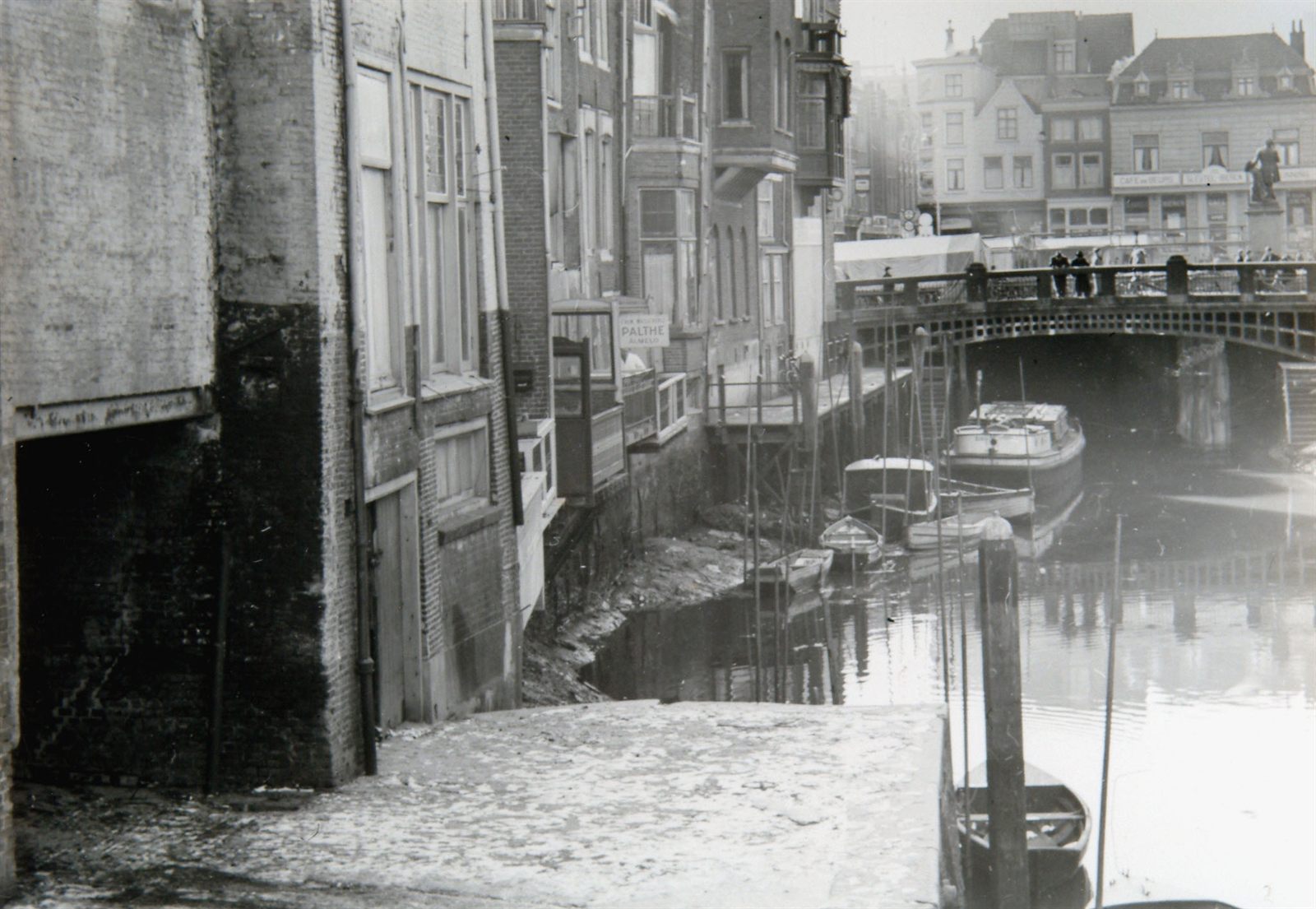
Vanderslice is the Americanized spelling of the Dutch surname van der Sluijs (also written Sluis or Sluys). It is a place-name: sluis is the Dutch word for a sluice — a lock, floodgate, or gated channel that controls the flow of water through a canal or dike.
The van der means "of the," so van der Sluijs is literally "of the sluice." In the low-lying, water-laced Netherlands such gates were everywhere and essential, and a name like this was usually earned in one of two ways: by an ancestor who lived right beside a sluice, or by one who operated it — a sluiswachter, or lock-keeper, who raised and lowered the waters. (It can also point to the town of Sluis on the Zeeland coast.) Either way, the family took its name from the sluice — and over generations American clerks softened the Dutch spelling until van der Sluijs became Vanderslice.
The 1929 family book preserves a romantic legend — a noble foundling found on a North Sea beach — but genealogists long ago debunked it: there was never a "Baron van der Sluys." The sluice is the real, humbler root.
Leiden — a city of refuge
Reynier and Anna Hendriksdr Spruyt registered their marriage in Leiden in 1685. Leiden was no ordinary town. In the 1600s the Dutch Republic was the most religiously tolerant place in Europe, and Leiden — home to the Netherlands' oldest university (founded 1575) and a booming center of the wool and cloth trade — drew refugees and migrants from across the continent.
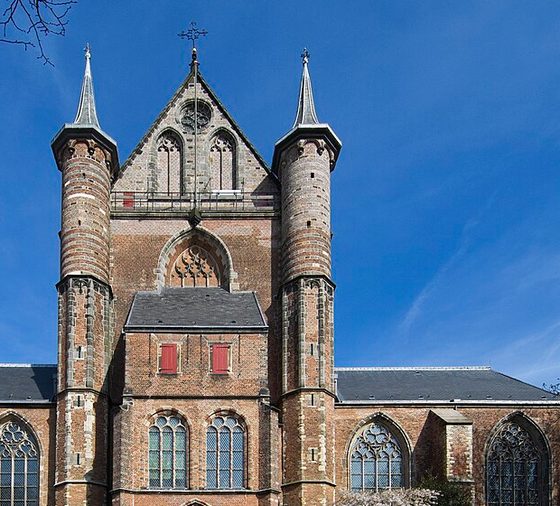
Most famously, the English Separatists we remember as the Pilgrims fled to Leiden in 1609 to worship freely, living there for more than a decade before some of them sailed on the Mayflower in 1620. The church most bound up with their story is Leiden's Pieterskerk — the great late-Gothic church of St. Peter, begun in 1390 and nearly two centuries in the building — where the Pilgrims' pastor John Robinson lies buried (as does the scientist Willebrord Snellius, of Snell's law). The Vanderslices were Dutch, not Pilgrims — but the family's American story begins in the very city that had sheltered them.
From Reynier the immigrant down to the present day — one generation per card, oldest first.
Documented — every generation now linked by record
Tap any card to open the full record — sources, family, and stories.
Want the whole family, not just the direct line? The branching family tree shows every generation's siblings and spouses — and you can download it all as a GEDCOM file.
For years, one father-to-son link held the whole line in suspense — Aaron's own parentage. The link just below it (Aaron → William) had been settled by Aaron's Civil War pension file, which names William and his siblings as the children of Aaron and his first wife Martha. But who Aaron's own parents were stayed a mystery, with several competing theories.
A poorhouse ledger answered it. The Chester County Poor House admission books — the register of the county's tax-supported home for the destitute, orphaned, and infirm — record a whole Vanderslice family fallen on hard times in 1841–42: a mother, Ann, age 40, and her children Lott, Aaron (age 7), Wilson (age 5), and Jane (age 2) — the three boys bound out to local masters as apprentices in 1842. That household matches, name for name and age for age, the family of John Henri Vanderslice and his wife Ann (Tweedy). Finding Aaron beside his mother and all three siblings, at just the right ages in the right county, is what finally tied him to his father — and through John Henri, born in Philadelphia on March 4, 1802, back into the documented line. Read Aaron's full story →
Notable Kin
Famous Vanderslices
A few Vanderslices who left a mark on American history — verified against period records and local histories.
Reading, Pennsylvania · July 8, 1776
Henry Vanderslice read the Declaration of Independence
As Sheriff of Berks County, Henry Vanderslice (1726–1797) had the duty of carrying the news to the people. On July 8, 1776, the courthouse bell on Penn Square — since known as the Berks County Liberty Bell — was rung to summon the townspeople, and Henry read the newly adopted Declaration aloud from the courthouse steps in Reading. Because so much of the county was German-speaking, he read it in both English and German — among the first times the Declaration was proclaimed in German anywhere. He then enlisted, serving as Wagon-Master in General Muhlenberg's brigade through the New Jersey campaign and the winter at Valley Forge.
Berks County still marks the anniversary every July 8 with a bell-ringing and public reading. Henry also appears in the tree above, among the line's older generations.
Sources: Van der Slice and Allied Families (1929); Berks History Center; County of Berks.
Phoenixville, Pennsylvania · 1801–1882
John Vanderslice built half of Phoenixville
John Vanderslice (1801–1882), from the frontispiece of his own travel book.
Born near Phoenixville on May 27, 1801, John Vanderslice bought a 75-acre farm there in 1840 and turned it into a town: by the reckoning of his own day, "one-half of Phoenixville" was built on lots he sold, and he put up some 120 houses (renting out 26 more) as the borough's iron industry boomed. A firm Union man, he gave liberally to the cause during the Civil War — and local histories remember him for easing the rent of servicemen's families. In 1875, at seventy-four, he circled the globe — San Francisco, Japan, Hong Kong, Singapore, India, the Suez Canal, and on through Europe — and afterward published a full account of the journey — the 1876 book Around the World Through Many Lands and Over Many Seas. Vanderslice Street in Phoenixville still carries his name.
He belonged to the Chester County / Phoenixville branch — descendants of Reynier's son John.
Sources: Futhey & Cope, History of Chester County (1876); an 1881 Chester County biographical sketch; Historical Society of the Phoenixville Area; his own Around the World Through Many Lands and Over Many Seas.
Philadelphia & Gettysburg · 1846–1915
John M. Vanderslice won the Medal of Honor — and helped build the monuments at Gettysburg
John Mitchell Vanderslice (1846–1915), Medal of Honor recipient.
A generation later, another John — John Mitchell Vanderslice (1846–1915) of Philadelphia — went to war as a private in Company D, 8th Pennsylvania Cavalry. In his regiment's charge on the Confederate works at Hatcher's Run, Virginia, on February 6, 1865, he was the first man to reach the enemy's rifle pits — the act for which he received the Medal of Honor in 1893.
After the war he became a Philadelphia lawyer and one of the most influential figures in the Grand Army of the Republic, serving as Pennsylvania's department commander and growing its membership from 4,500 to 25,000. As a director of the Gettysburg Battlefield Memorial Association, he helped place the battlefield's first monument on Little Round Top — and it was his idea that each state mark the ground where its regiments fought, the origin of the hundreds of monuments that cover the field today. He told the story in his 1899 book, Gettysburg Then and Now.
His father was Marcus Vanderslice (1813–1876) — very likely the same Marcus Lafayette Vanderslice, b.1813, of the Chester County / Phoenixville branch (Reynier's son John's line), which would make this John a kinsman of the Phoenixville John above. Promising, but not yet proven.
A curious footnote: a well-known present-day indie musician and record producer — founder of San Francisco's Tiny Telephone recording studio — is also named John Vanderslice (b.1967). No known relation; just a happy coincidence of a good Dutch name.
Sources: Congressional Medal of Honor Society; "John M. Vanderslice," Wikipedia; his own Gettysburg Then and Now (1899).
This is a living document. It traces the Vanderslice line back to Reynier van der Sluijs in Holland, with sources for each generation and honest notes on what's proven and what isn't. More records will be added over time.