🗓️ Coming soon · September 2026
Roots & Remembrance
Holland, Normandy and Paris — an ancestor's house in Dordrecht, bike rides across the Dutch countryside, and the beach in France where so many Americans gave everything.
Holland, Normandy and Paris — an ancestor's house in Dordrecht, bike rides across the Dutch countryside, and the beach in France where so many Americans gave everything.
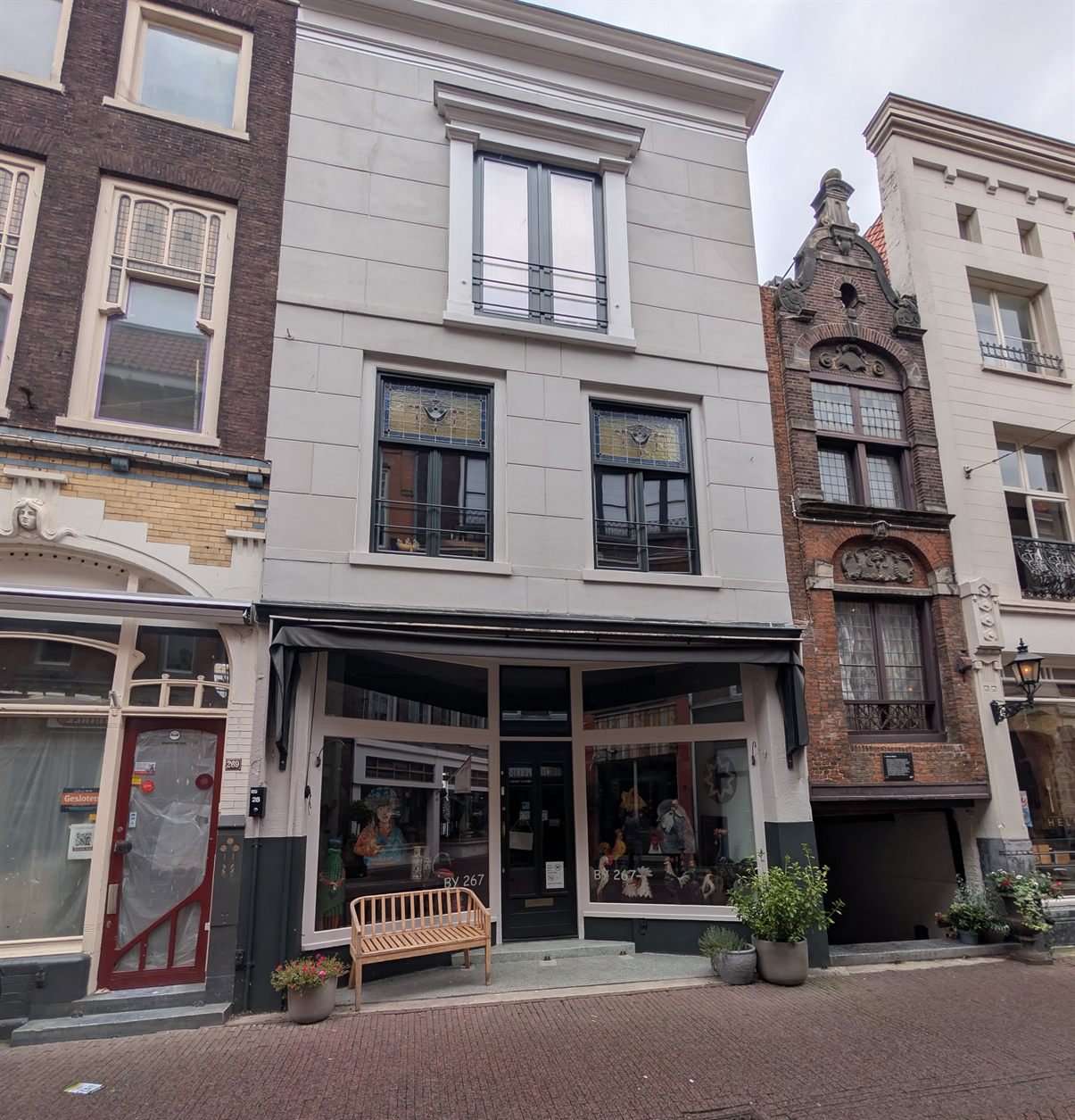
Two very different days on one trip. In Dordrecht, Holland, I walked into the house my ancestor Reynier van der Sluijs owned before he sailed for Pennsylvania, where his family became the Vanderslices. In Normandy, France, I walked up the same hillside above Omaha Beach that American soldiers took on D-Day, stood in the German bunkers that faced them, and visited the American Cemetery.
My wife, Kari, made the trip with me. The house is on the Voorstraat, Dordrecht's old main street, on the corner of a narrow lane down to the harbour. Reynier bought it in 1686 and lost it in 1696, and in 1701 he and his wife Anna left for America. The research that led us to it, from the Dutch archives, is on Reynier's page.
Walking the streets Reynier walked, I kept picturing the city as it must have been in his day: the harbours full of boats, the shops along the Voorstraat, the Grote Kerk where he and Anna were married. And I kept thinking about what it took to leave all of it, everything and everyone he knew, for Pennsylvania, a place he had never seen.
In between, we spent some time on bikes. We rode from Gouda, the cheese town, to Dordrecht, passing the windmills of Kinderdijk, a row of nineteen mills from the 1700s that kept the low land there dry. We made a loop from Enkhuizen to Hoorn and back, two old harbour towns on the IJsselmeer, the big lake that was once the Zuiderzee, an arm of the North Sea. And we went back to Haarlem, where our 2025 trip through Belgium and the Netherlands ended, and I rode a loop through Nationaal Park Zuid-Kennemerland, the dunes national park between Haarlem and the sea.
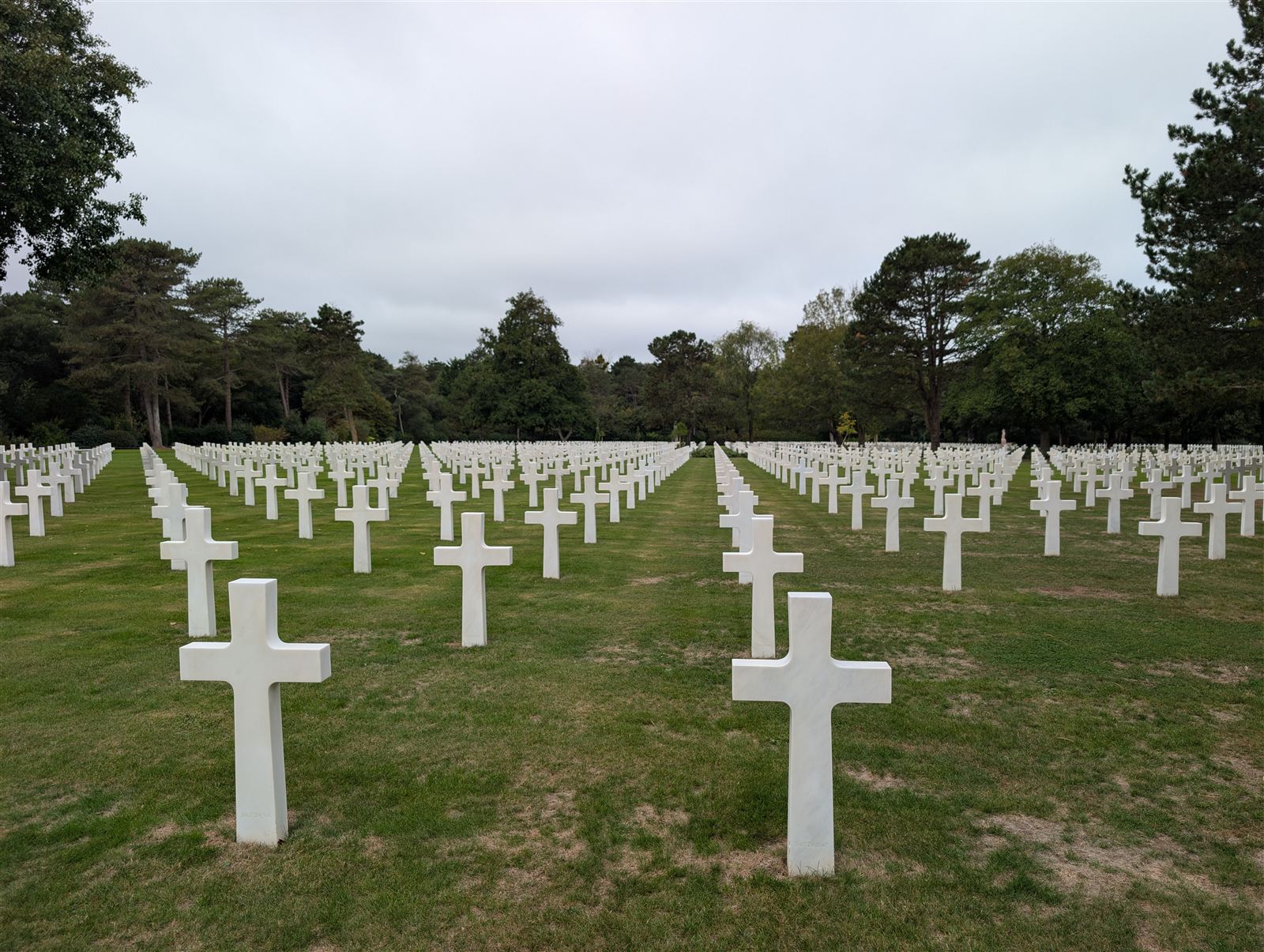
In Normandy we stayed in Port-en-Bessin-Huppain, a small fishing harbour on the coast between Omaha and Gold beaches, and spent time in Bayeux, the first town of any size to be liberated after D-Day. We went to Omaha Beach, the deadliest of the D-Day landing beaches. We walked up the bluff from the beach to WN62, a German strongpoint (the letters stand for Widerstandsnest, “resistance nest”) whose concrete bunkers still look down on the sand. At the top is the Normandy American Cemetery, where 9,388 Americans are buried in rows of white crosses and Stars of David above the beach.
We visited the British memorials as well: the British Normandy Memorial on the hill above Gold Beach, which carries the names of the 22,442 men and women under British command who died in Normandy in the summer of 1944, and the Bayeux War Cemetery, the largest British cemetery of the Second World War in France. None of it changed what I already knew, but it drove it home: these men gave up everything to free Europe, and us, from fascism. What struck me most was how young they were, and what they must have felt on the morning of June 6, 1944, heading for that beach and knowing the danger.
We finished in Paris, where we took a bike tour of the city and I went up the Eiffel Tower before we flew home.