🇧🇪 🇳🇱 Bicycle Tour · May 2025
15 Days in Belgium &
the Netherlands
178.5 miles through two countries, from the medieval streets of Bruges to the canals of Amsterdam — no rush, no agenda, just the road ahead.
178.5 miles through two countries, from the medieval streets of Bruges to the canals of Amsterdam — no rush, no agenda, just the road ahead.
After a few days exploring Amsterdam and a train ride south to Bruges, Belgium, Kari and I set out on what would become one of our favorite adventures. The plan was deliberately loose — ride from Bruges back toward Amsterdam, but take our time doing it. No long mileage days, no rigid schedule, no pressure. Just bikes, panniers, and the Fietsknoop route-planning app to guide us through the Dutch cycling network.
The route would take us through some of the most beautifully engineered landscape on Earth — a country that has literally reclaimed much of its territory from the sea through centuries of dikes, windmills, and sheer determination. We'd ride across former ocean floors, past ancient medieval towns, and along coastlines that shouldn't technically exist. Every day brought something unexpected. That's exactly how we planned it.
One key reason we chose to ride south to north — Bruges to Amsterdam — was the advice we consistently received: the prevailing winds in the Netherlands this time of year blow from the south, so riding northward would mean a tailwind for most of the trip. The wind had other ideas. We faced headwinds from the north nearly the entire way. That said, we'll take that trade — the weather was noticeably better than what the Netherlands typically serves up in May. No complaints.
Riding Day Explore Day Travel Day
Schiphol Airport → Hotel → First canal stroll
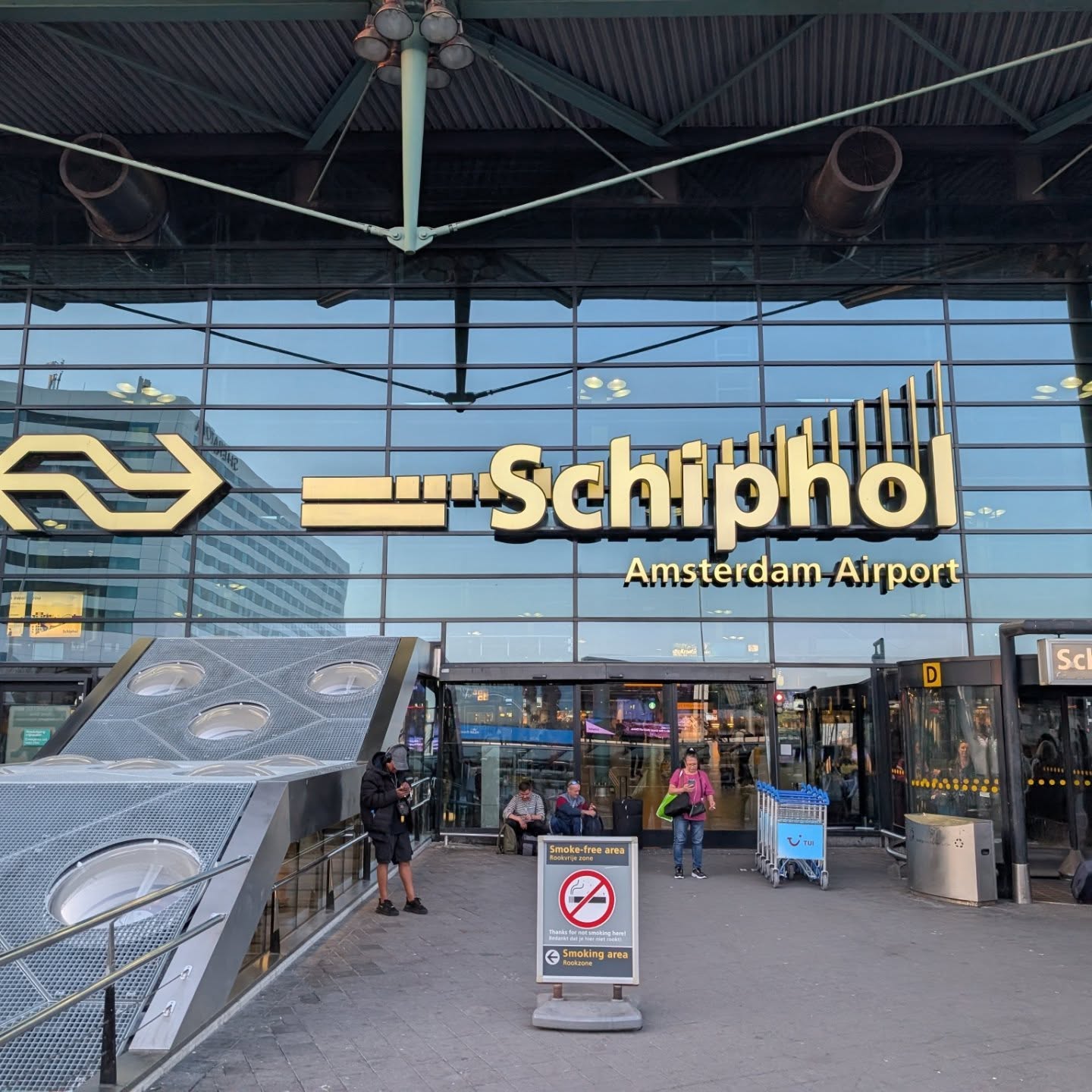
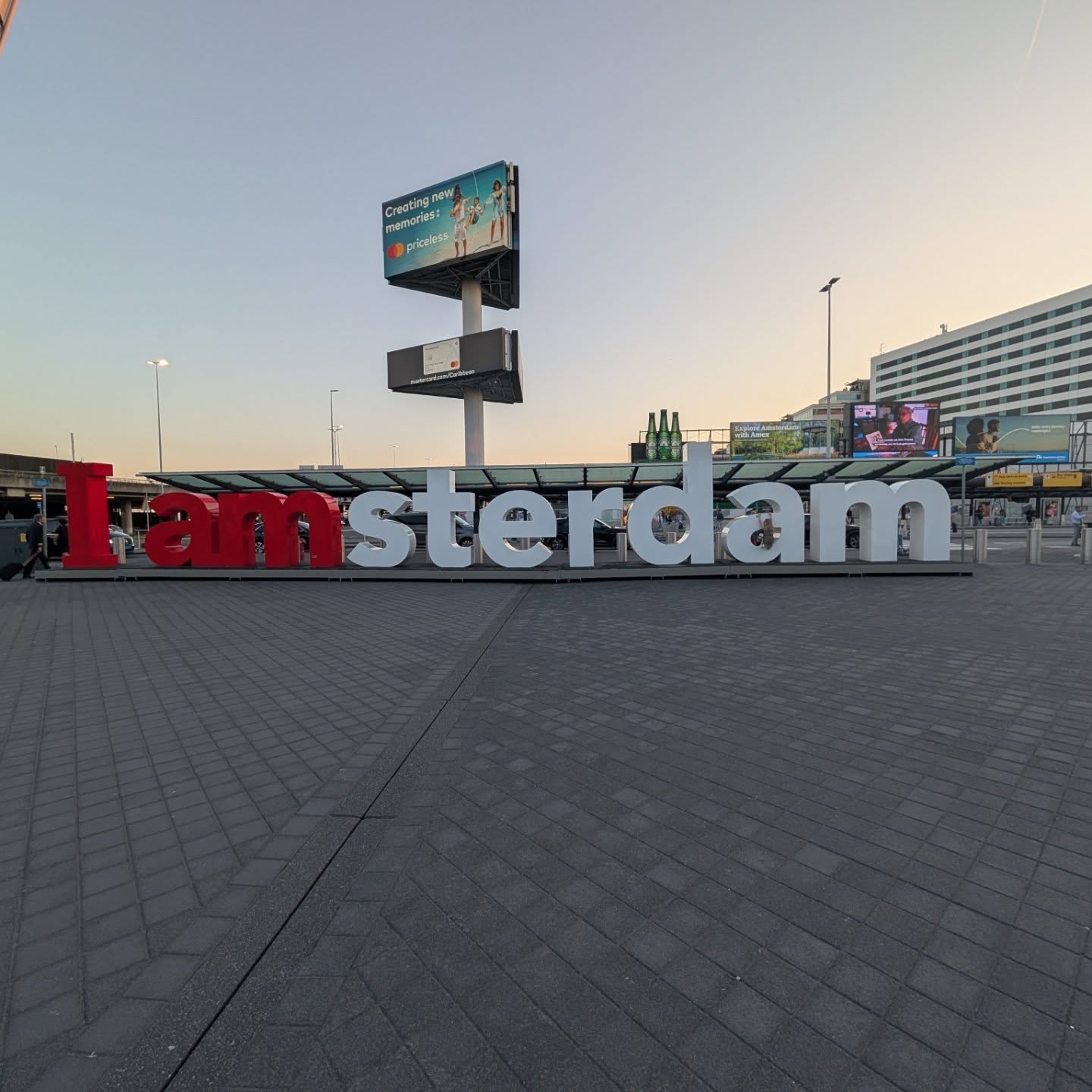
After a long transatlantic flight, Kari and I touched down at Amsterdam Schiphol Airport around 8:20 PM local time. Even with jet lag setting in, there was something immediately energizing about stepping onto Dutch soil. Just outside the terminal, the famous I amsterdam sign welcomed us — our first photo op of the trip.
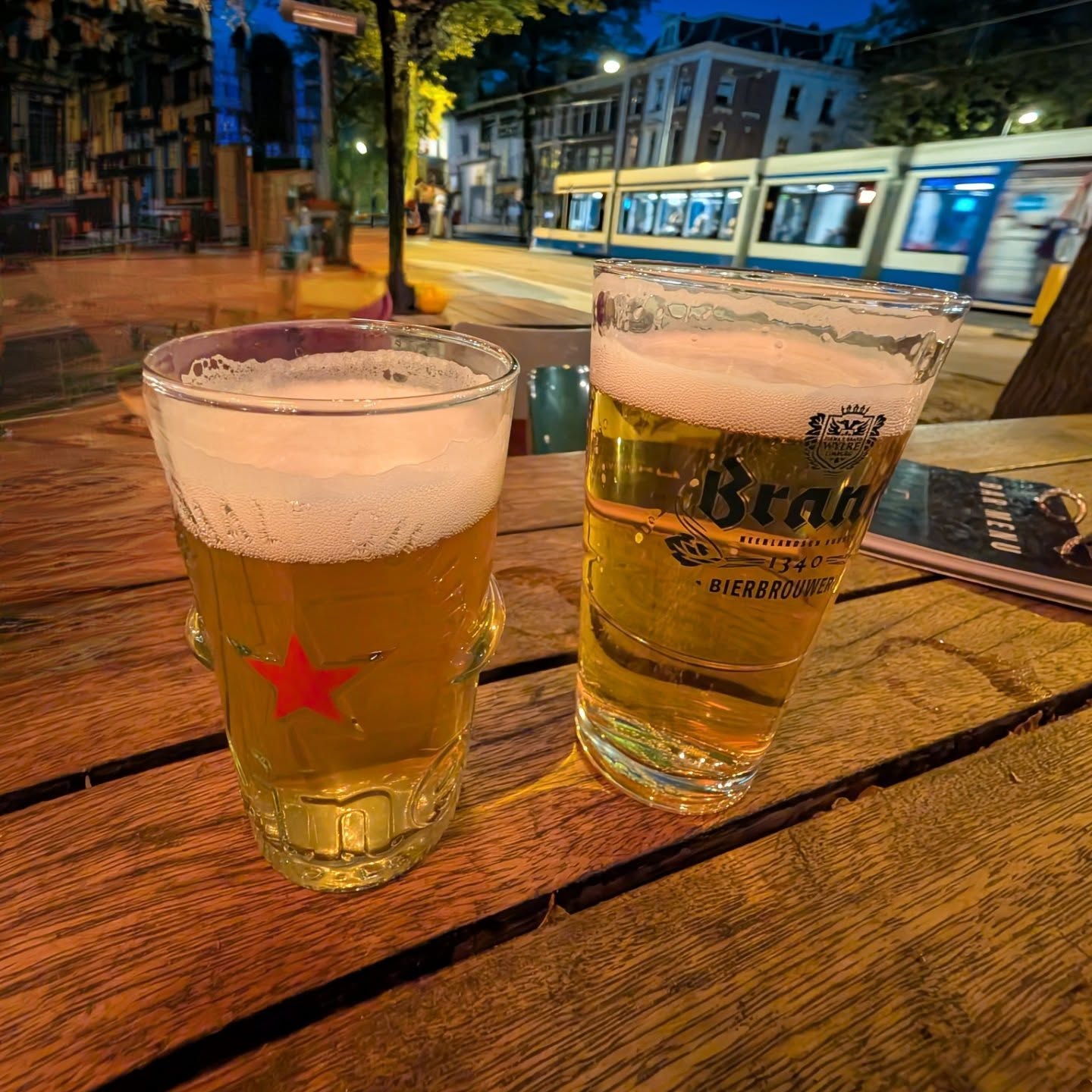
With limited daylight left, we kept the evening low-key. We checked into our hotel, grabbed a small bite nearby, and then took a short walk to get our first look at one of Amsterdam's famous canals. We found a spot to sit outside, ordered a couple of beers — a Heineken and a Brand Bierbrouwerij — and soaked it all in. Even in the fading evening light, the city was beautiful: canal reflections, leaning gabled buildings, trams gliding past in the blue hour. Not a bad way to start 15 days in Europe.
It was a gentle introduction. The real exploring would start tomorrow.
Day Highlights
26,000+ steps · Canals · Anne Frank House · Bike culture deep-dive
We woke up rested and ready to explore. Over the course of the day, Kari and I logged over 26,000 steps wandering Amsterdam's streets, bridges, and neighborhoods — and barely scratched the surface.
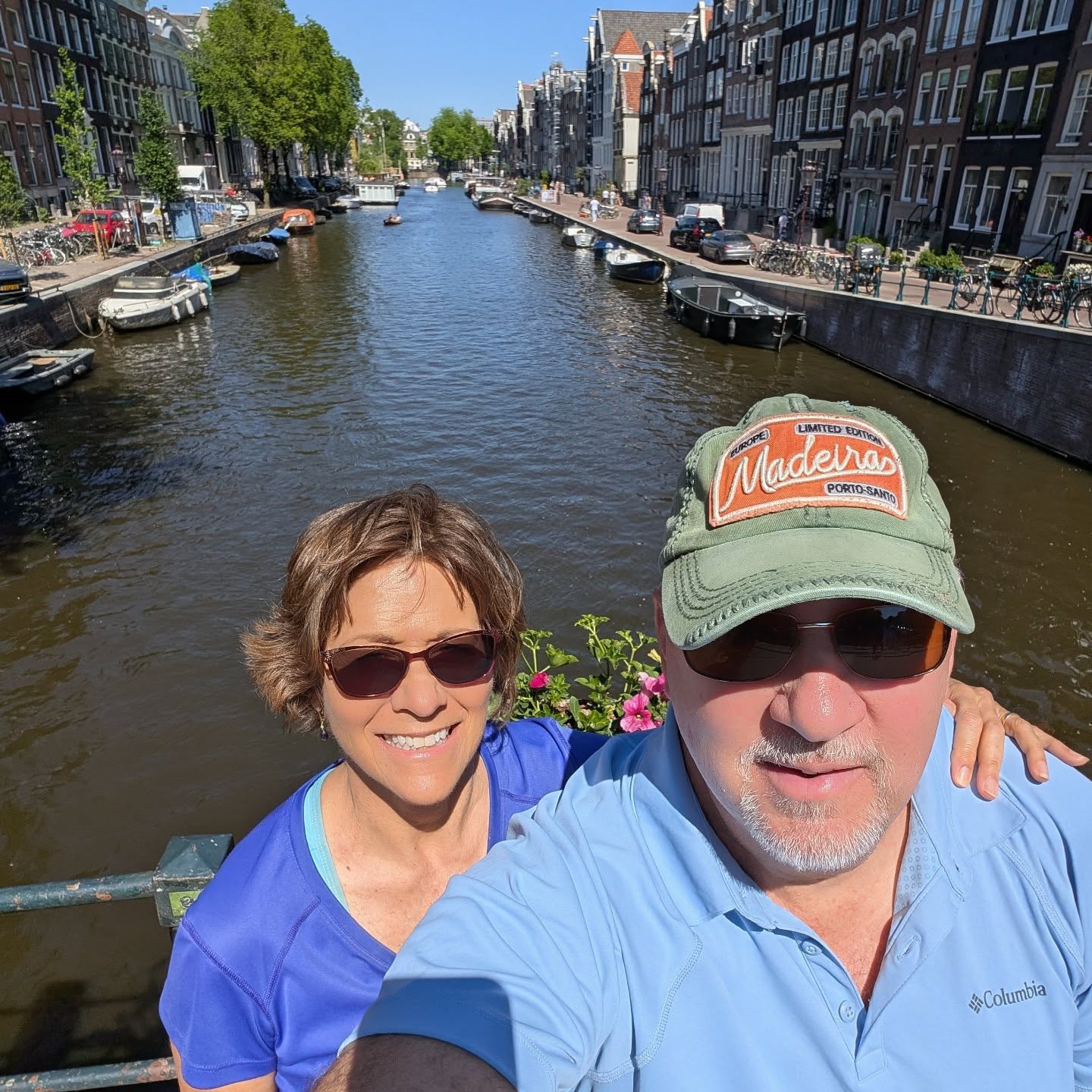
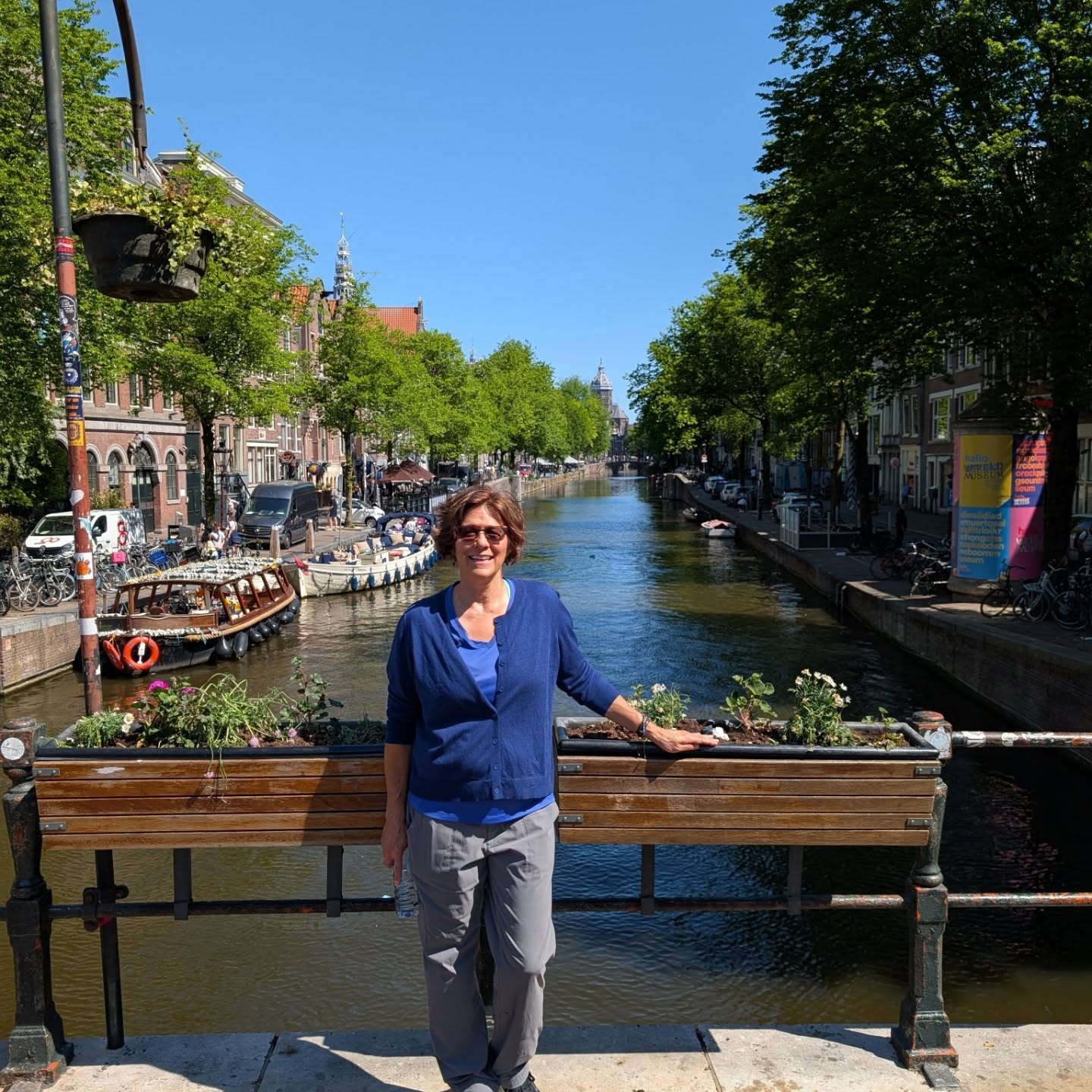
Late in the day we made our way to the Anne Frank House. The building was under renovation so we didn't go inside, but we spent time taking it all in from outside — the narrow canal house facade, the quiet street, the weight of what happened behind those walls. Immediately next door stands the Westerkerk, a stunning 17th-century church whose tower is one of the tallest in Amsterdam. Anne Frank wrote in her diary that she could hear the Westerkerk's bells from the hiding annex.
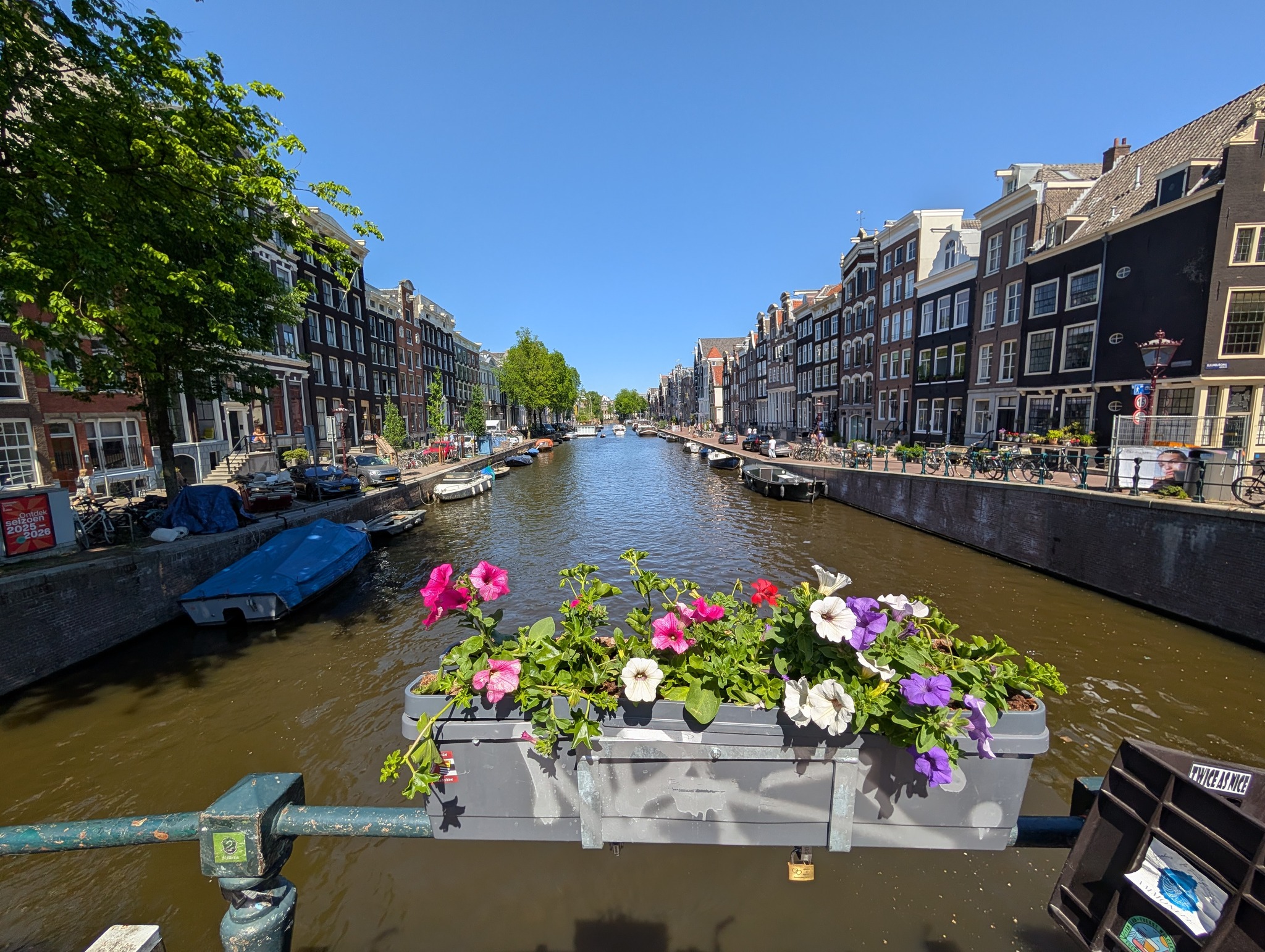
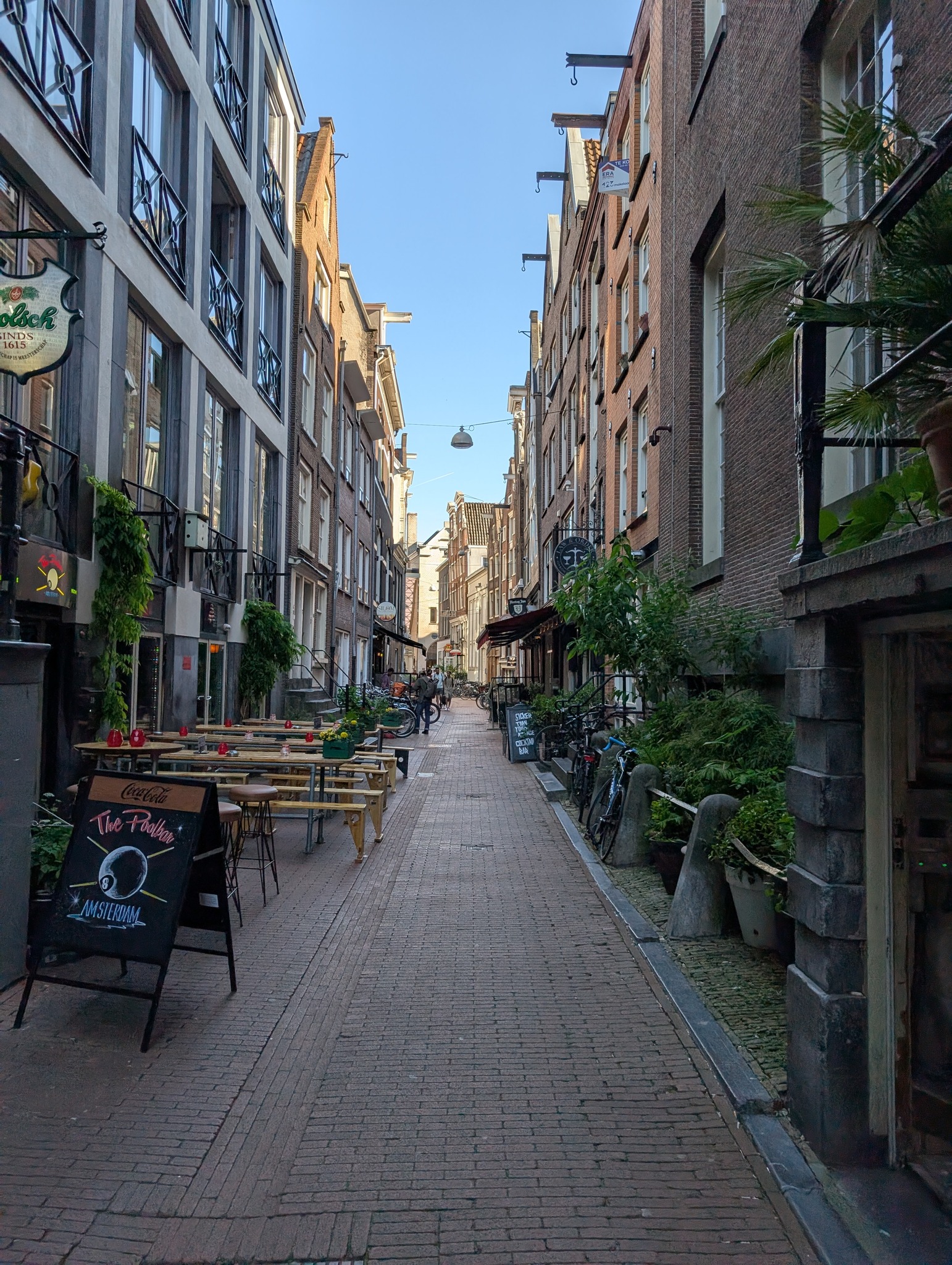
From there we let the city lead us. Amsterdam's famous canal ring is a UNESCO World Heritage Site, and it's easy to understand why — every bridge offers a new perspective, every street opens up onto another narrow waterway lined with houseboats and leaning gabled townhouses. Those lean, by the way, isn't just charming decay — it's deliberate. The buildings were designed to lean forward so furniture hoisted by the hooks at the top wouldn't scrape the facade on the way up through the narrow windows. Some lean so dramatically they have visible gaps between them.
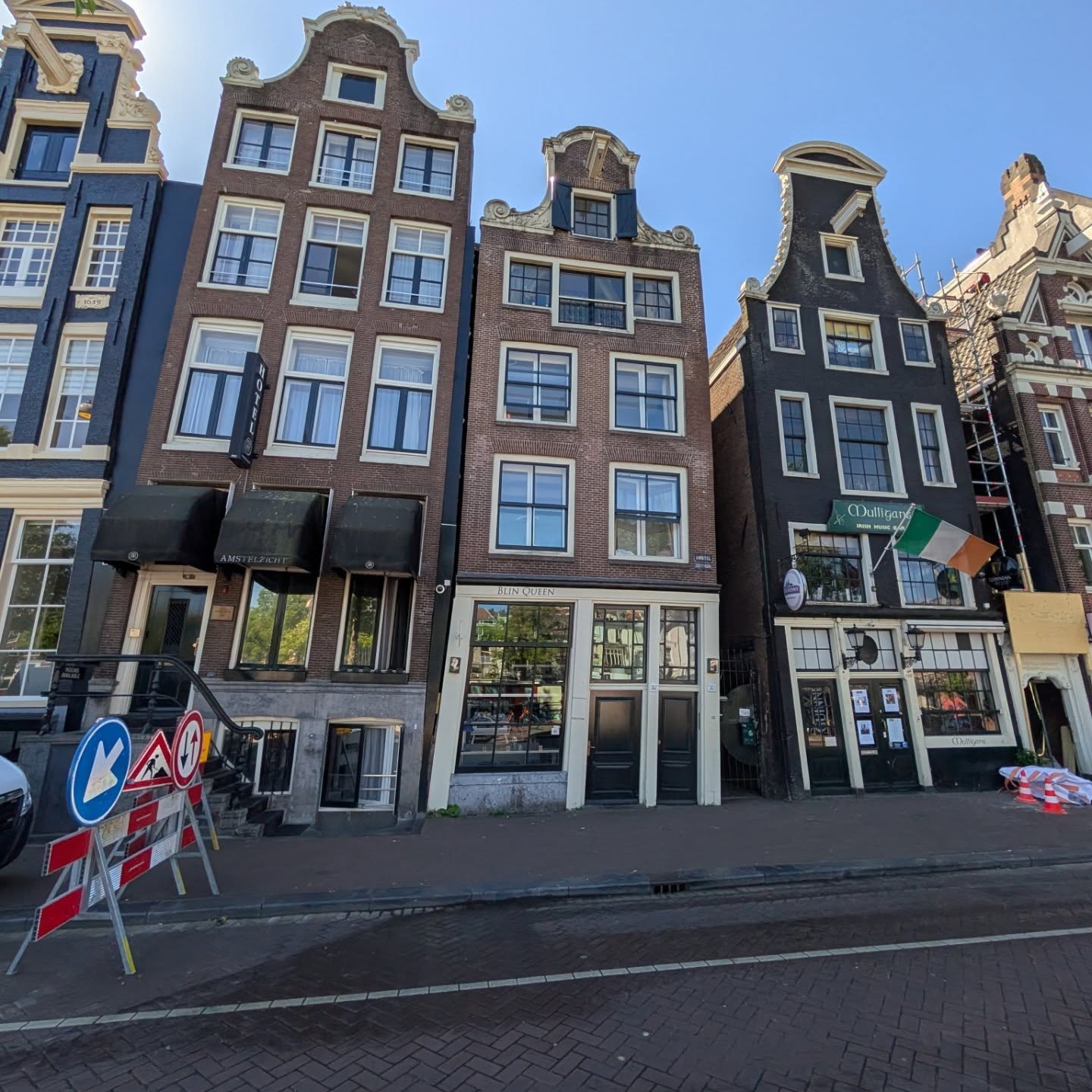
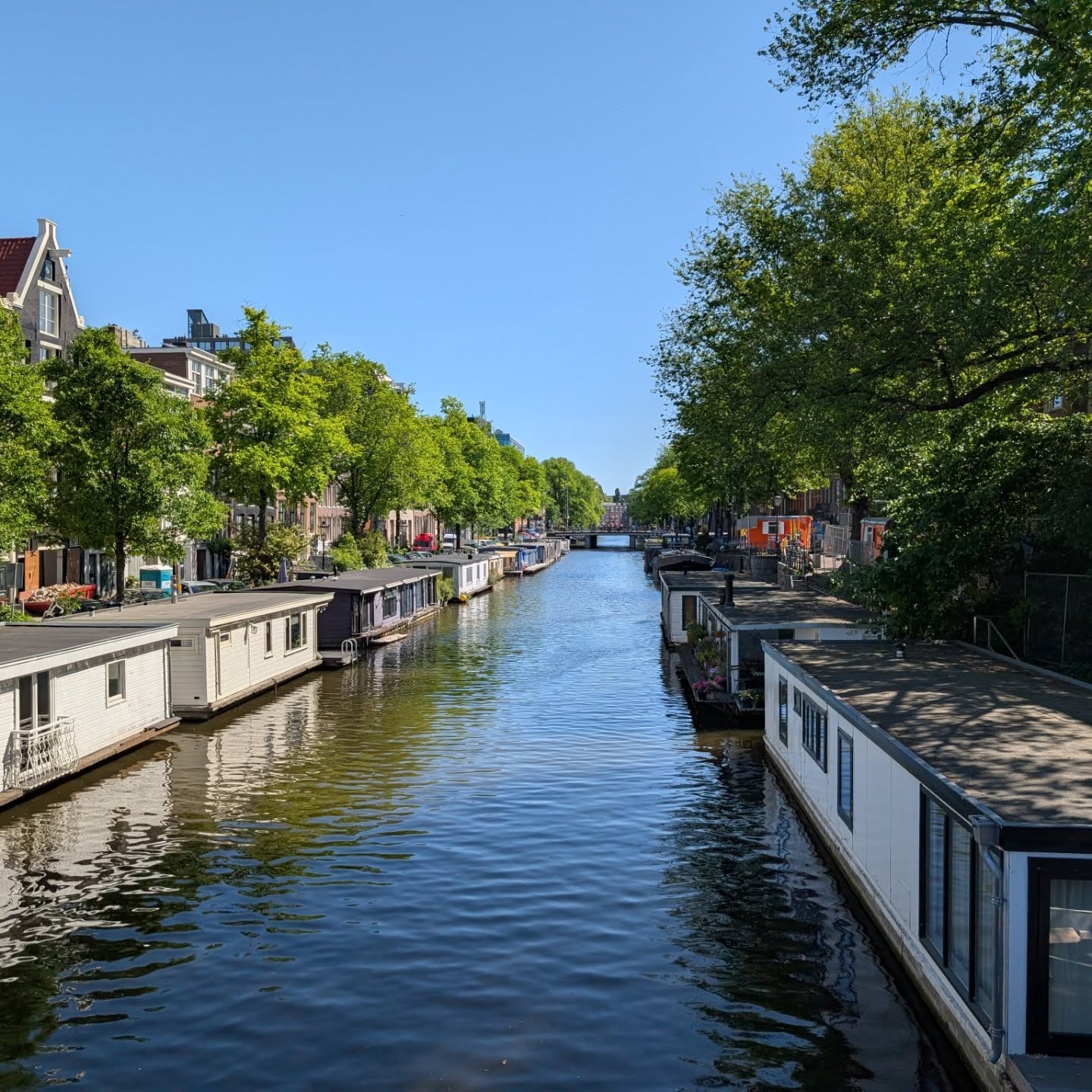
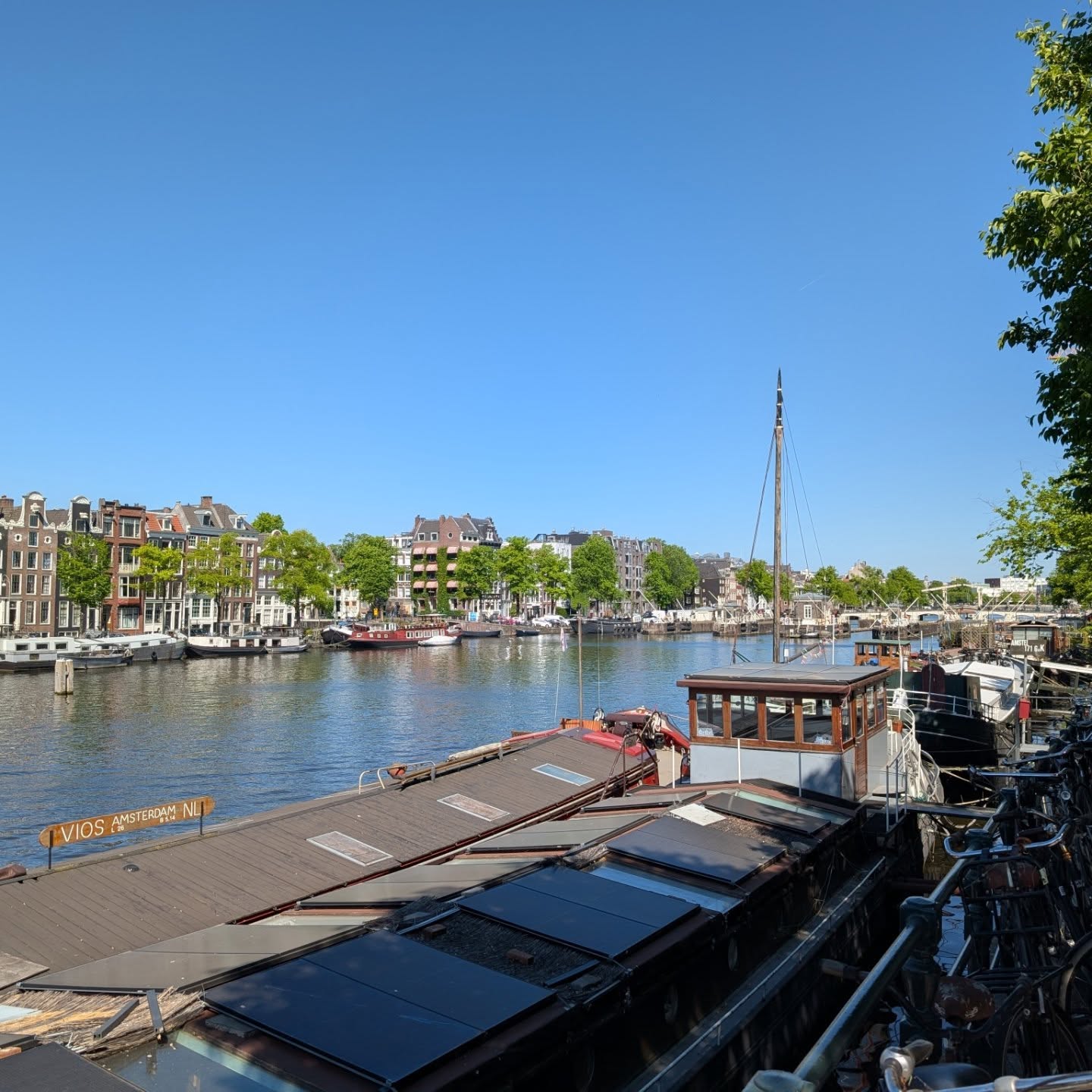
We made a point to visit the Centraal Station area and find the IJboulevard bike parking garage — a massive multi-level structure that holds over 7,000 bikes. For people from the US, protected bike lanes exist in even the most bike-friendly American cities, but they're still the exception. In Amsterdam, they're everywhere — and bikes don't just have their own lanes, they often have the right of way. Cars, trams, and pedestrians all work around cyclists. It's not just infrastructure. It's a philosophy. It's how biking should be, and it gave us a real preview of what our week of riding through the Netherlands was going to feel like.
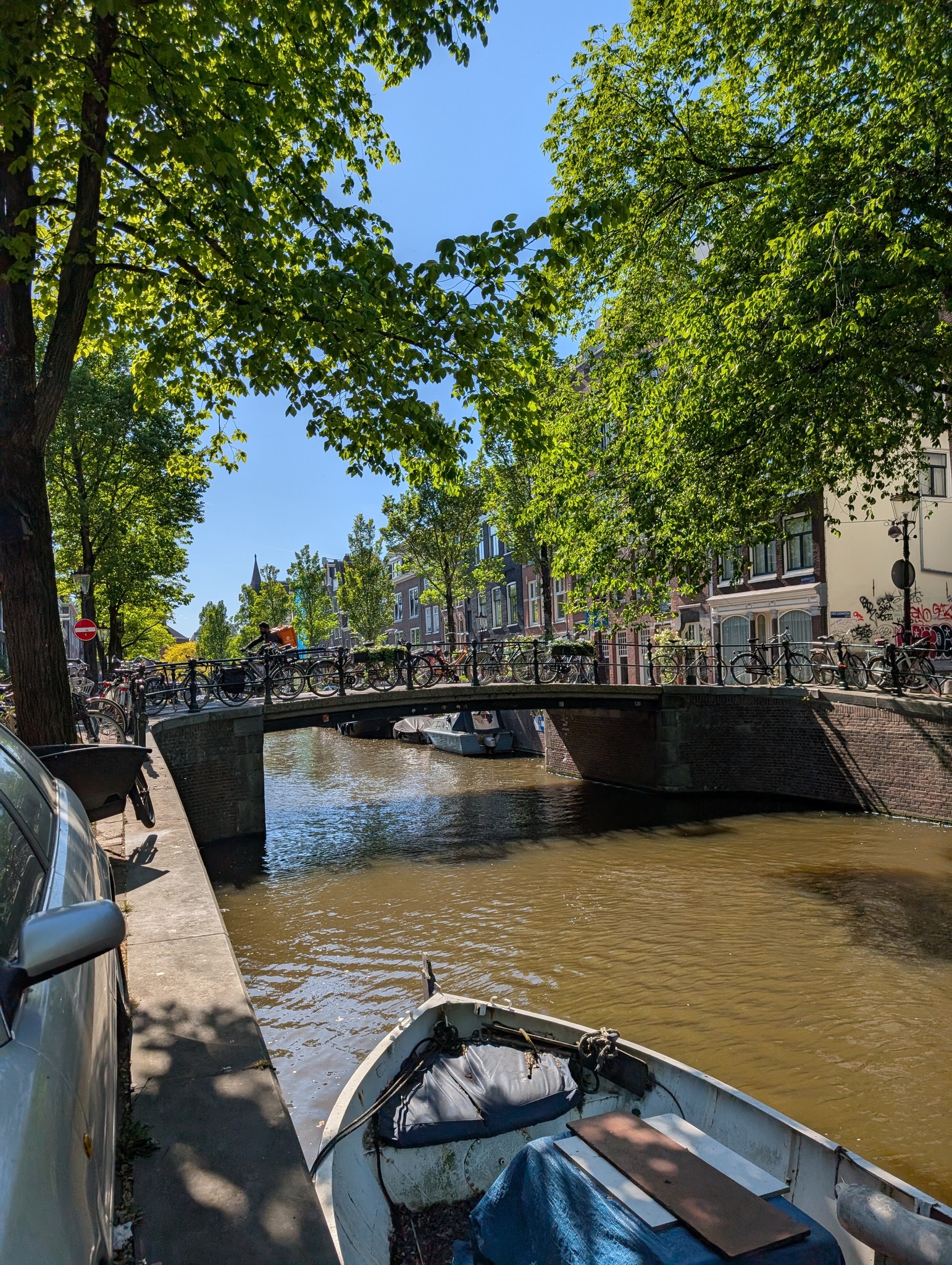
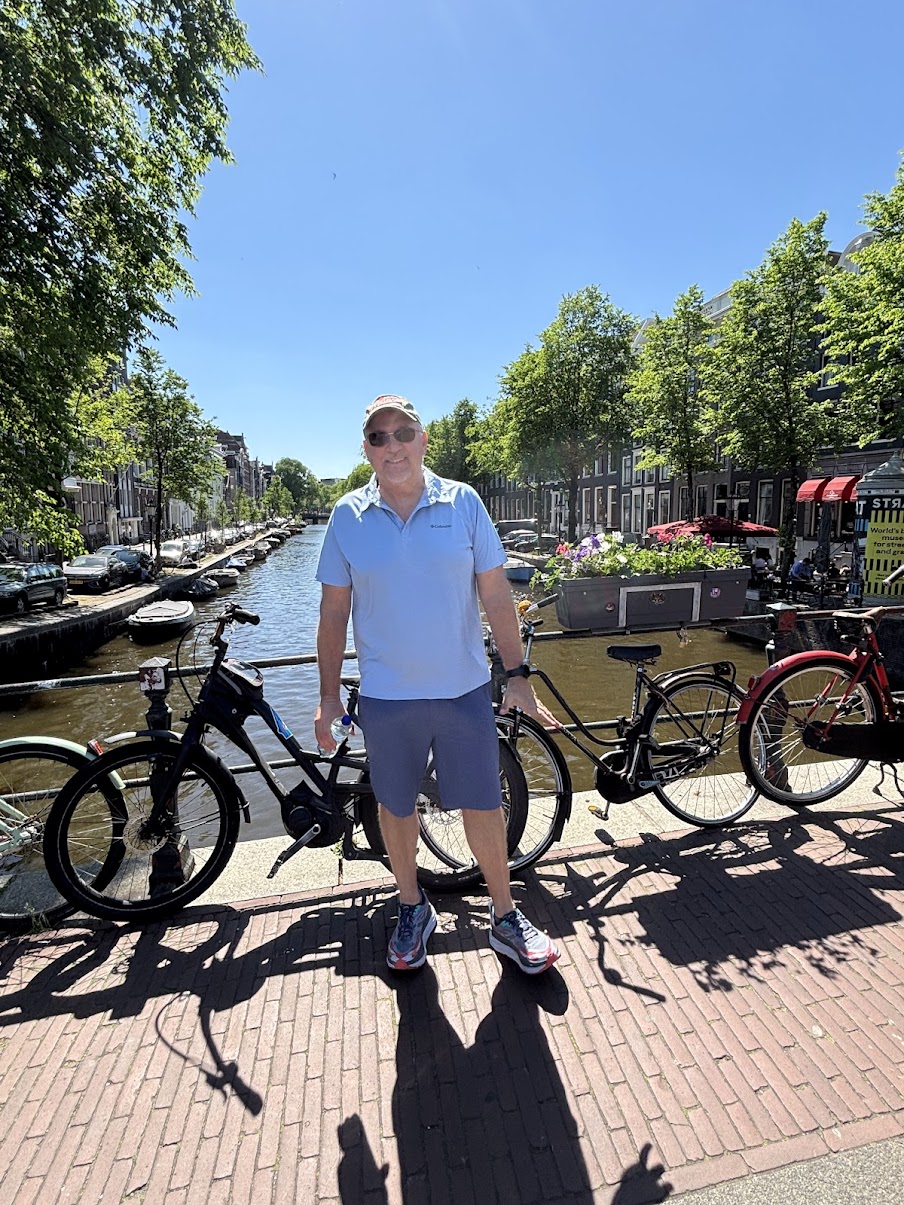
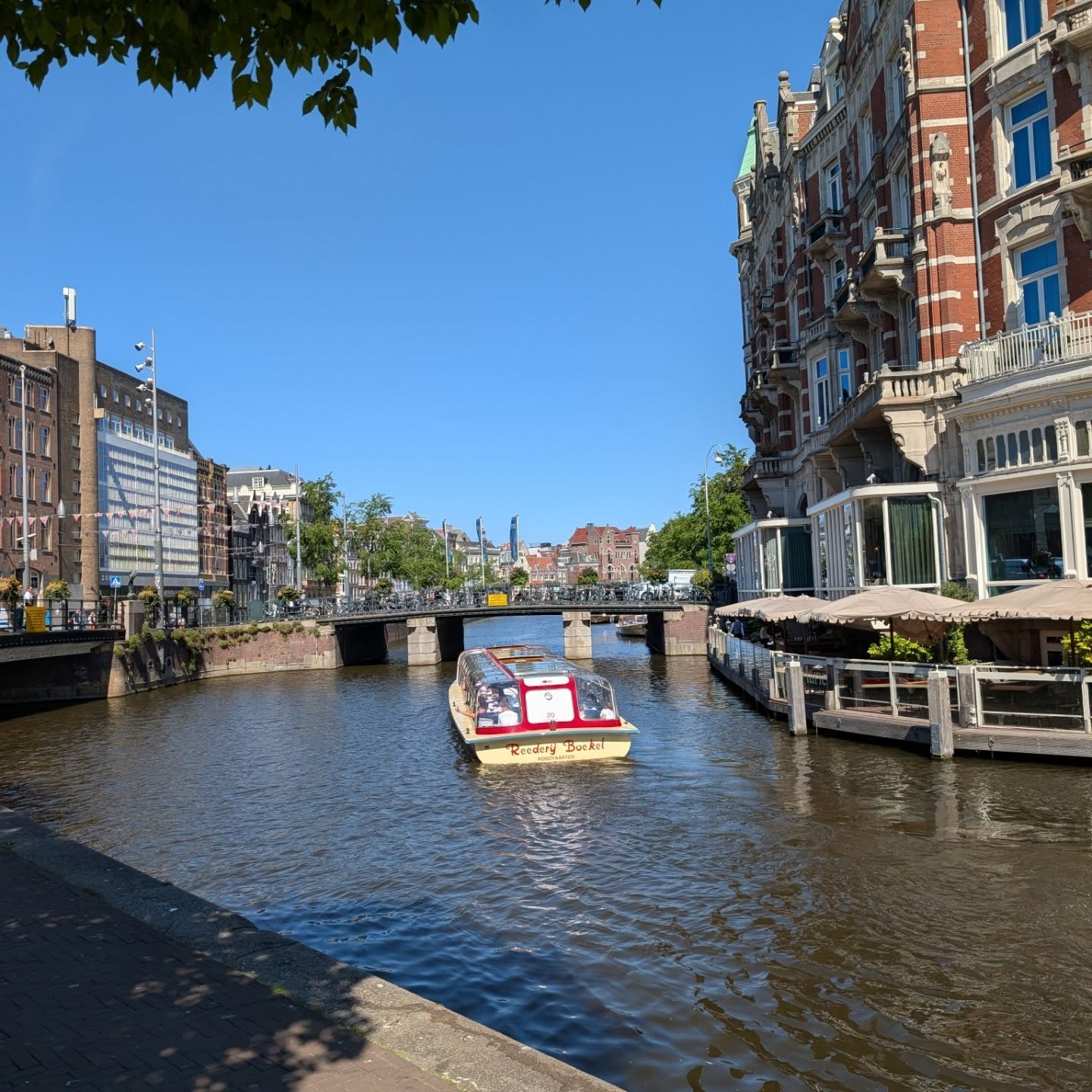
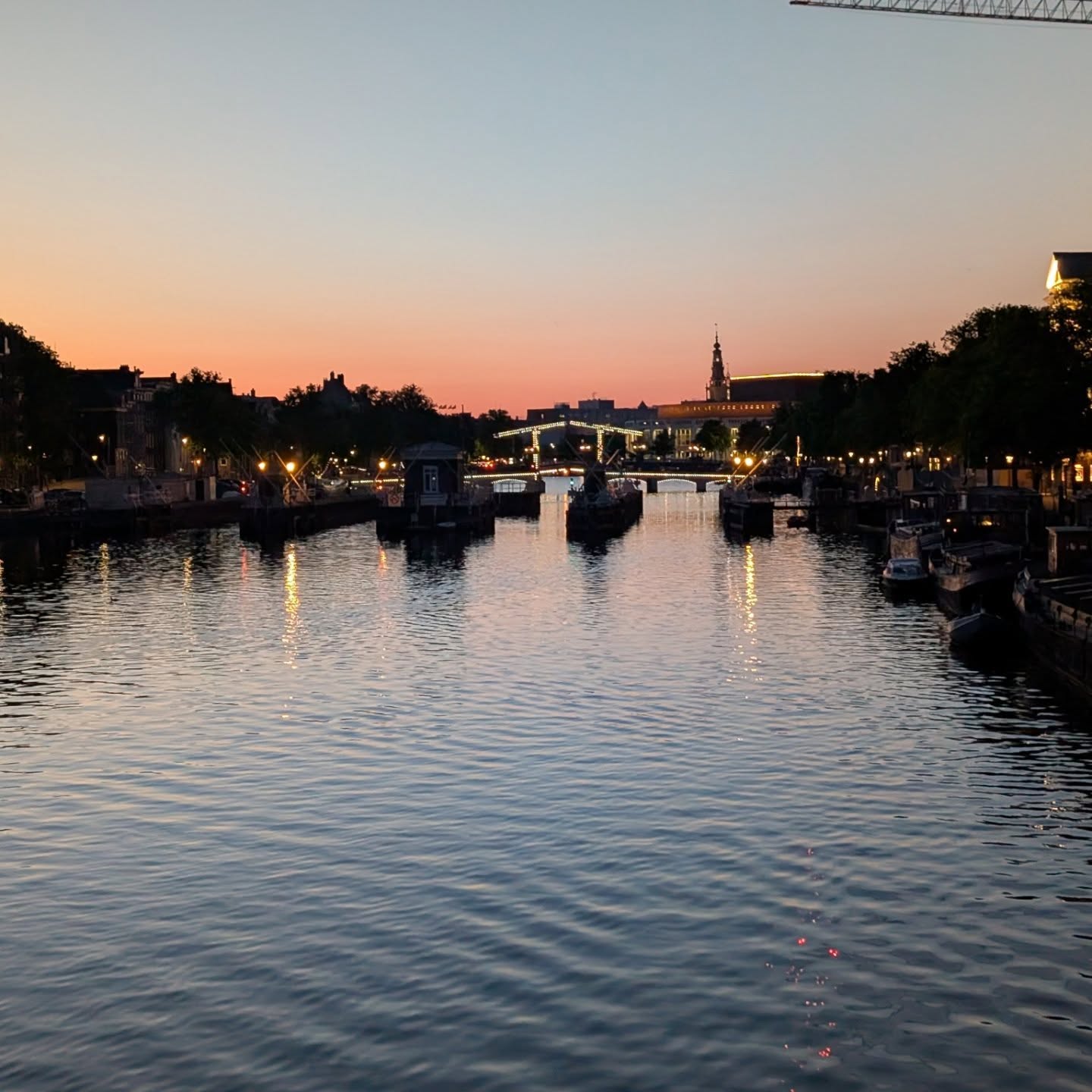
The evening wound down with a walk along the Amstel River at golden hour — the Magere Brug (Skinny Bridge) glowing in the distance, its lights reflected in the still water. Amsterdam at dusk is one of those things that's hard to describe. You just have to be there.
Day Highlights
Train with bikes · On foot · By bicycle · Canals · Belfry · Belgian beer
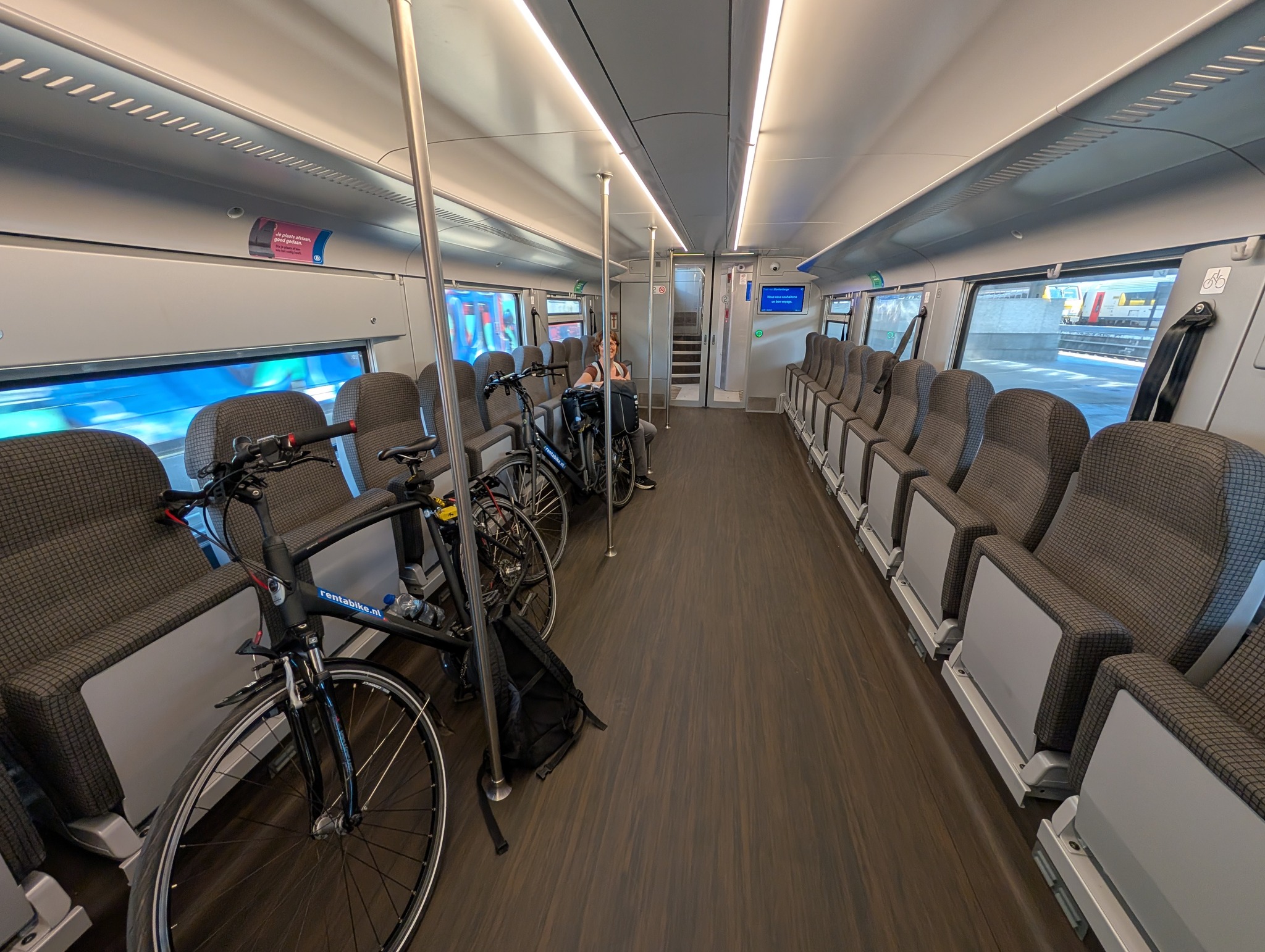
Getting to Bruges required a bit of logistics: rent the bikes in Amsterdam, load them onto the train, ride south. What we didn't anticipate was the luxury of having an entire dedicated bike carriage to ourselves — just our two rentabike.nl bikes, panniers, and three hours of Dutch and Belgian countryside rolling past the windows. Anyone who's wrestled bikes onto packed Italian or Austrian trains will appreciate how civilized this felt.
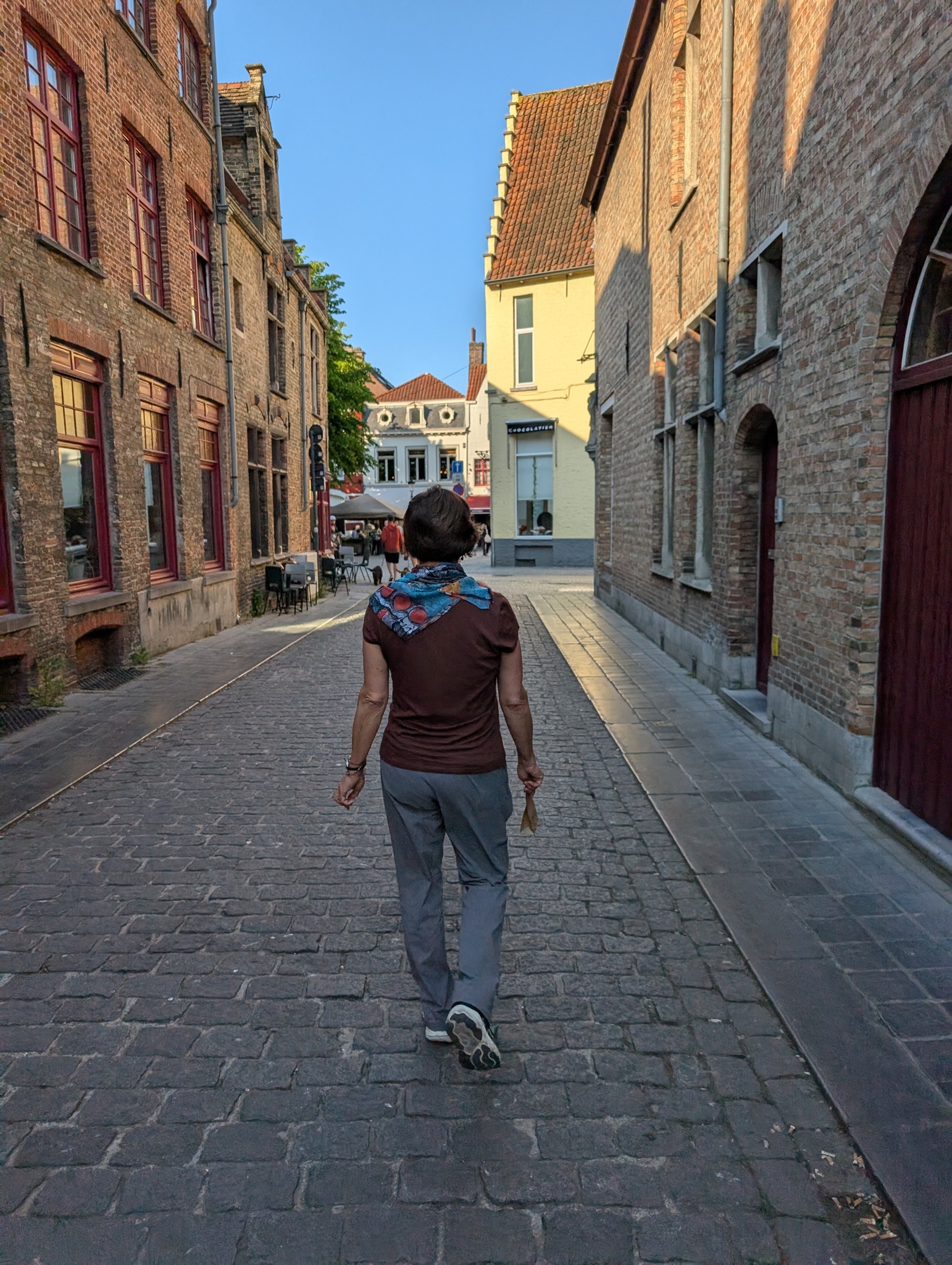
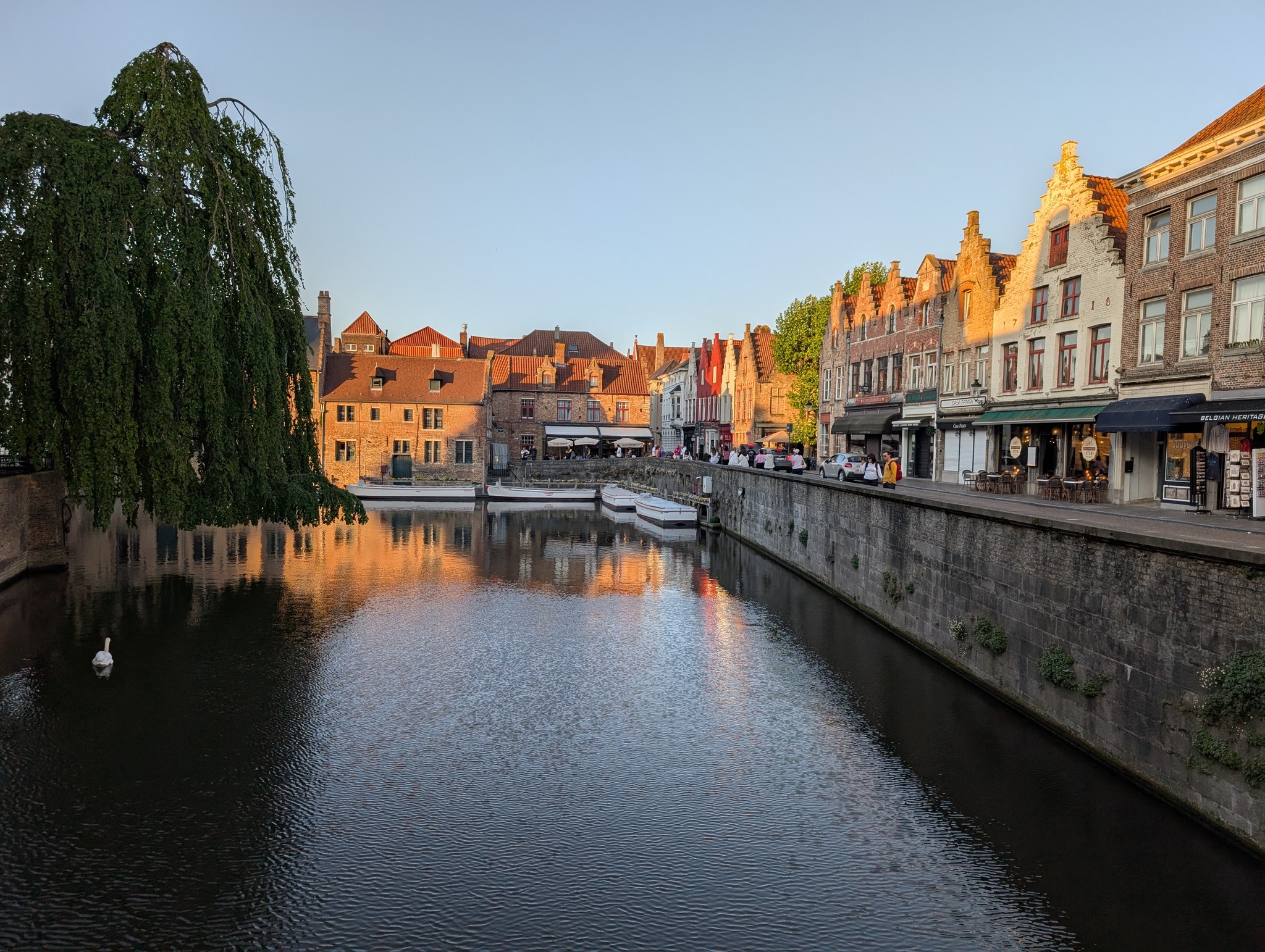
We arrived in Bruges in the afternoon and biked straight from the train station to our accommodations. Right from those first pedal strokes through the old city, it was clear this place was something different. The cobblestone streets, the medieval facades, the way the light caught the brick — it had the quality of a film set, except completely real. Some streets were so quiet and perfectly preserved that it felt almost surreal, like riding through a living postcard from the Middle Ages.
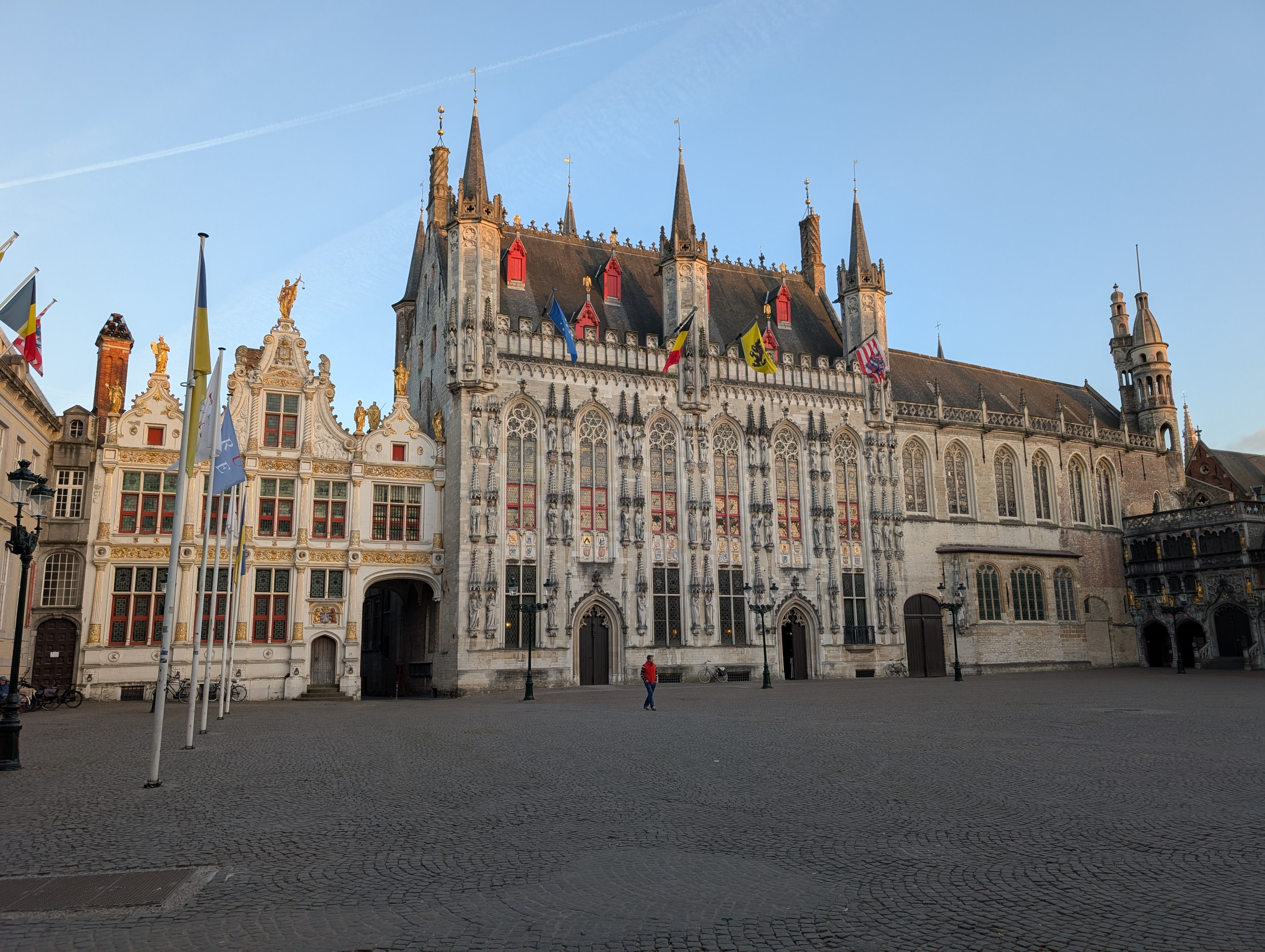
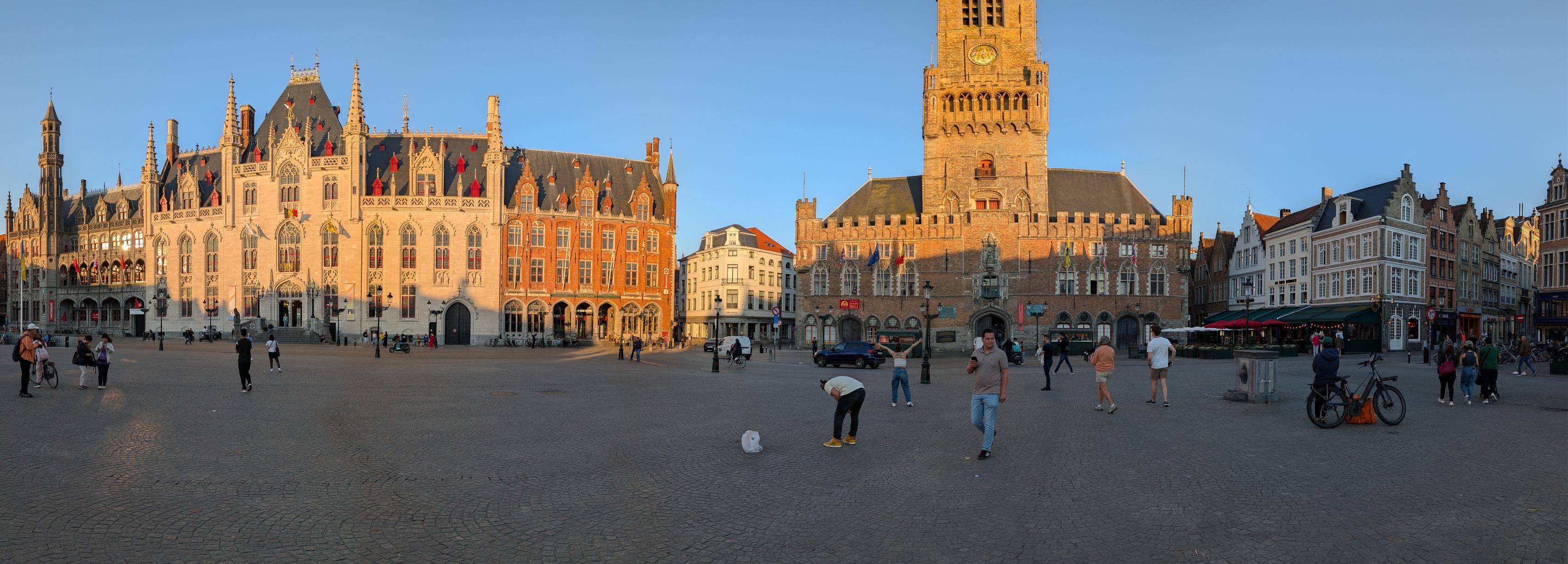
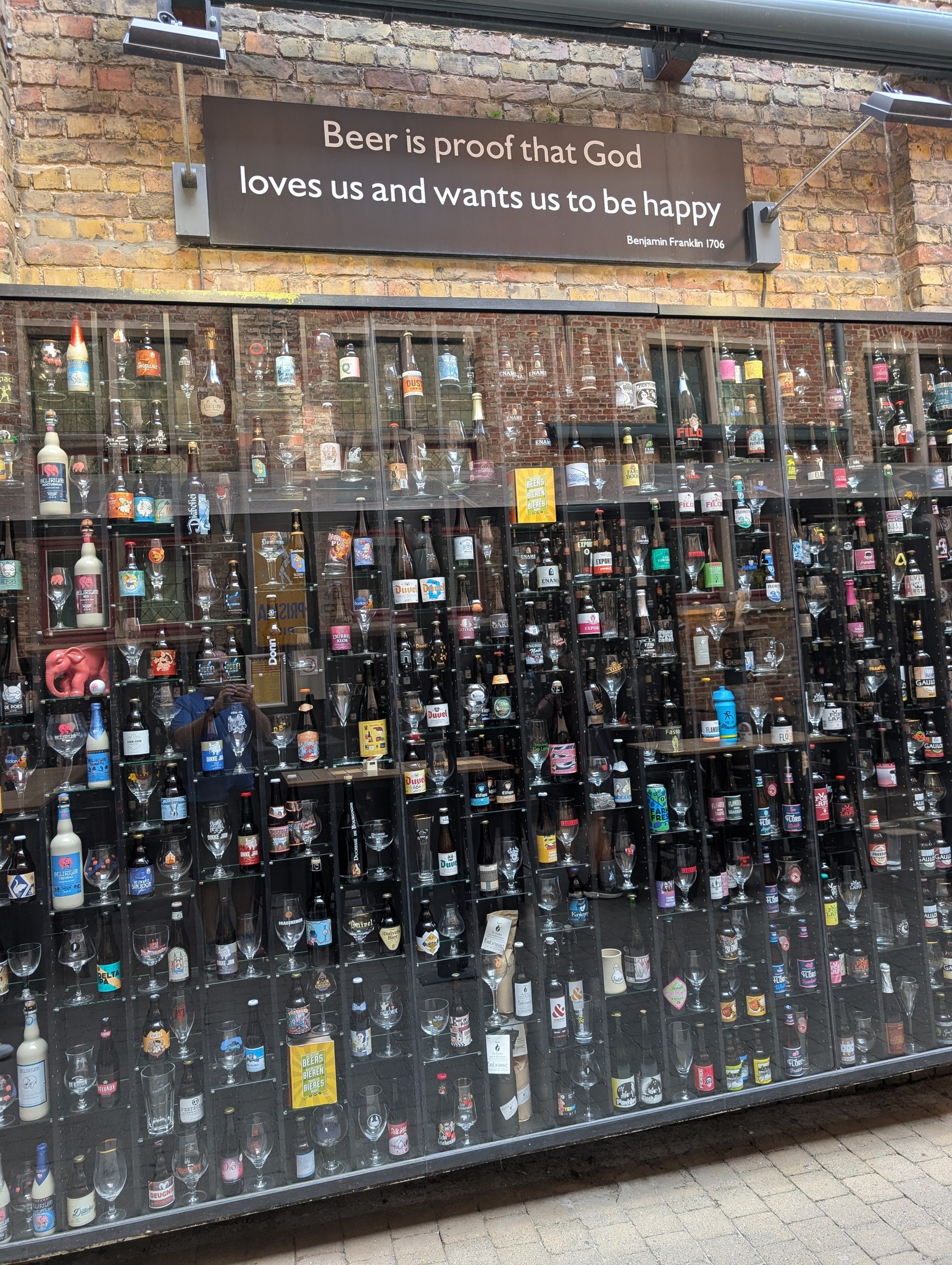
The first day we explored entirely on foot. Belgium is famous for a handful of things — beer, chocolate, and medieval architecture chief among them — and Bruges delivers on all three within about a two-block radius. The Markt, the city's central square, is anchored by the 13th-century Belfry — 83 meters of Gothic tower that has watched over the city for 800 years. At golden hour the whole square glows amber. Horse-drawn carriages clatter across the cobblestones, and somehow it doesn't feel like a tourist gimmick. In Bruges, it just feels like Tuesday.
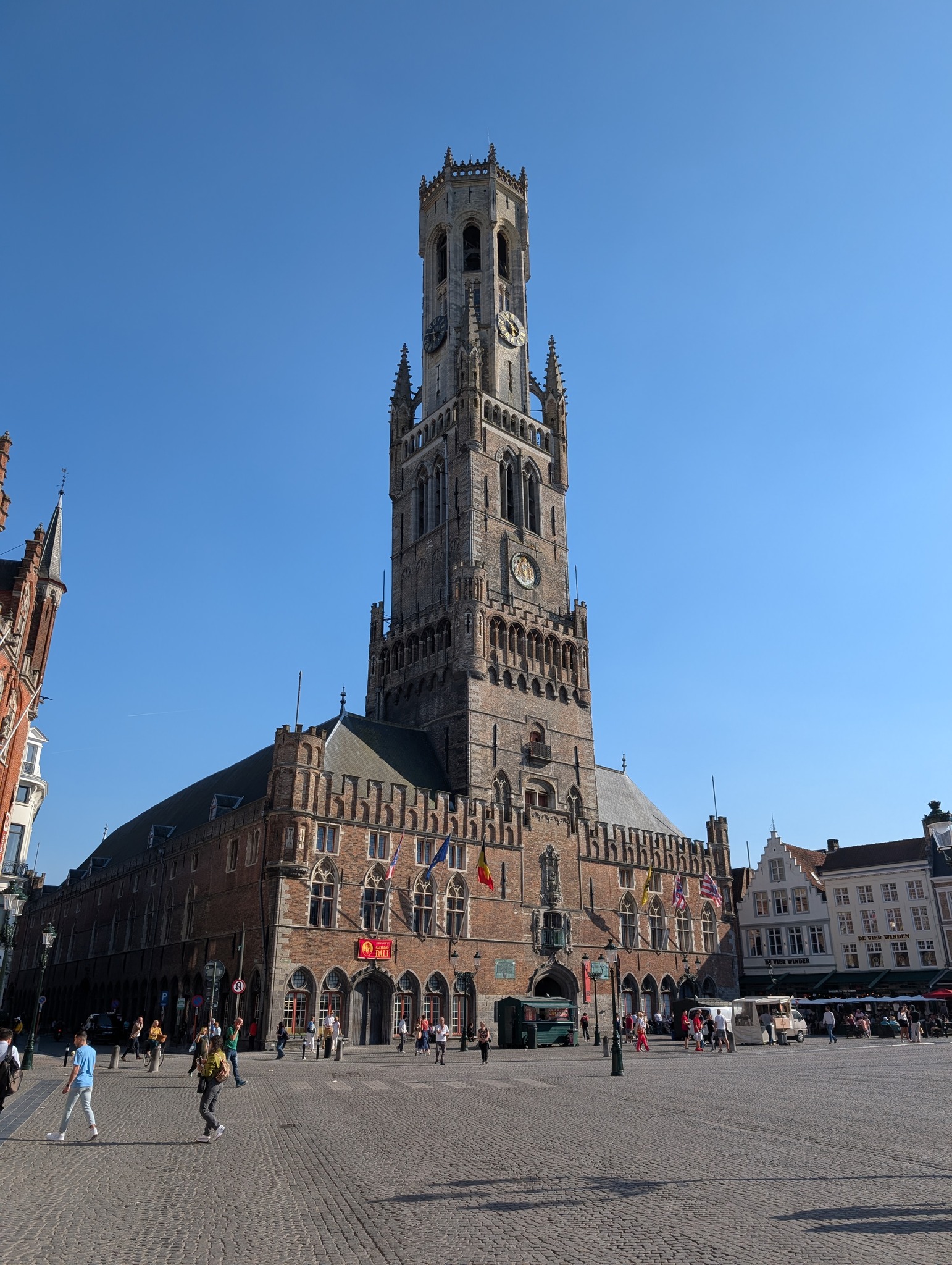
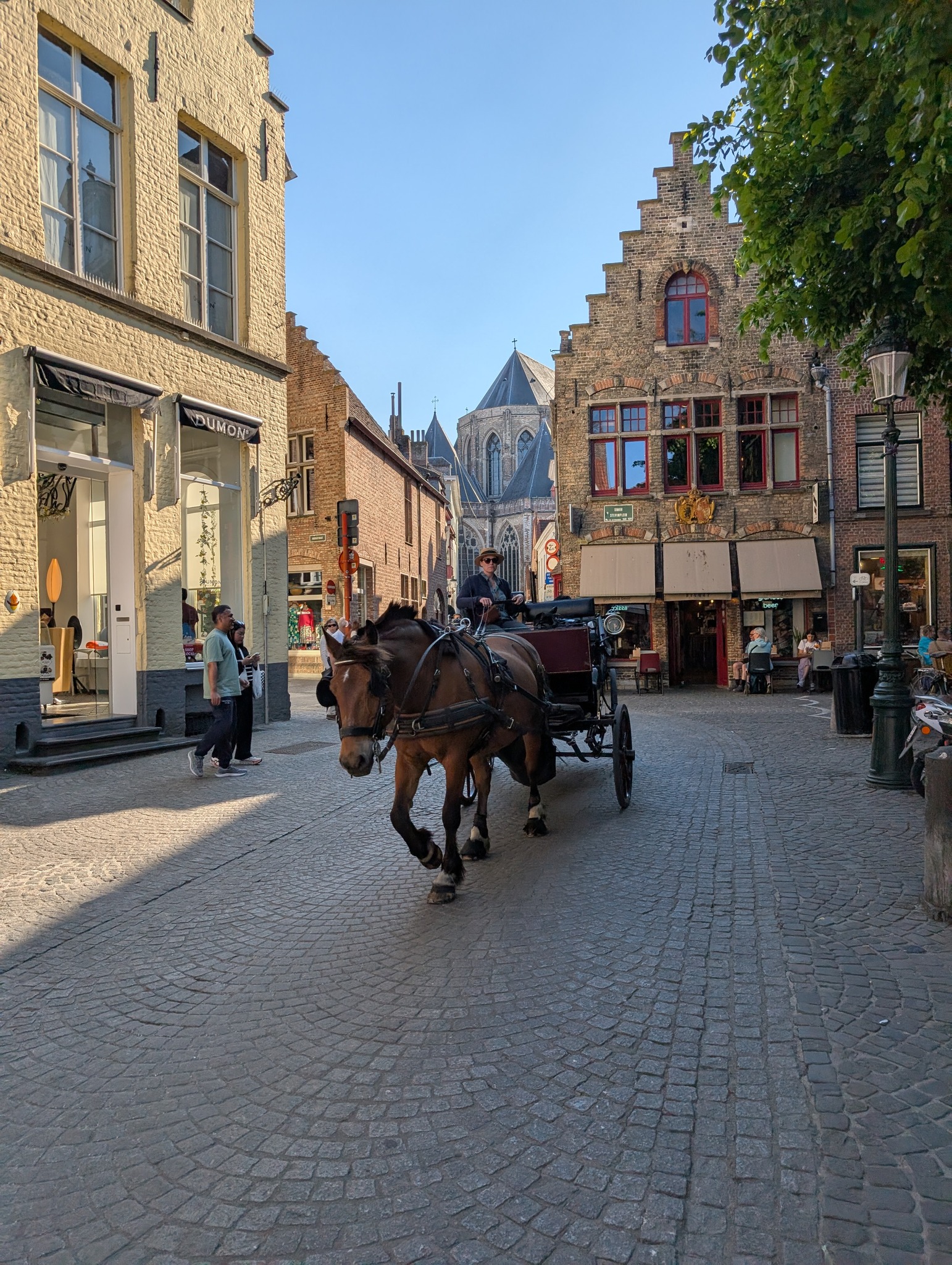
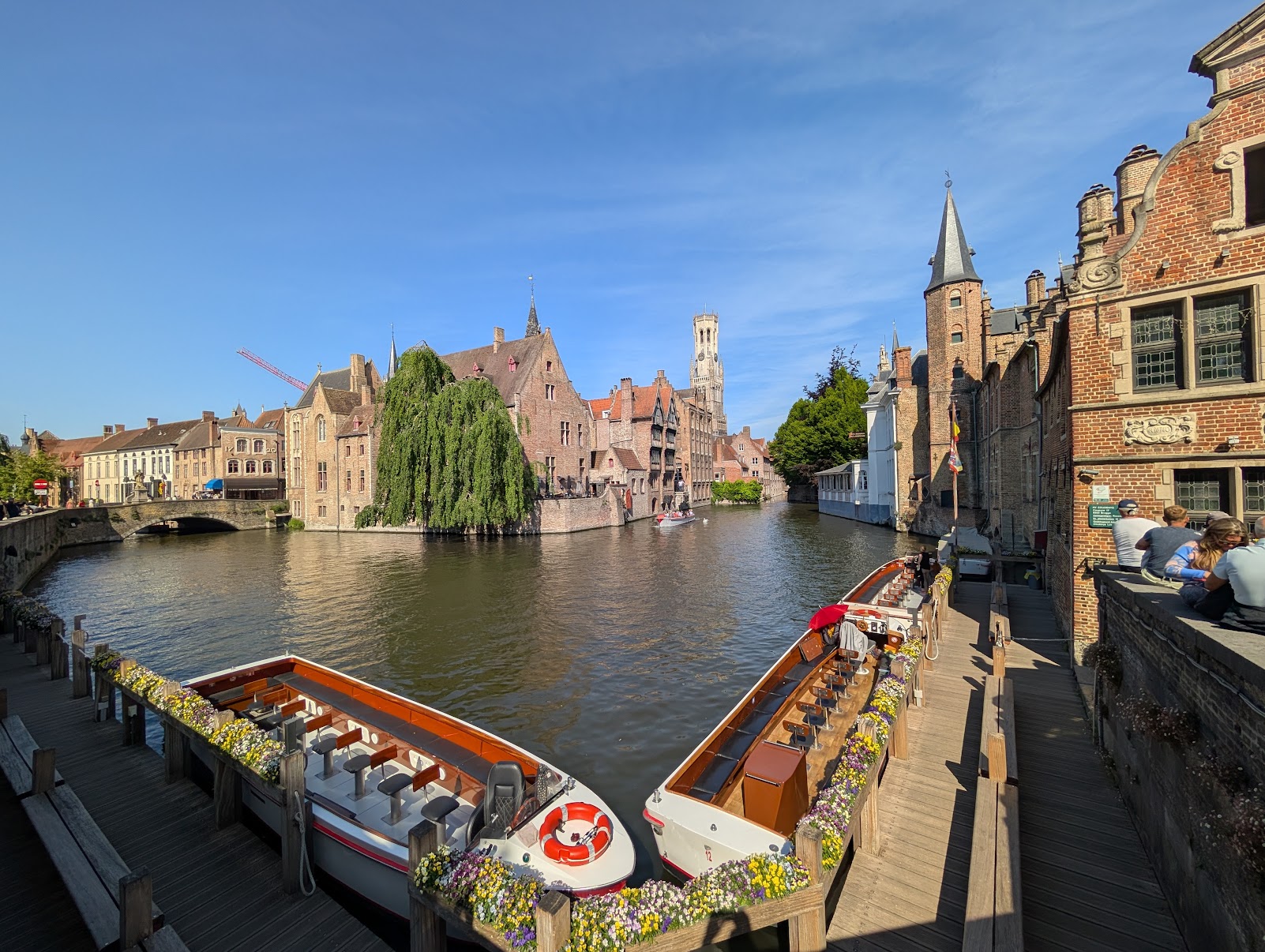
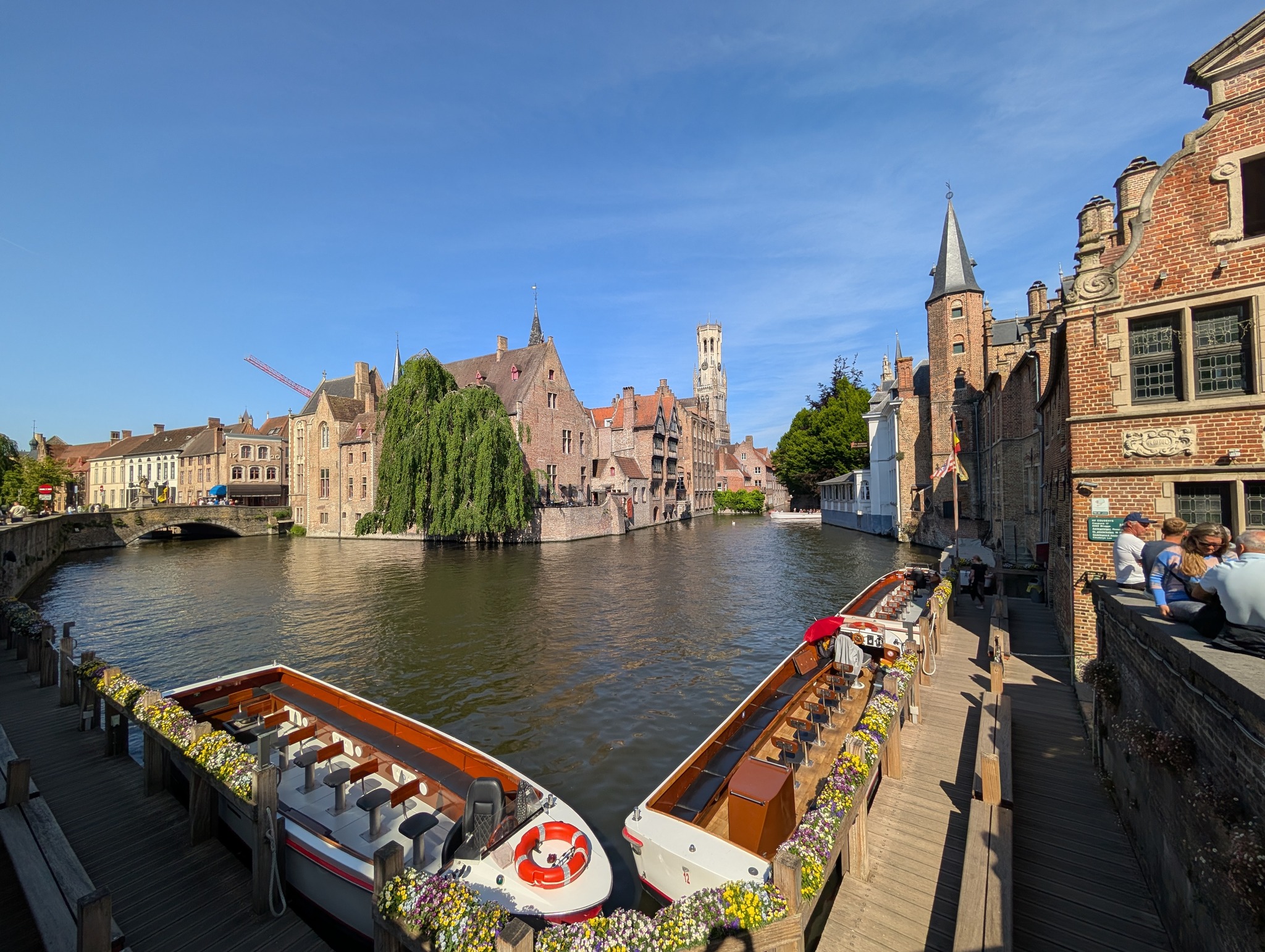
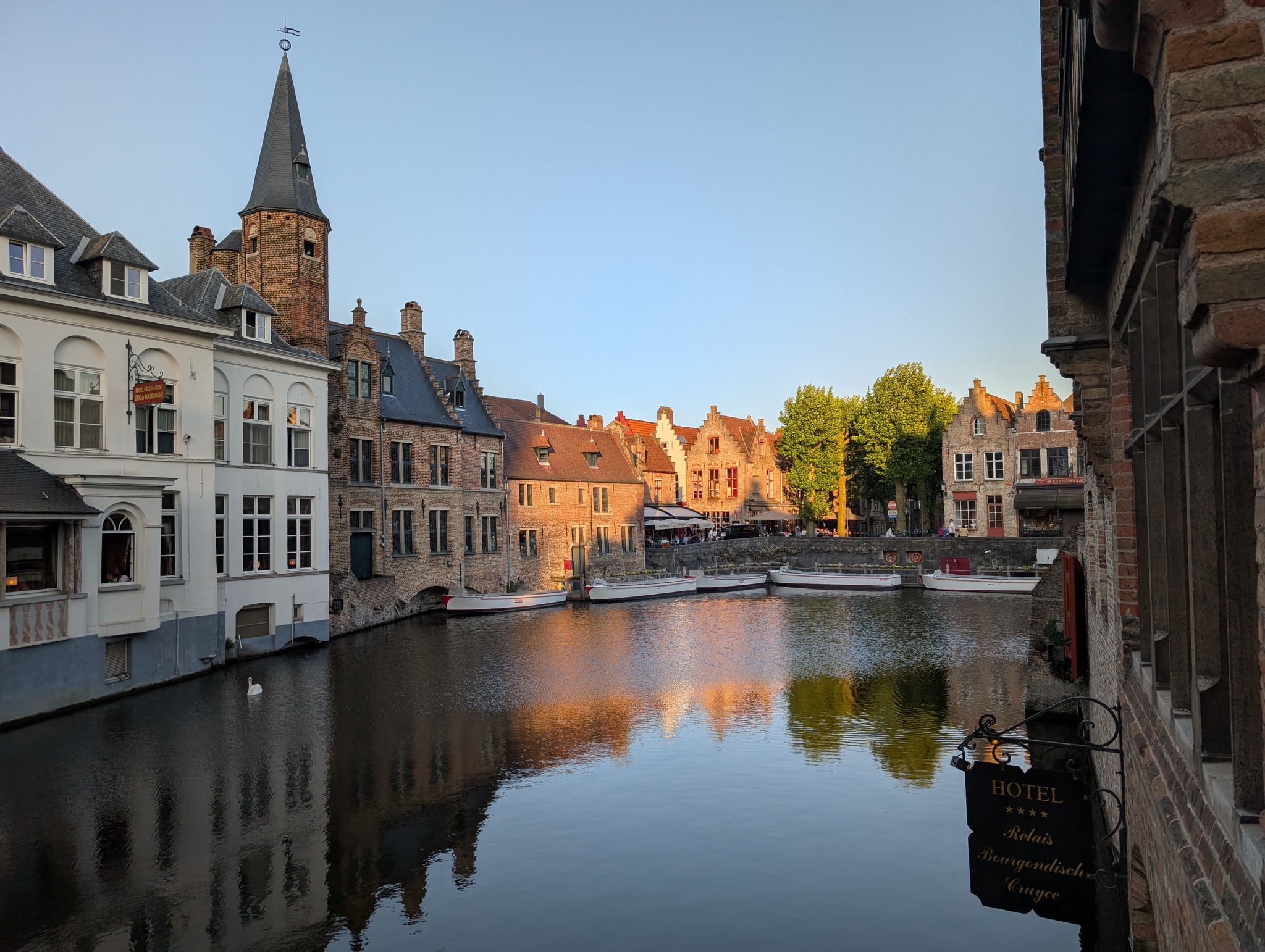
The second day we explored by bicycle, weaving through the side streets and riding the full perimeter of the old city along its canal ring. Bruges' waterways are quieter and more intimate than Amsterdam's — no houseboats, far fewer tour boats, just medieval brick reflected in still dark water and swans drifting past stone arch bridges. The Rozenhoedkaai — where the canal bends past step-gabled medieval buildings with the Belfry rising behind — is probably the most-photographed view in Belgium, and it earns every photo. Riding the perimeter gave us a completely different perspective on the city's scale and beauty.
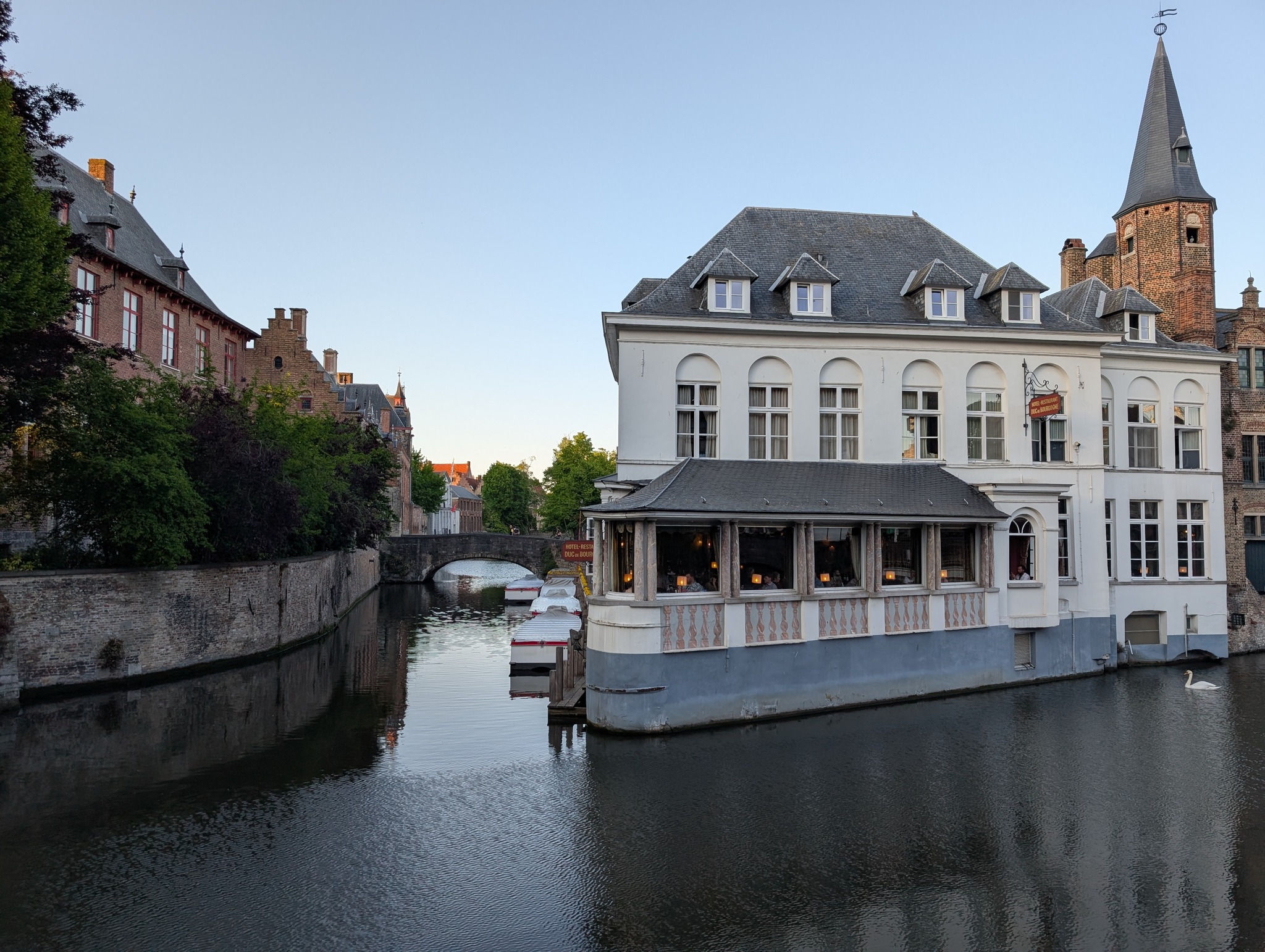
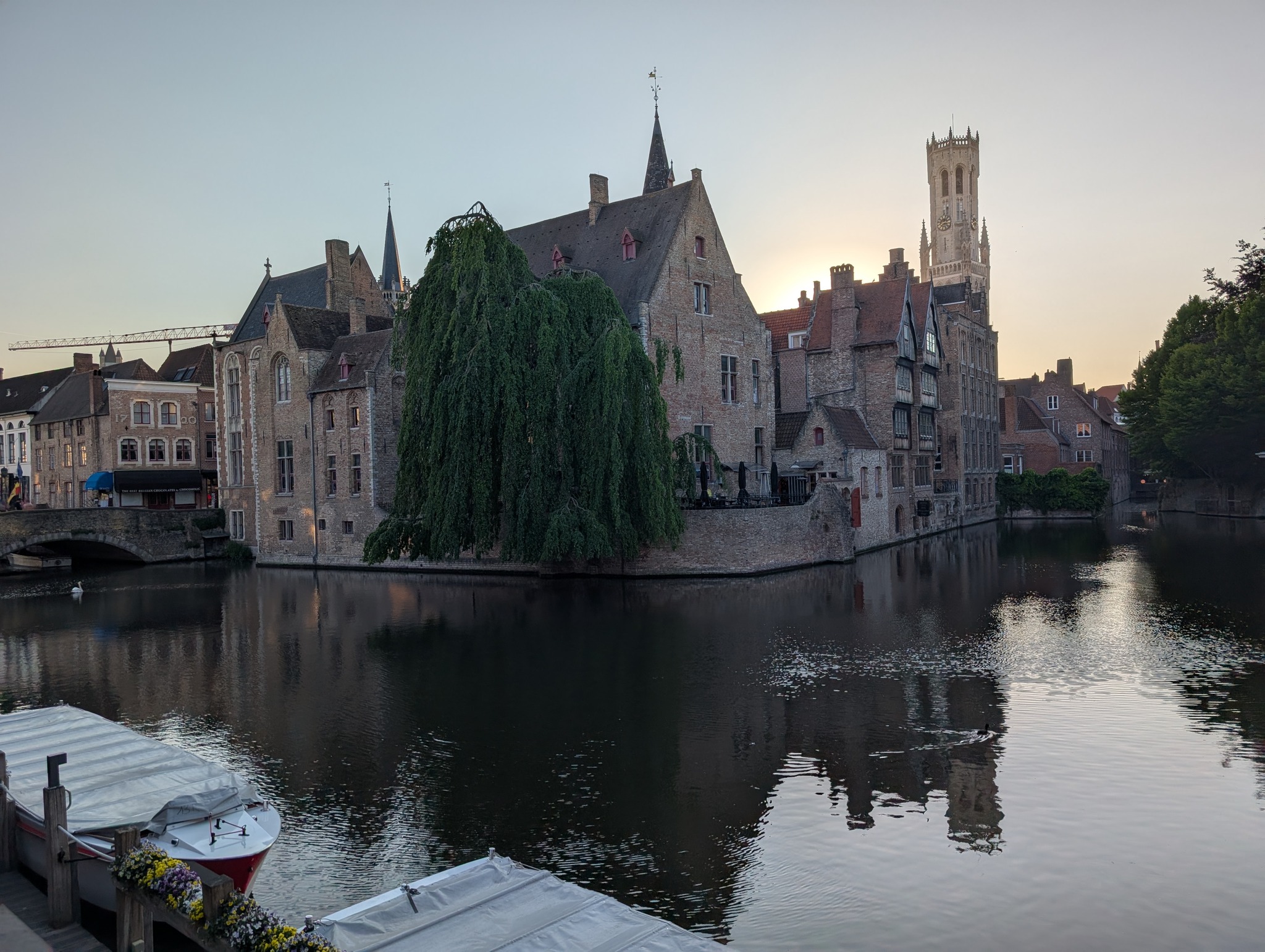
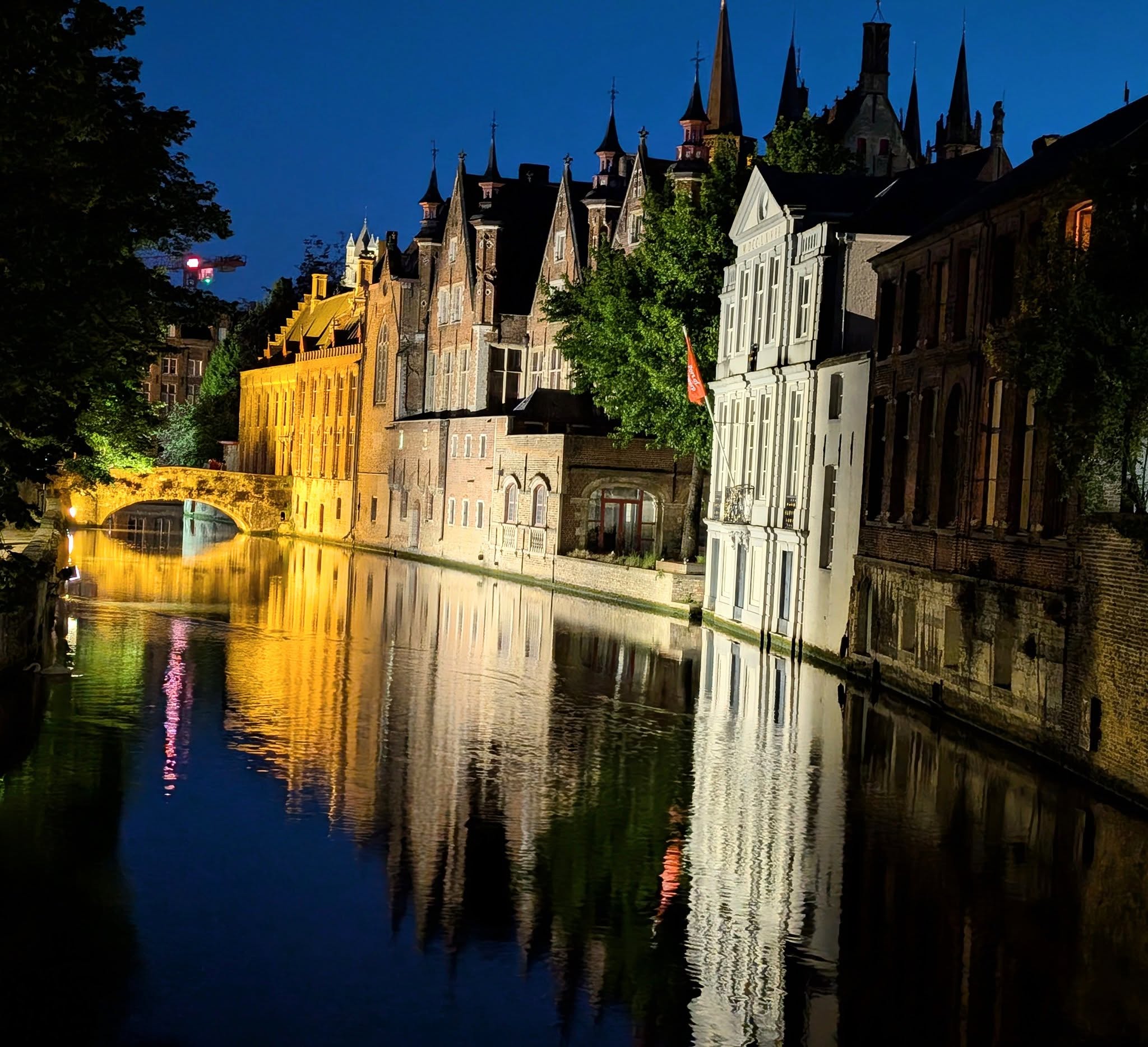
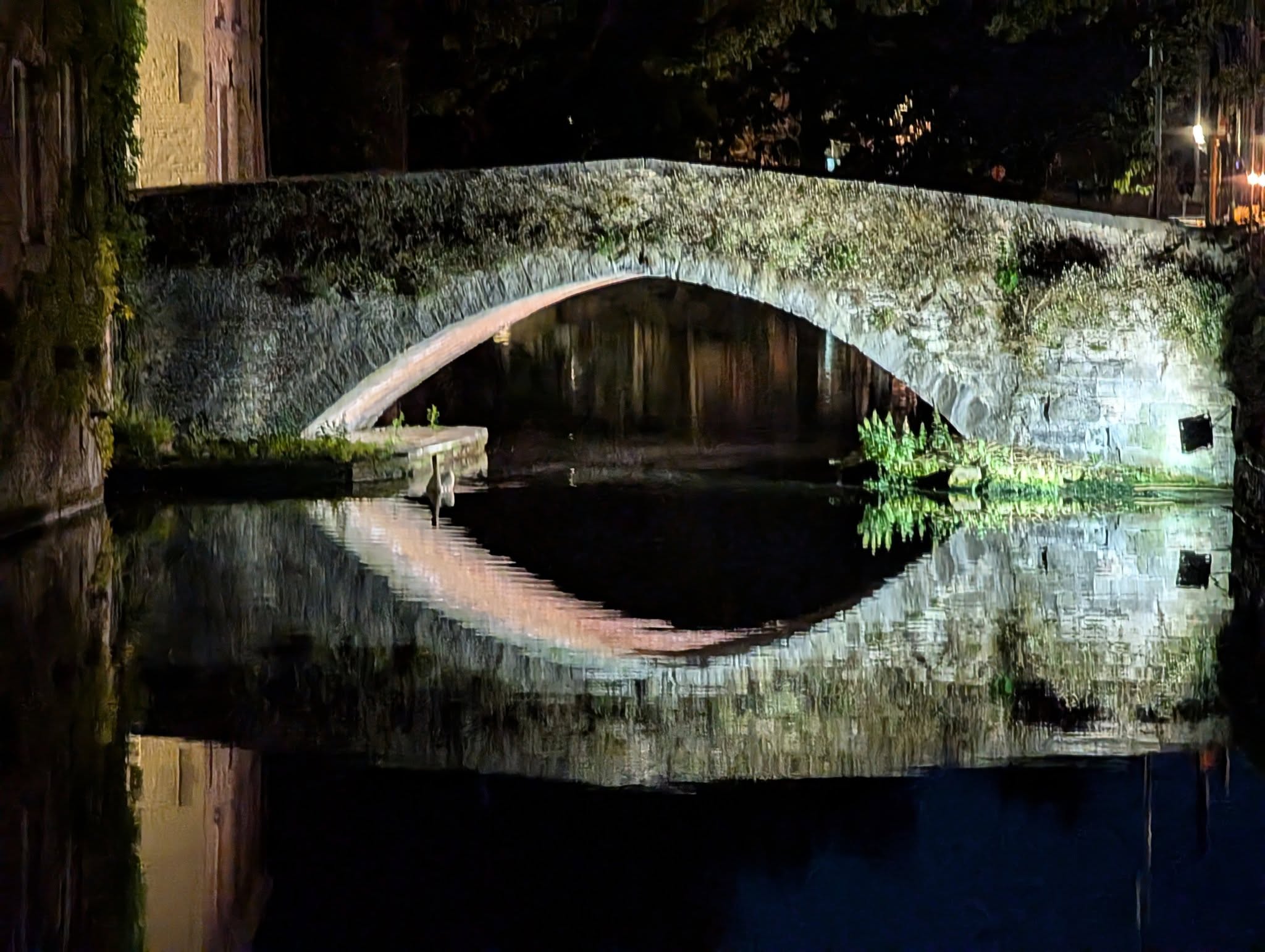
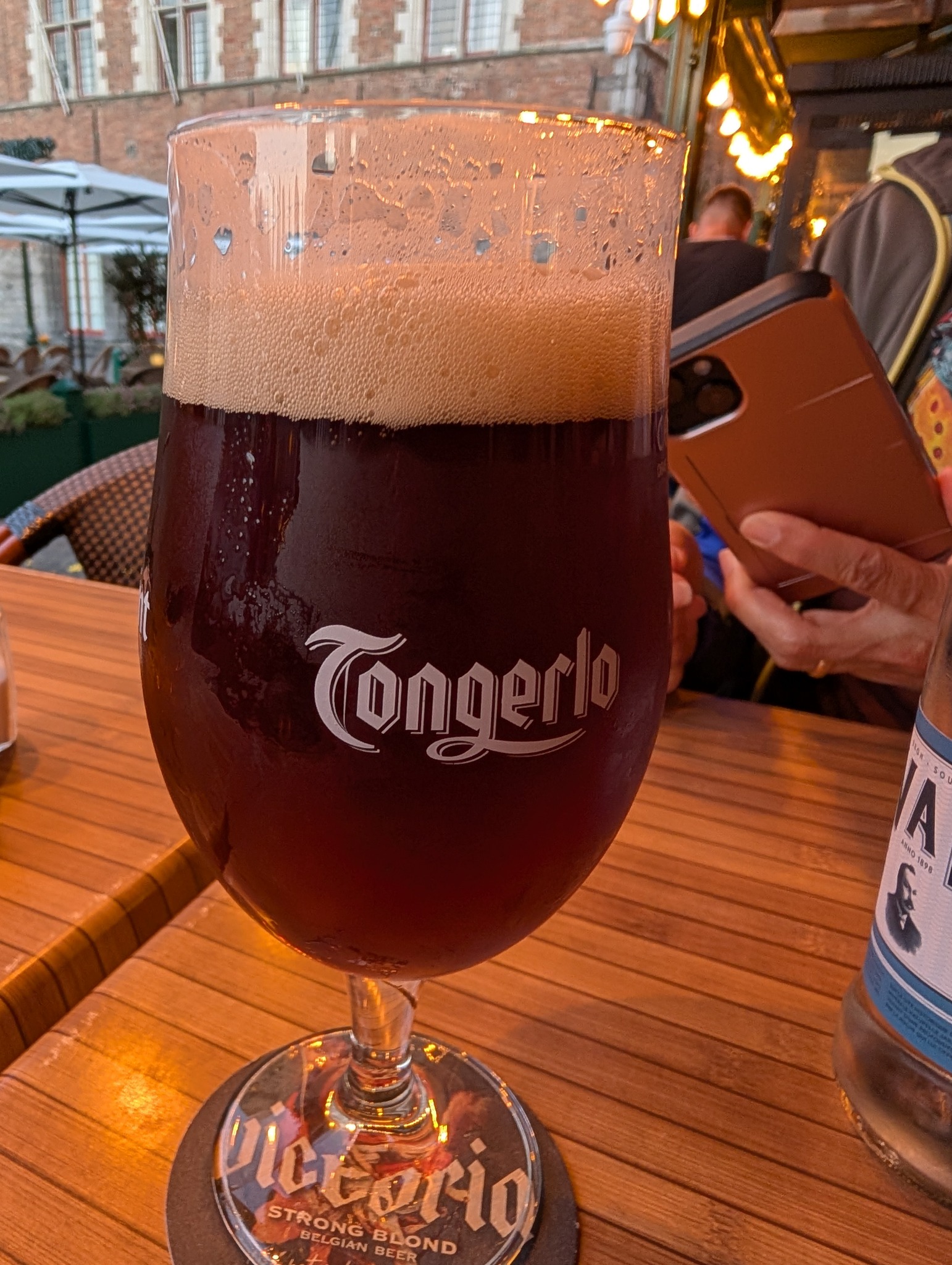
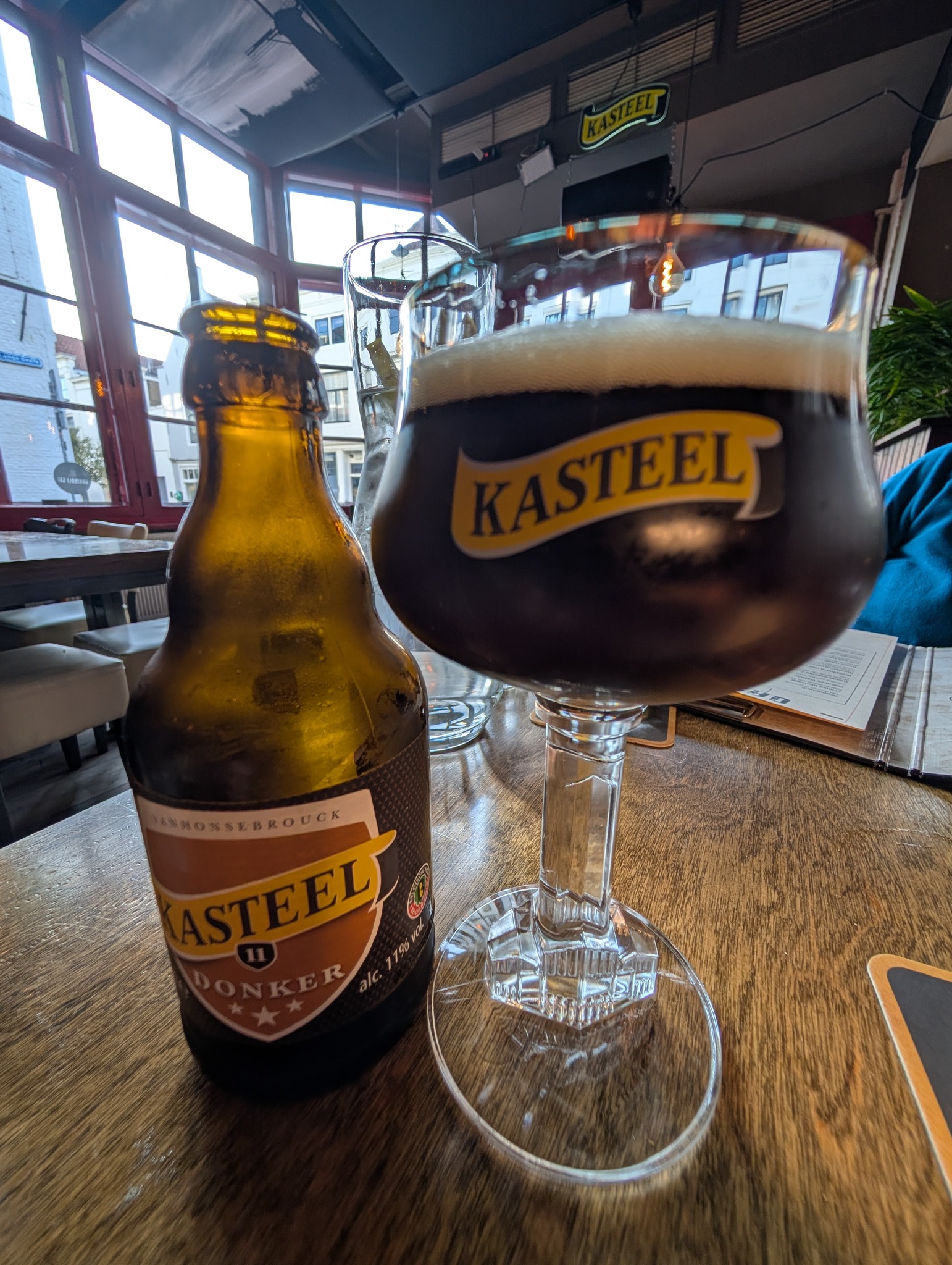
At night, Bruges transforms entirely. The facades are lit from below, the canal water goes glassy, and the whole city takes on a glow that seems almost theatrical. We stayed out late, stopping for a Tongerlo dark abbey ale at an outdoor café. Beer #3 of the goal of 15. Belgium was already making a strong case.
Highlights
~37 miles · Flat terrain · North Sea ferry crossing
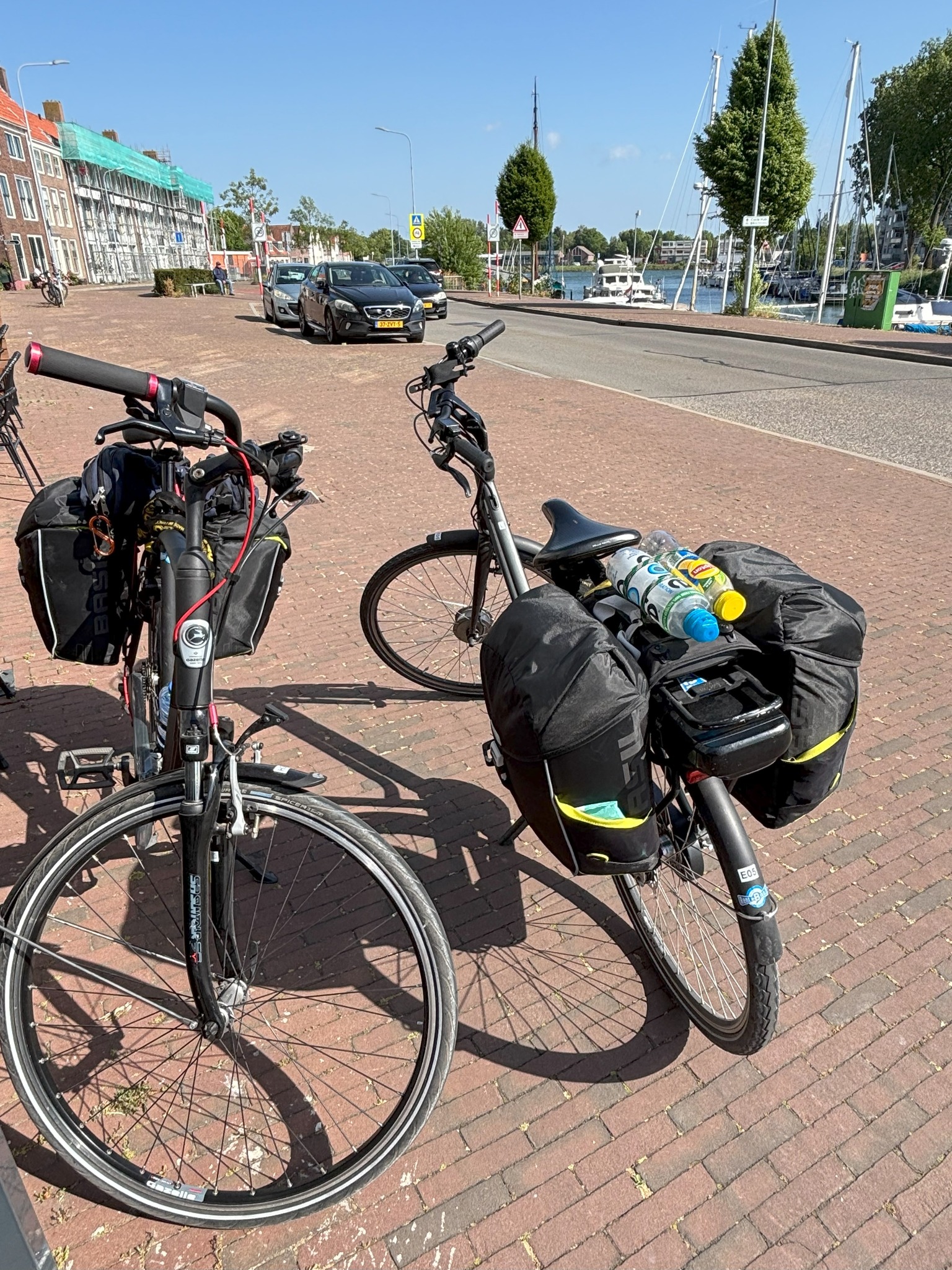
After a few days in Bruges, it was finally time to start our bike tour. Our plan wasn't to rush back to Amsterdam or take the most direct route — we wanted to meander through towns and countryside at our own pace over the course of a week or so. Armed with bikes rented in Amsterdam (and carried south by train), panniers packed with just the necessities and a couple changes of clothes, and a cycling app called Fietsknoop for route planning, we set off.
This was the only day we had fully mapped out in advance. Everything else we'd figure out as we went.
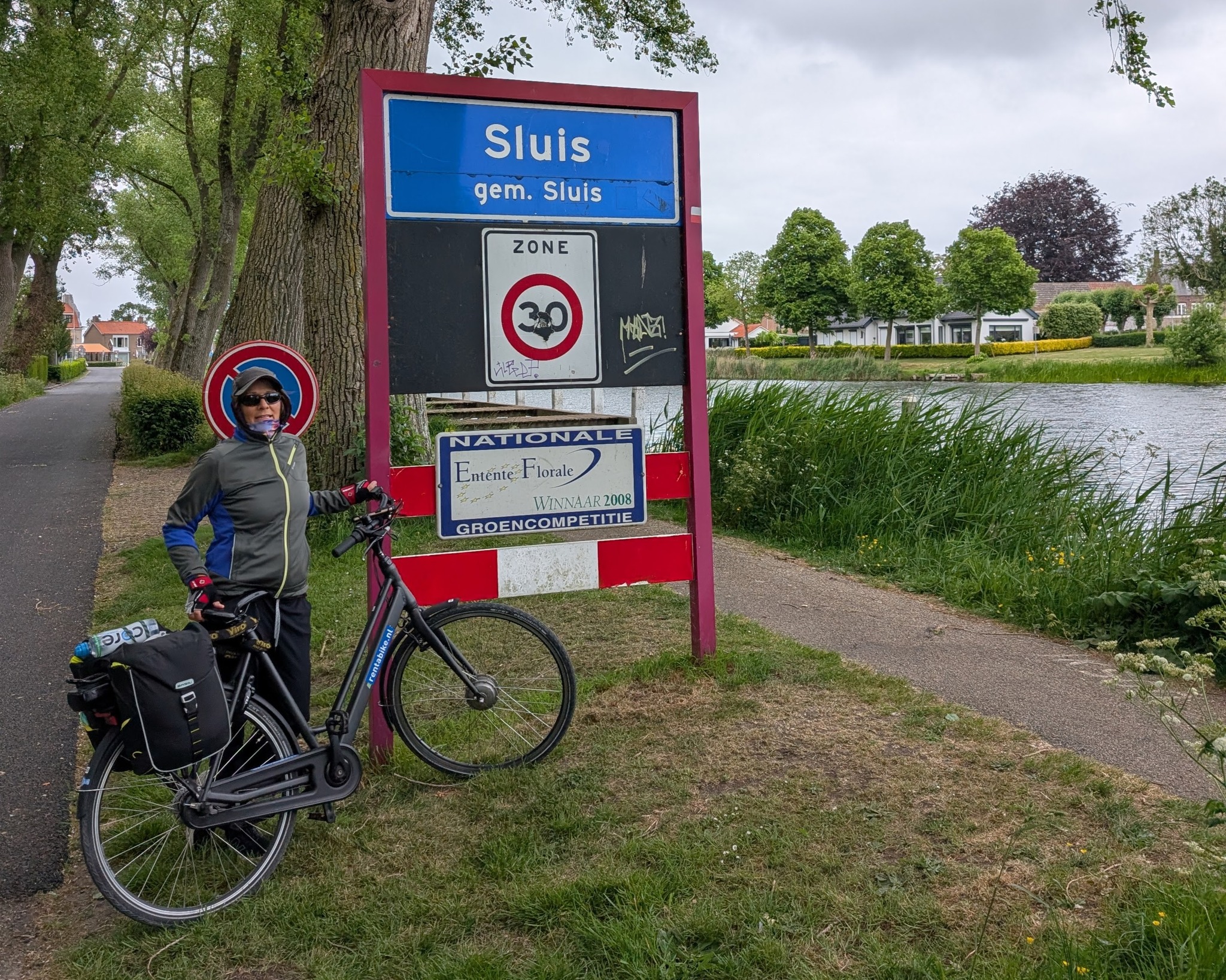
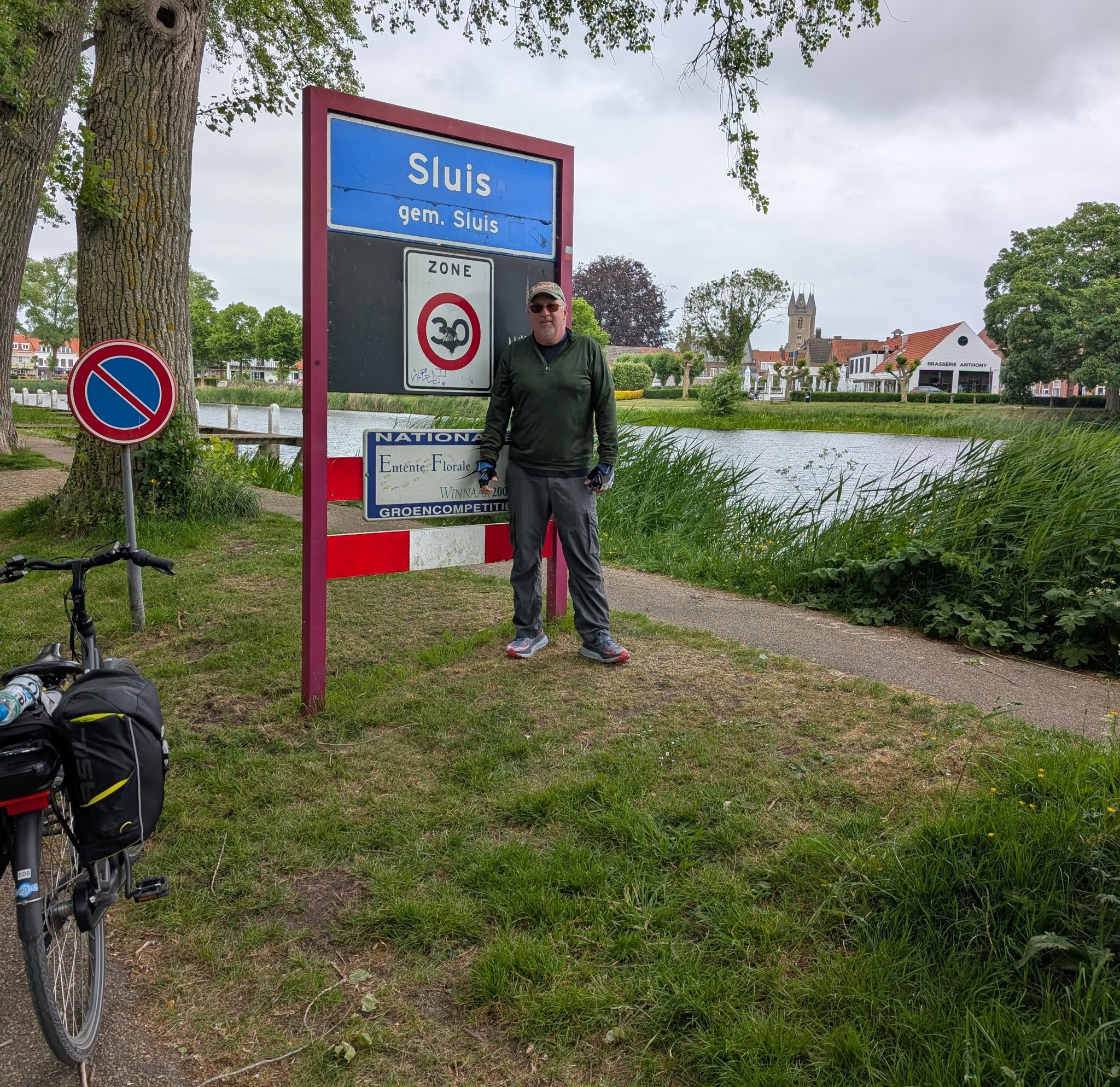
Our first stop was Sluis — a small Dutch border town and our official crossing out of Belgium. As it turns out, the word "sluis" means lock or sluice gate in Dutch, used to control water flow in canals and rivers. My family name — Vanderslice — derives from "Van der Sluis," meaning "from the sluice." While my ancestors weren't from this exact town (they emigrated from the Netherlands to America in the late 1690s, and the name eventually became Vanderslice), we couldn't help feeling a connection standing next to that sign.
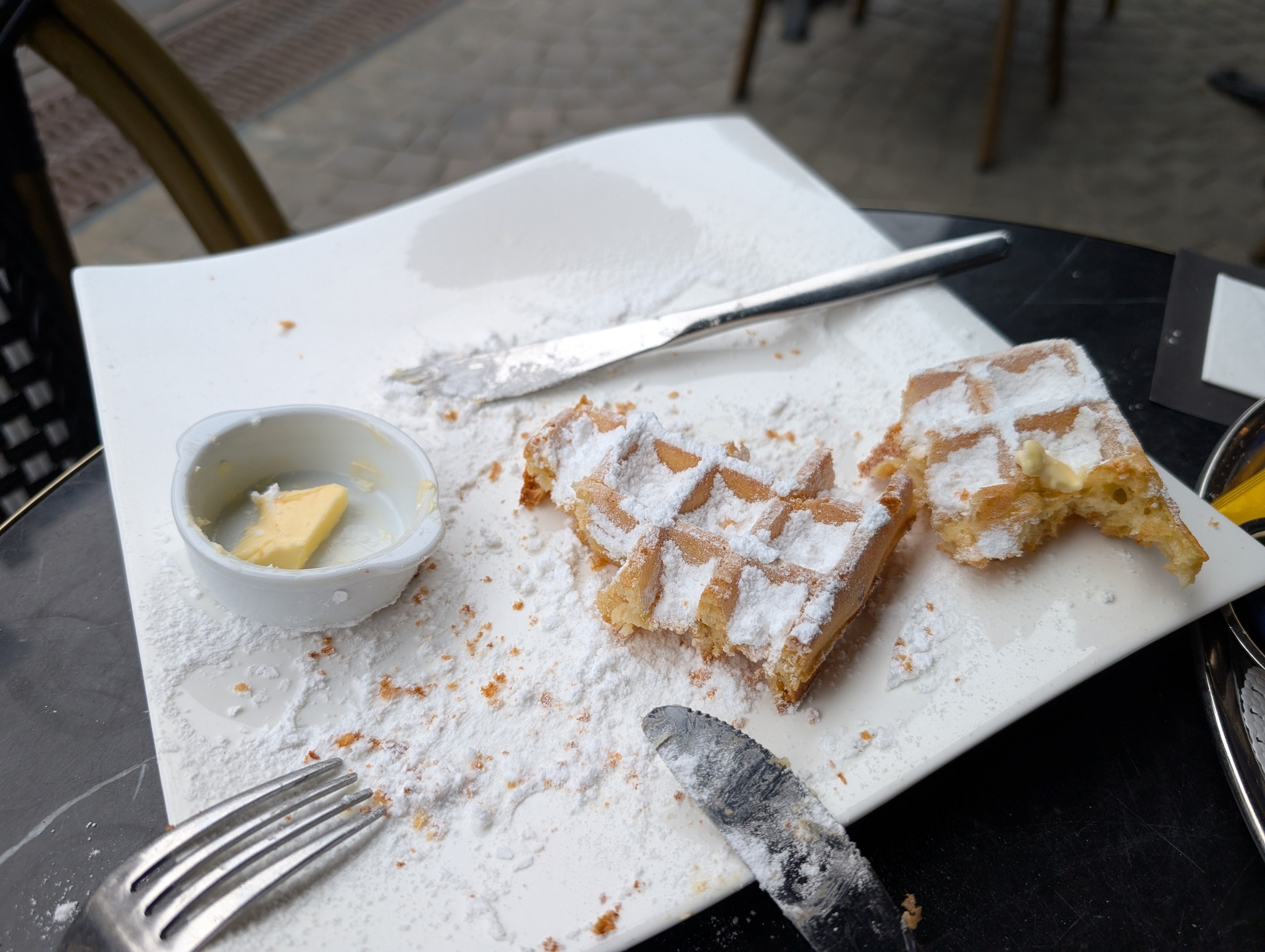
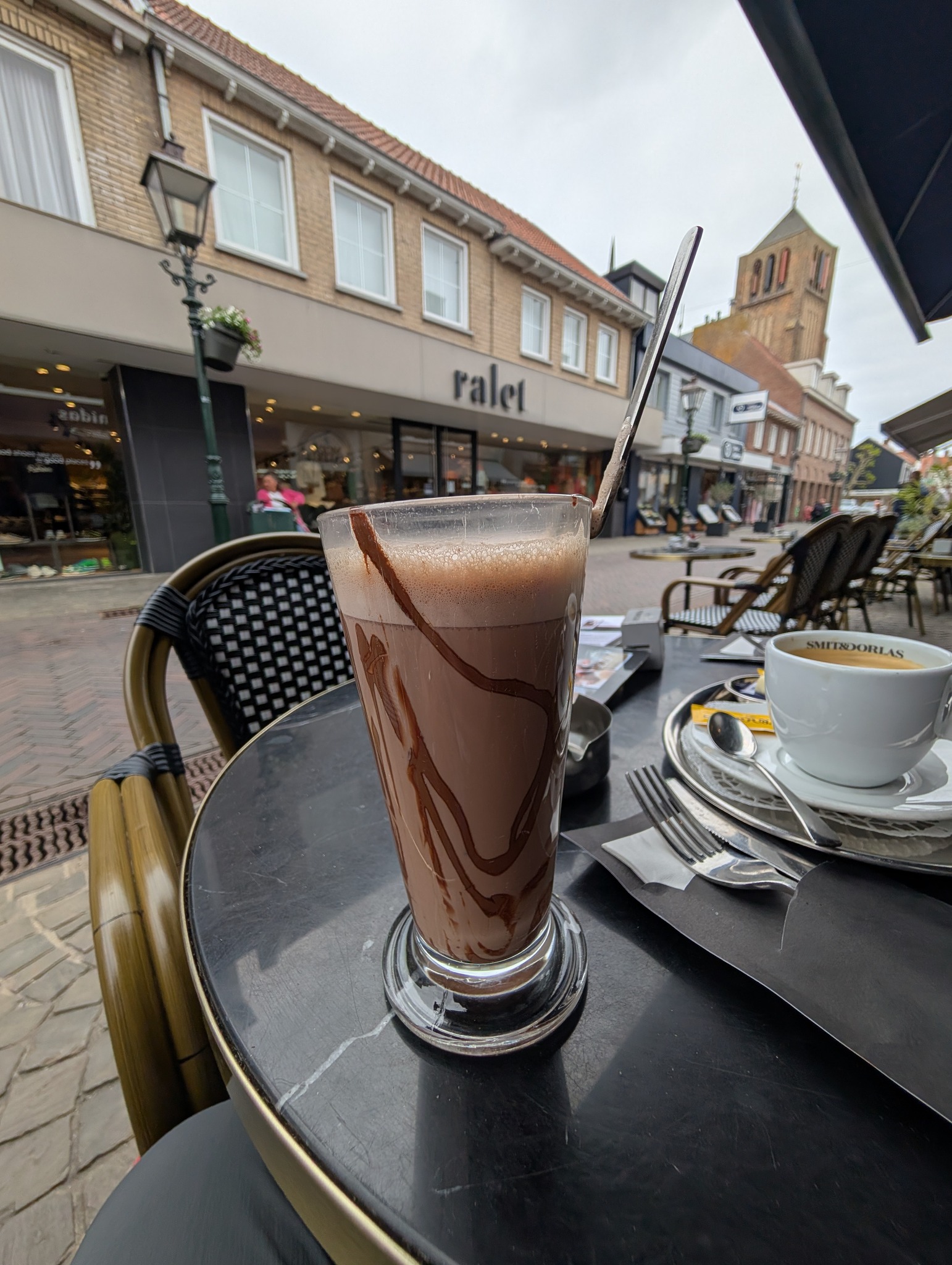
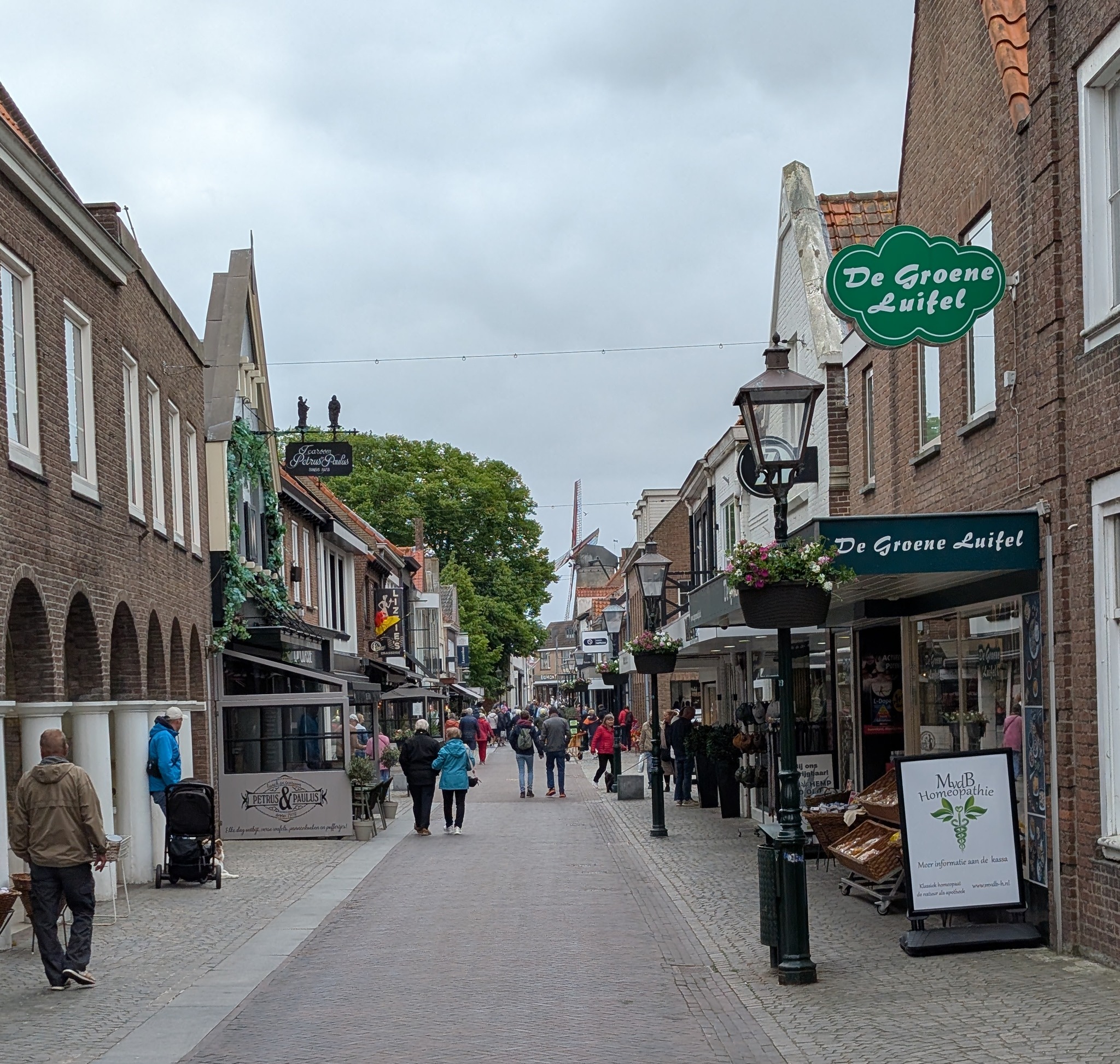
We stopped at a café in Sluis and were happily talked into trying their famous Belgian waffles. It was one of the best decisions of the trip. The hot chocolate was like drinking a liquid Belgian candy bar. Kari generously let Mike have a few bites of the waffle, unlike past riding partners that rhyme with "dug" who won't share their chocolate.
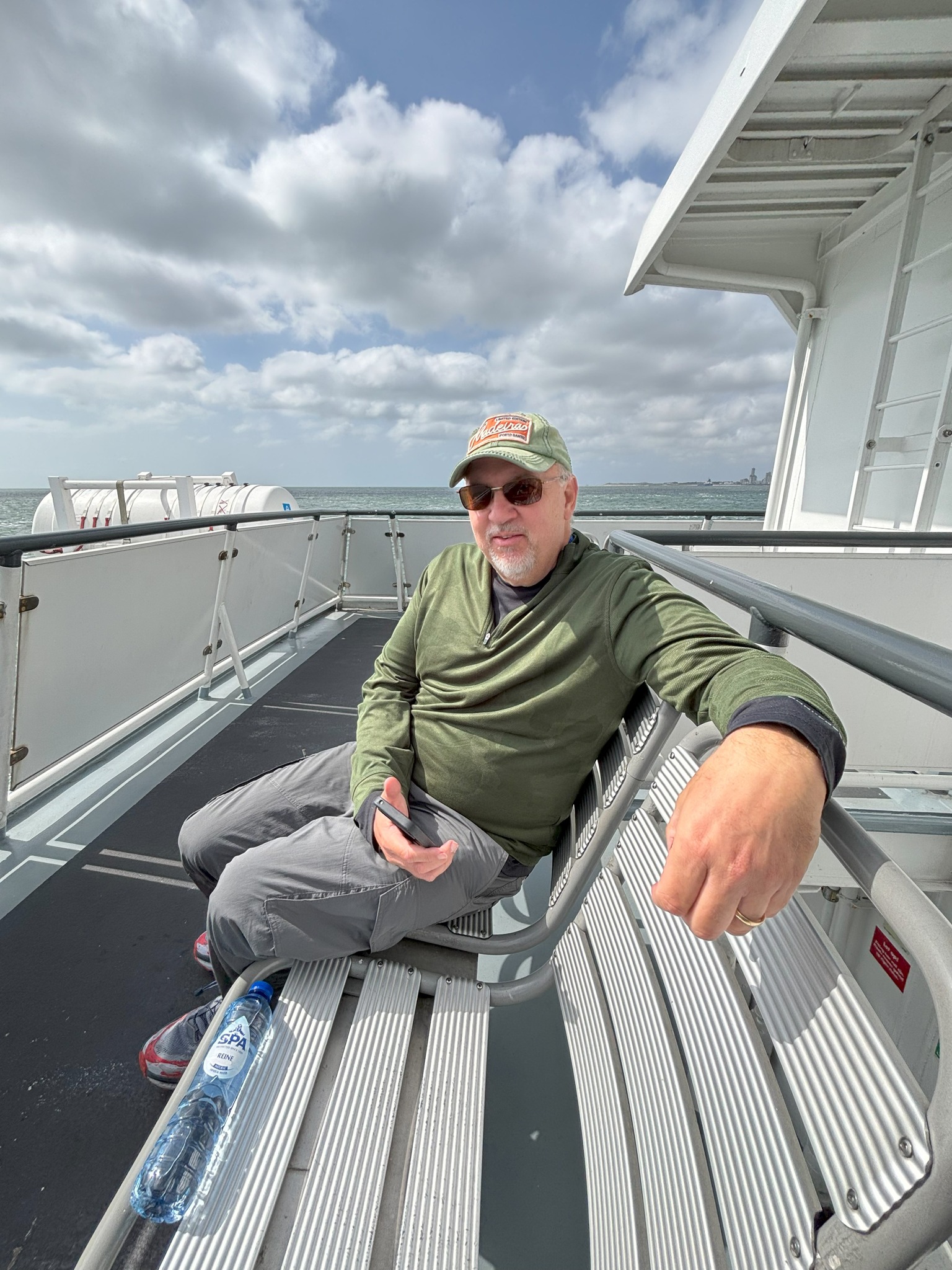
After Sluis we wound through spectacular farm fields — including one enormous field of brilliant orange flowers that seemed to go on forever. The route then took us along the North Sea coast toward a ferry crossing. From the upper deck we watched a pilot vessel named Procyon head out to guide a large ship into port, and spotted a fantastic 3D pavement mural of an octopus bursting through the brickwork right at the ferry landing.
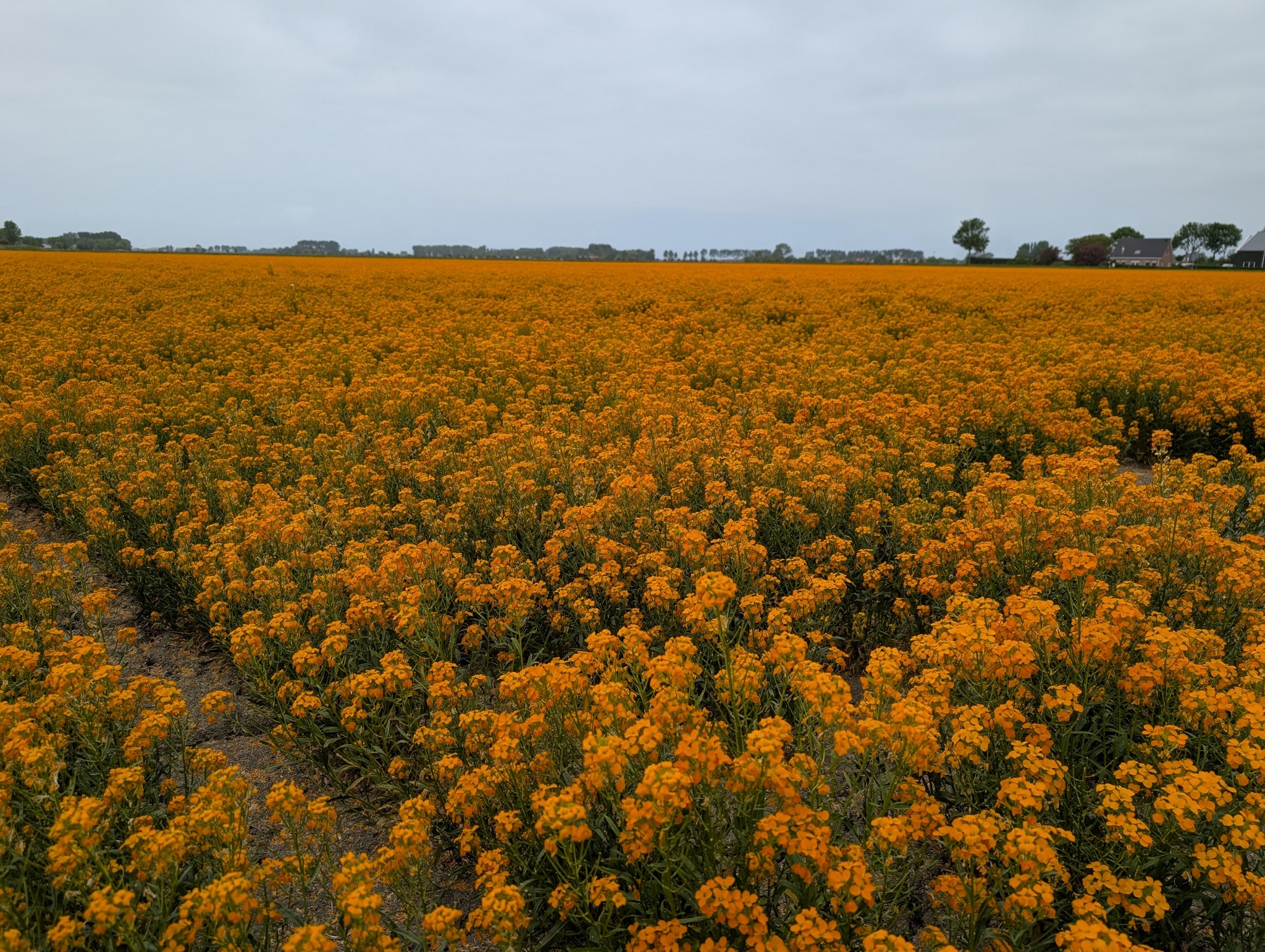
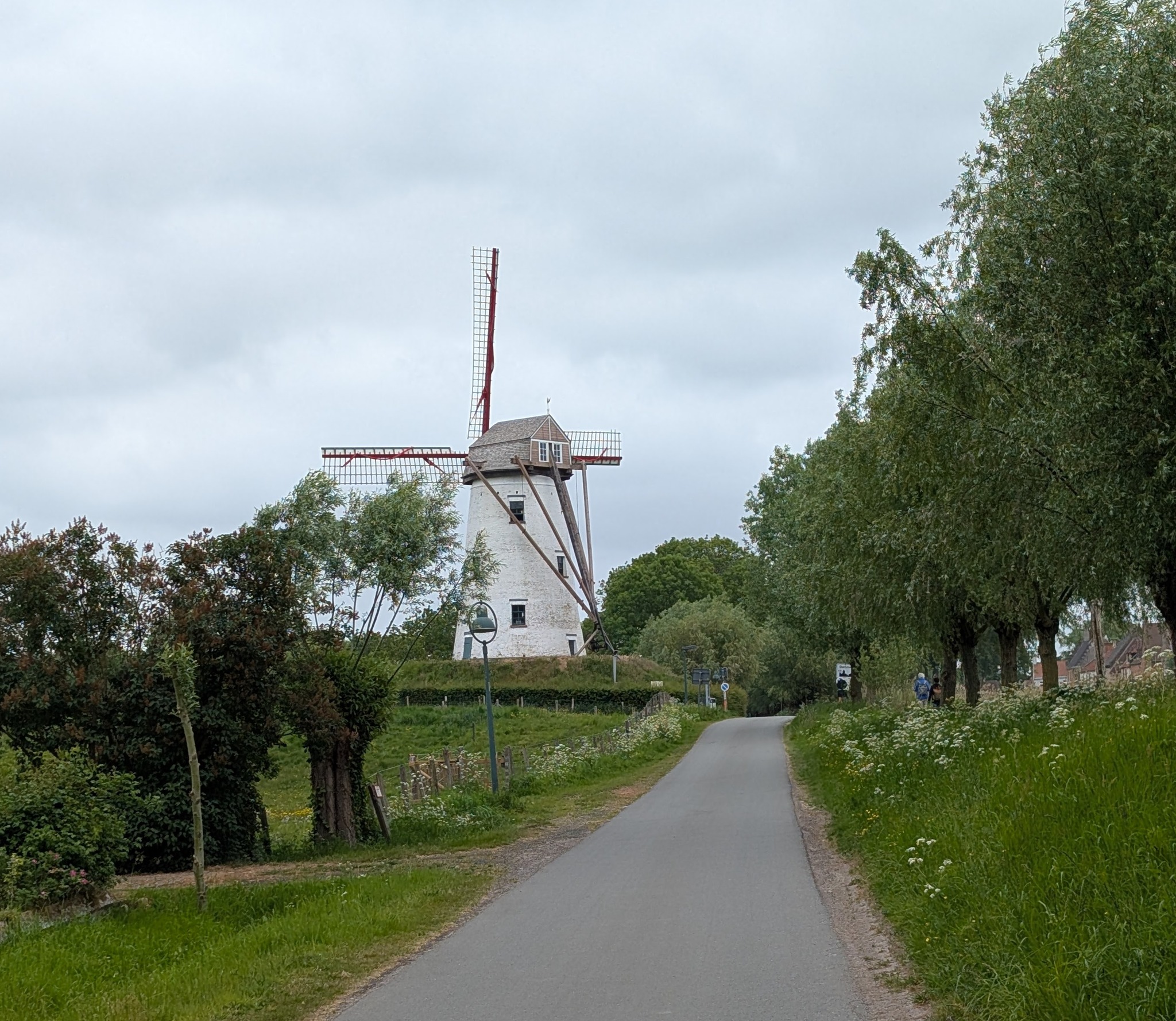
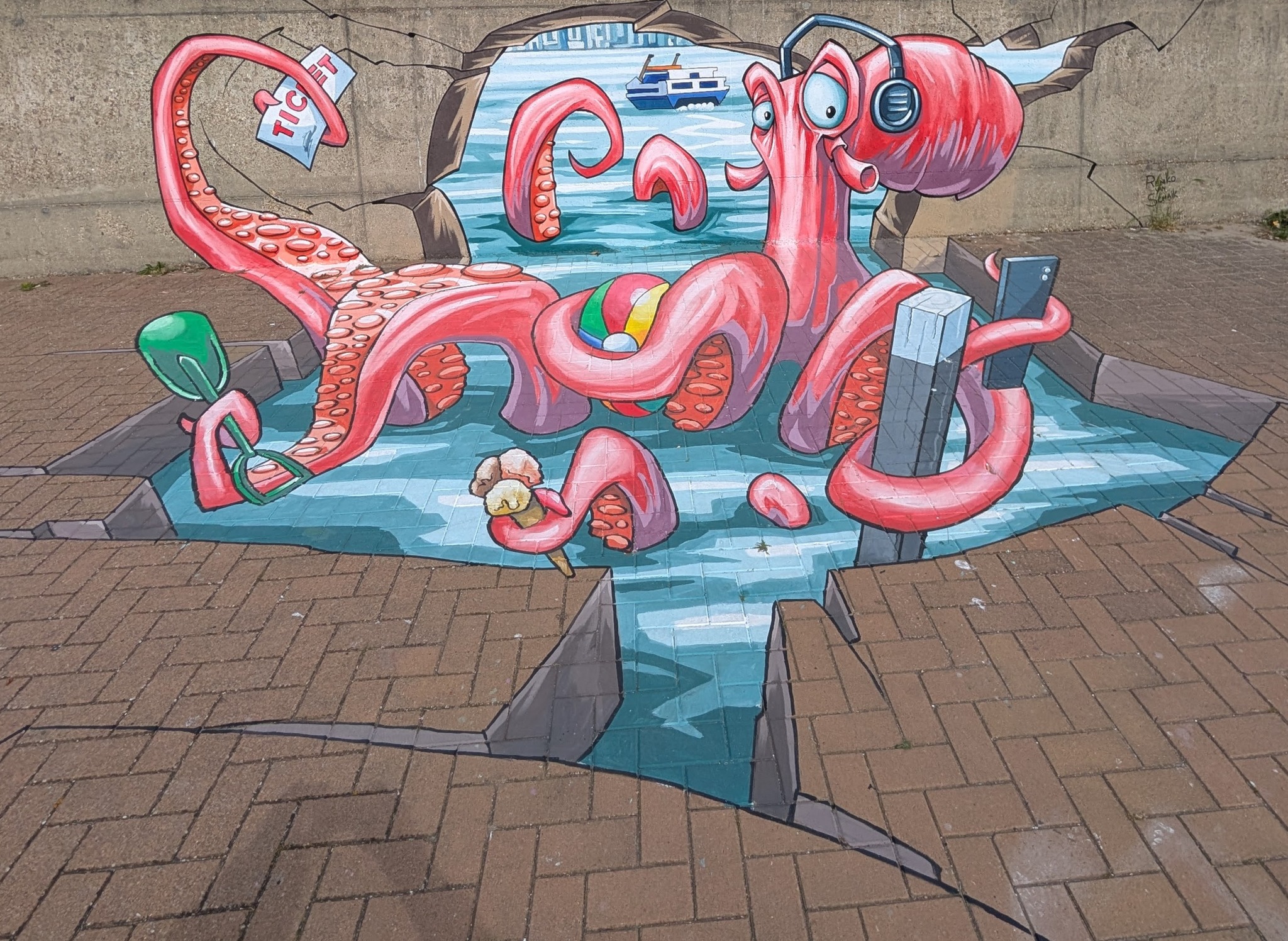
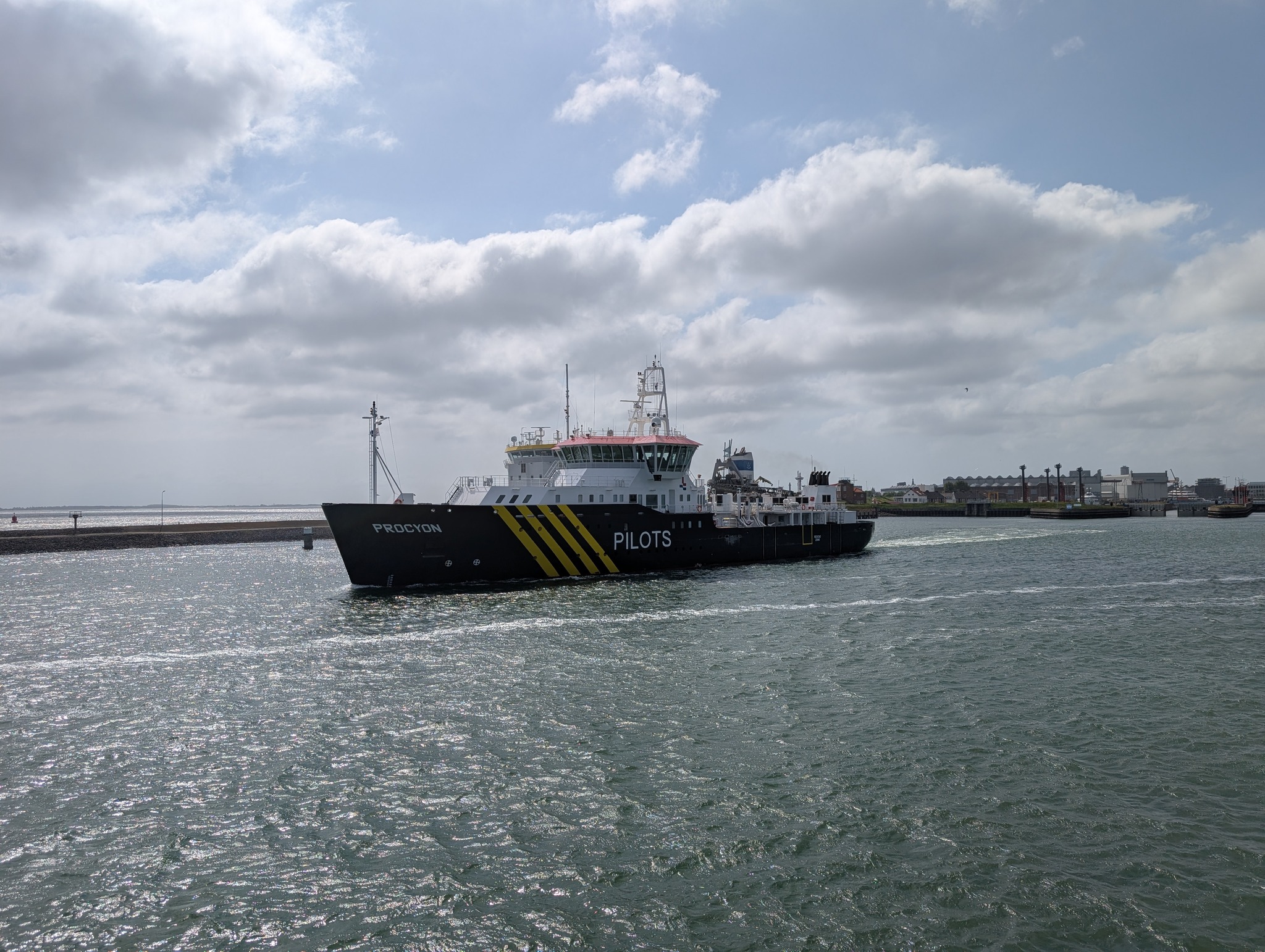
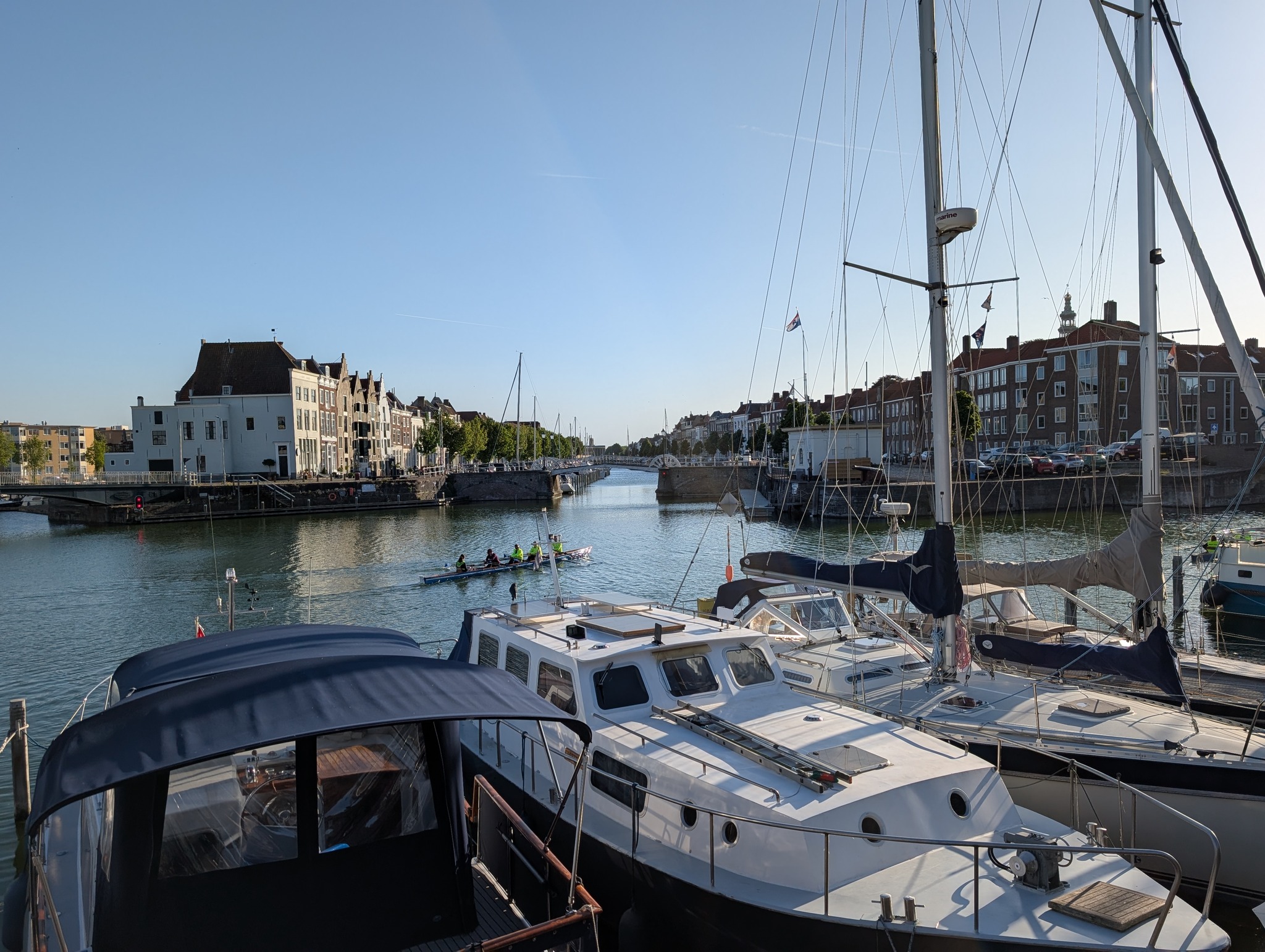
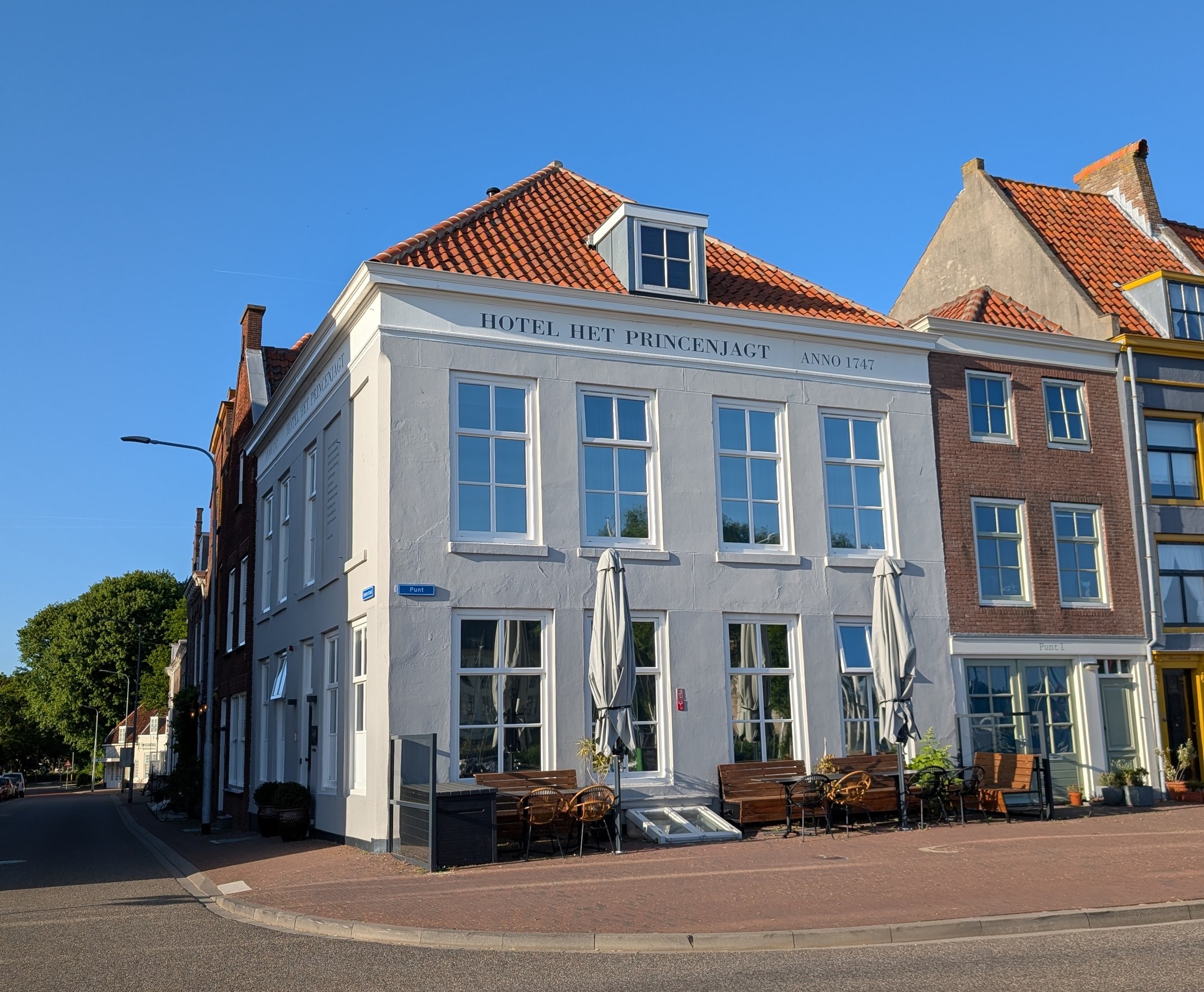
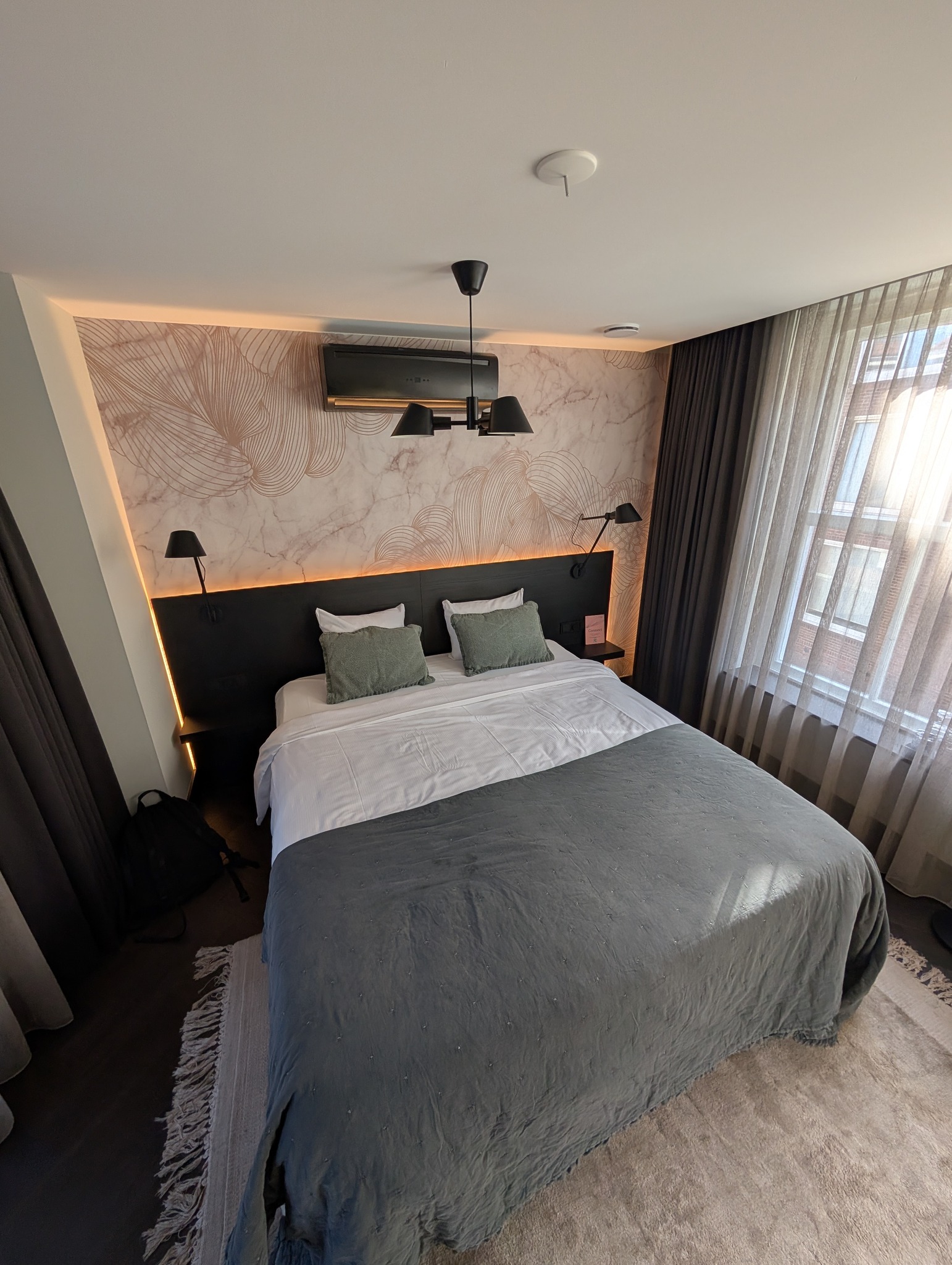
The day wrapped up in Middelburg, the historic capital of Zeeland, with its beautiful canal system, a rowing crew gliding through the golden-hour water, and a stay at Hotel Het Princenjagt — a beautifully restored historic building dating to 1747. No roughing it on this trip.
Day 1 Highlights
🎥 The full day's ride — Bruges to Middelburg
~30 miles · Detour through Veere · Oosterscheldekering · Tailwind finish
Over dinner the night before, we pulled up a map and started sketching a route. No hard plan — just a rough line north from Middelburg toward our target for the night: Zierikzee. Instead of taking the direct road, we decided to veer east first to the town of Veere. See what we did there.
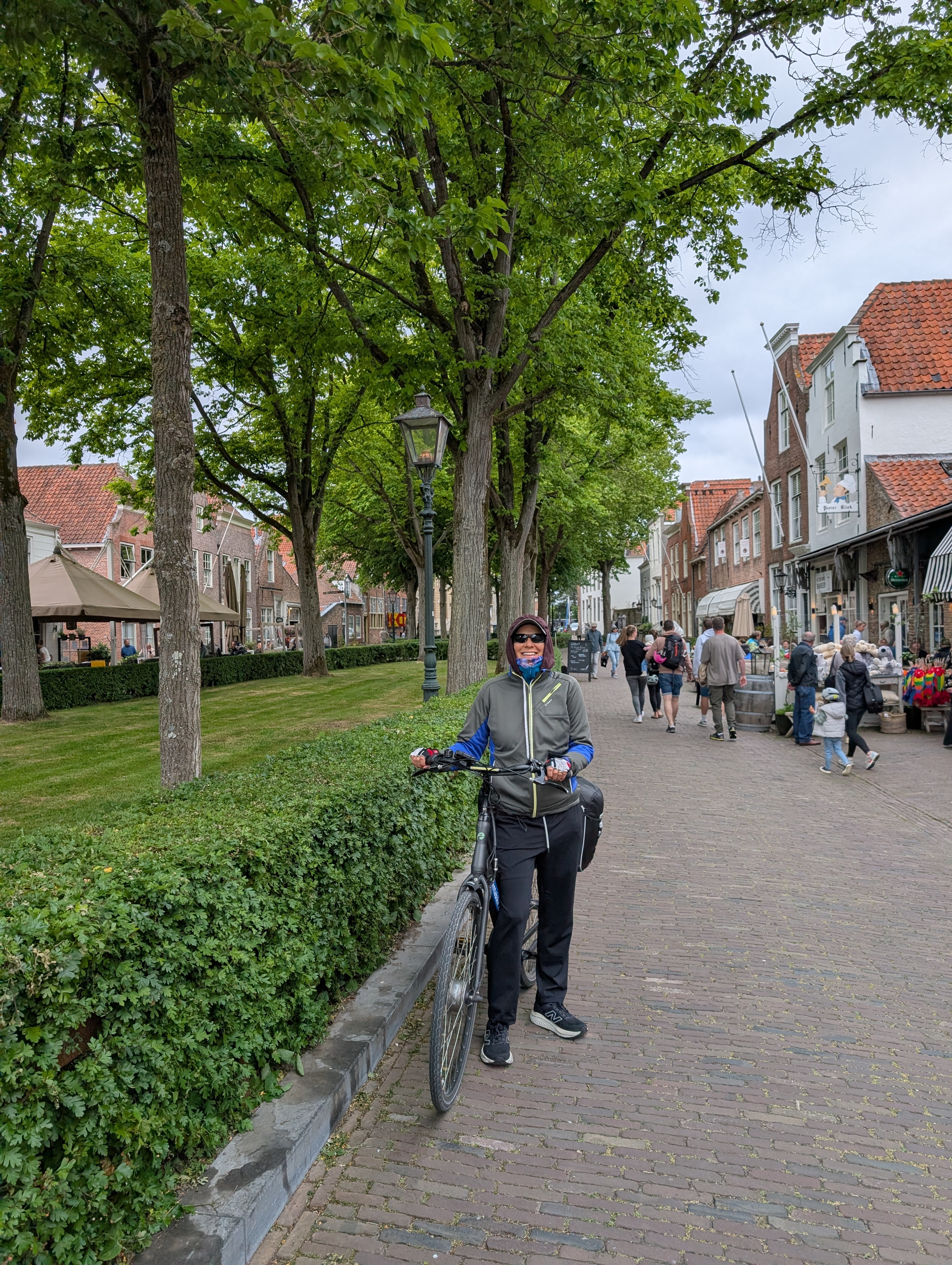
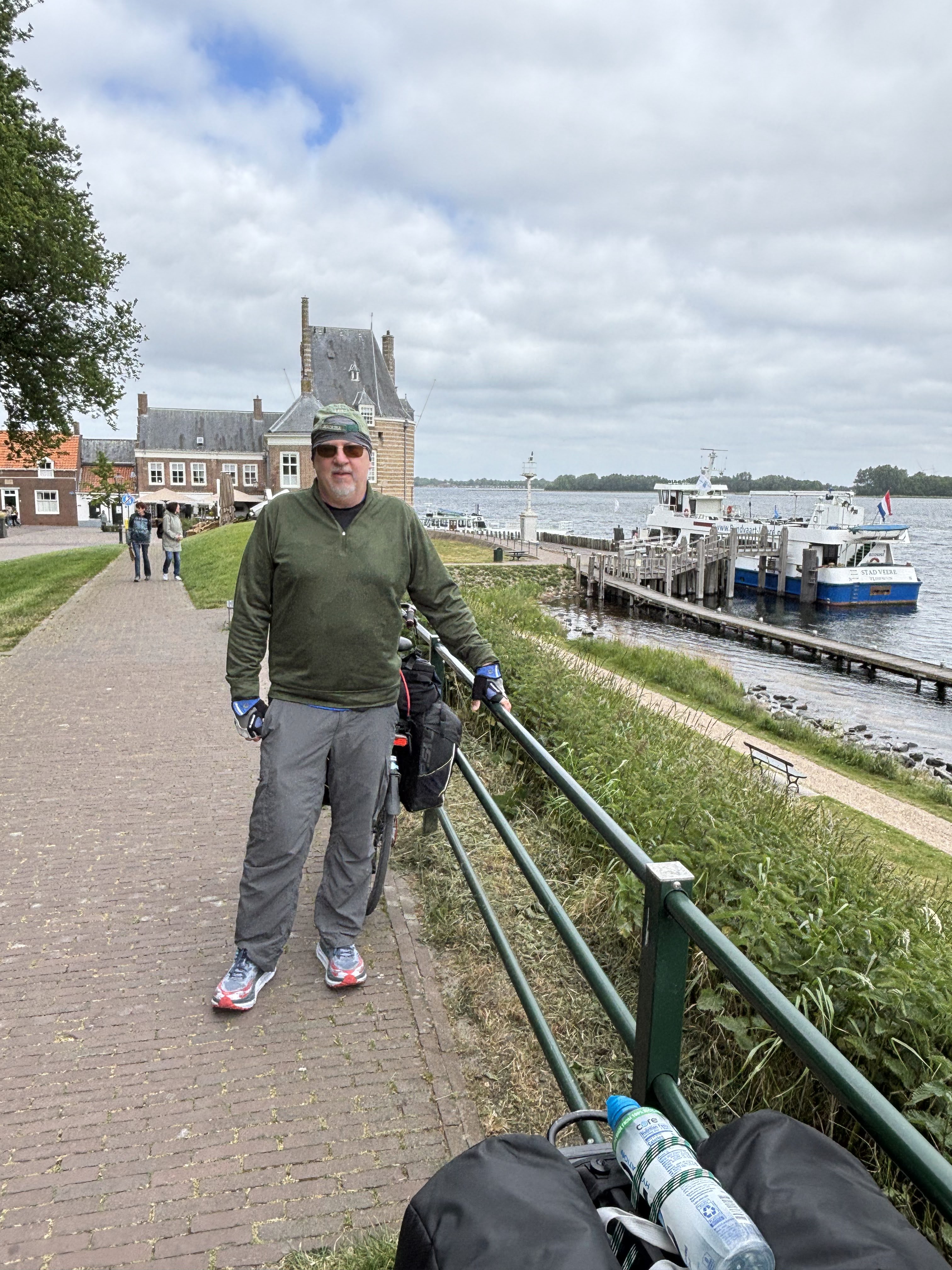
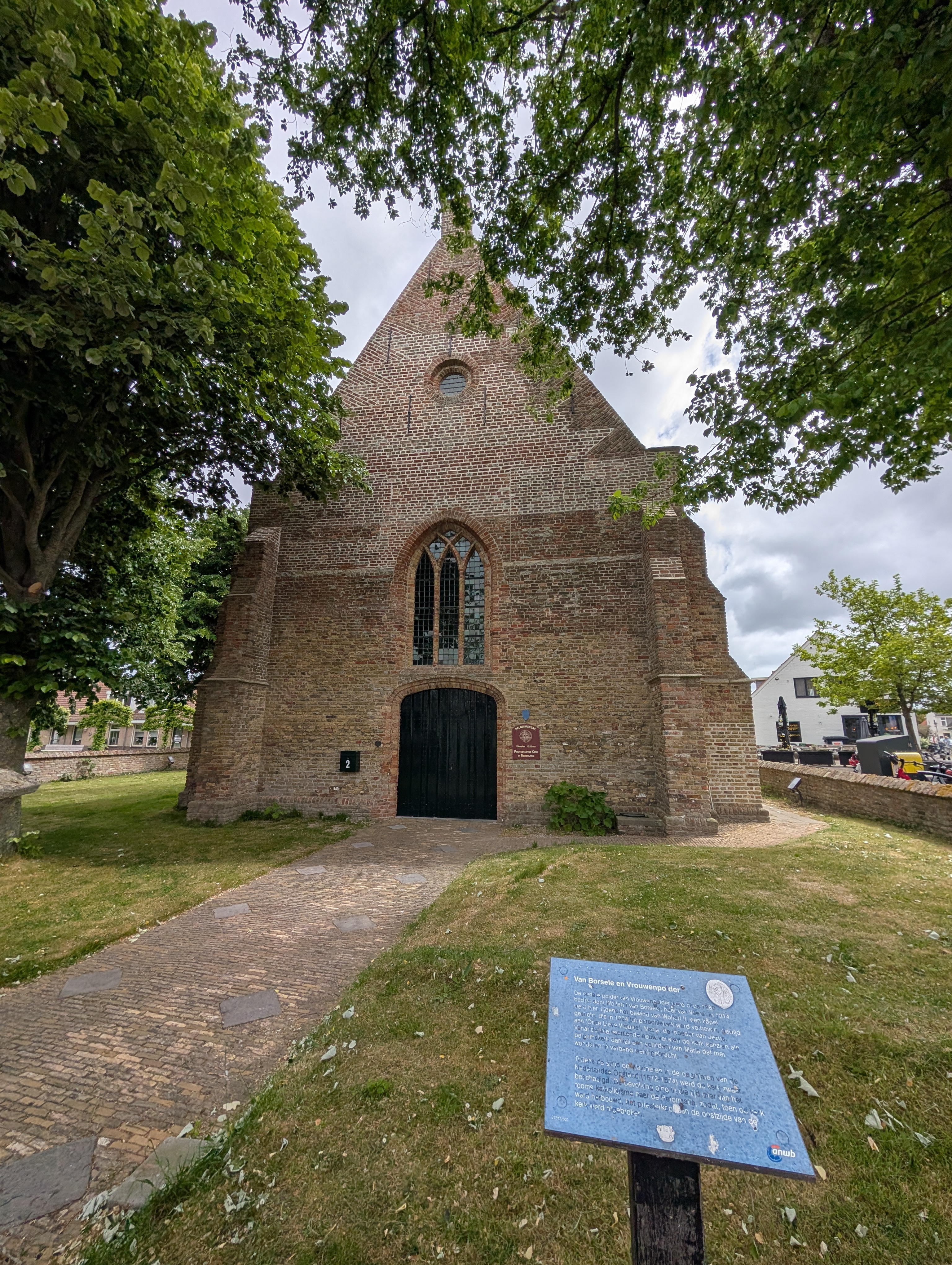
The detour was absolutely worth it. Veere is one of those Dutch towns that feels almost too perfectly preserved — a small, quiet harbor village that once punched well above its weight in European trade. Today it's largely a sailing and tourist town, but the architecture tells the whole story. We wandered past the old church and a windmill, walked the harbor, and took our time soaking in a place that most people driving between cities never see.
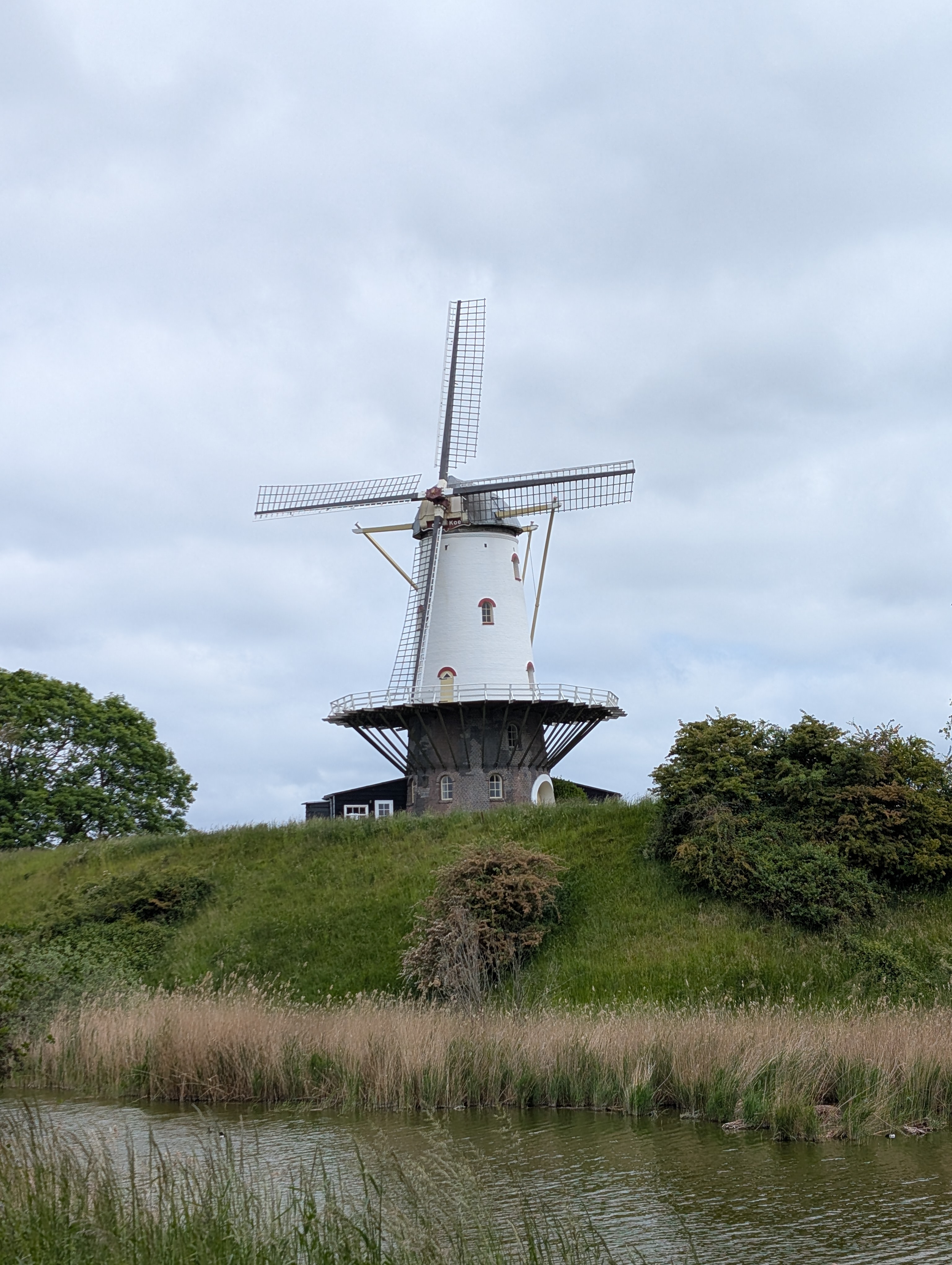
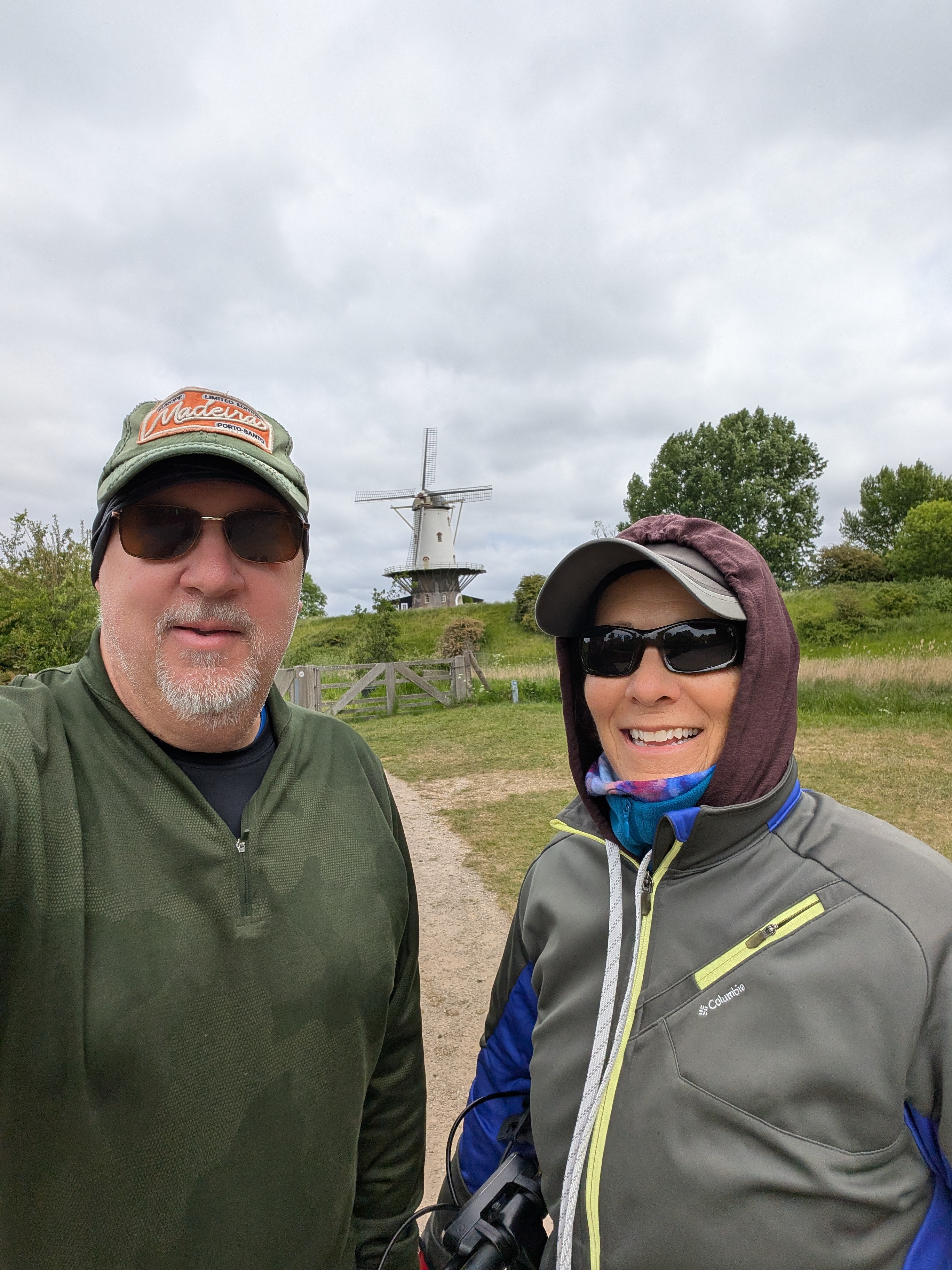
From Veere we worked our way toward the Oosterscheldekering — the Eastern Scheldt Storm Surge Barrier, the largest of the Delta Works engineering projects. We'd seen it on the map and knew it was going to be a highlight. It did not disappoint.
What we didn't fully anticipate was the wind. Crossing the barrier on bikes, fully exposed, with a strong headwind pushing straight back at us — it was one of the more physically demanding stretches of the whole trip. The barrier is nearly 9 kilometers long, all of it open to the North Sea. There's nowhere to hide. Heads down, grinding into the wind, occasionally glancing up at the engineering marvel we were crossing — massive concrete piers, steel gates, open water on both sides — it was spectacular and punishing in equal measure.
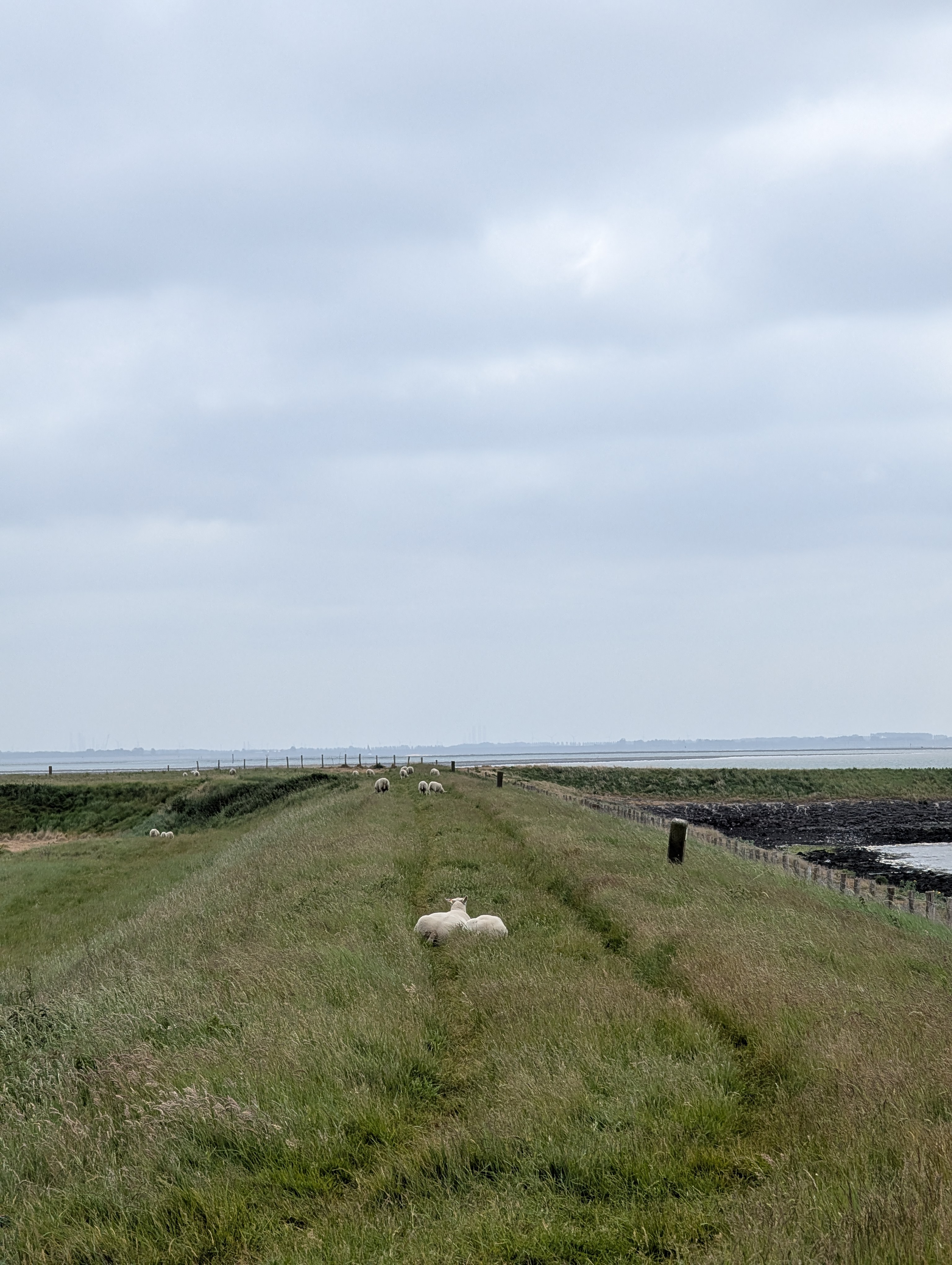
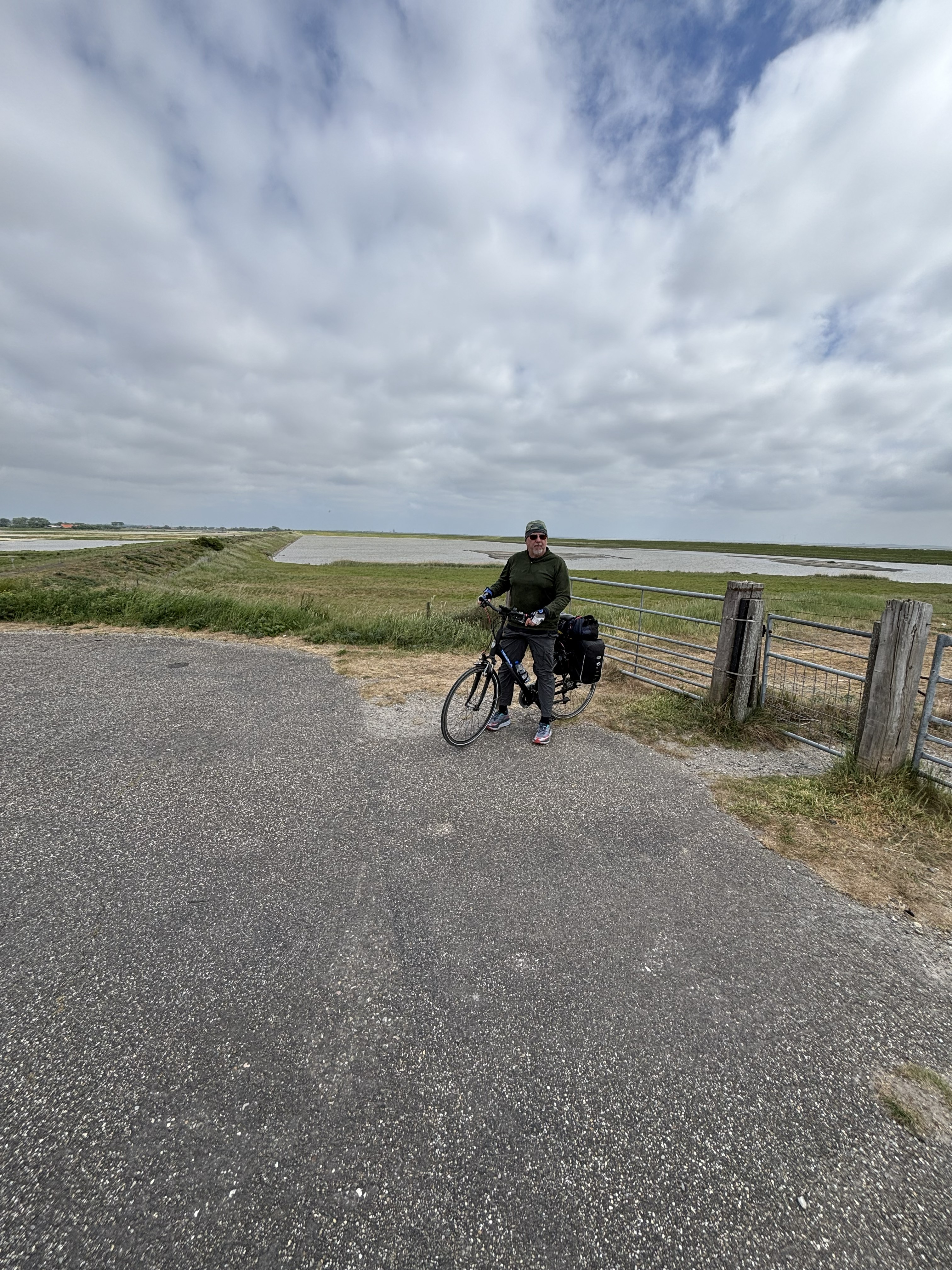
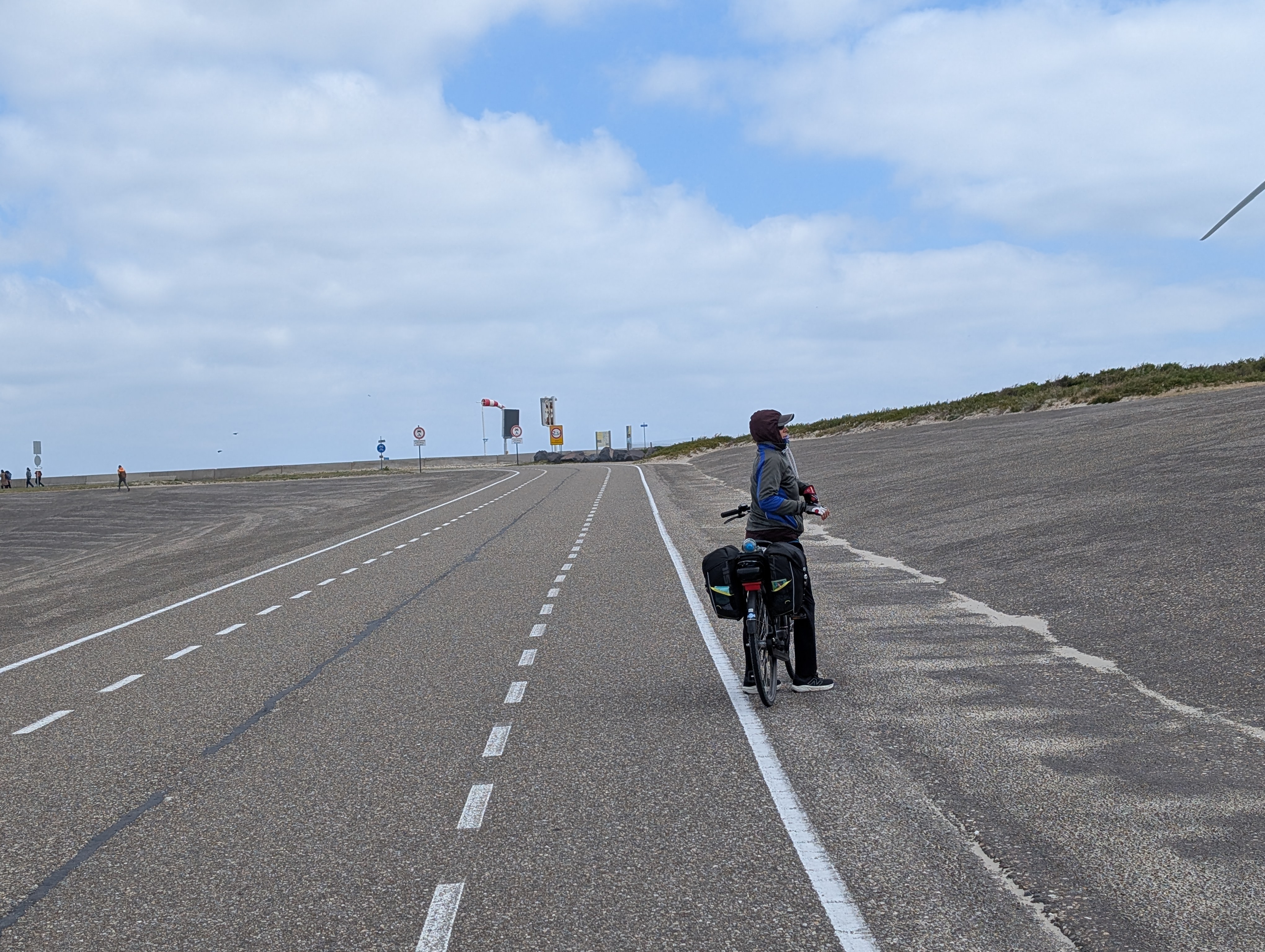
One reason we'd chosen this particular route to Zierikzee was the promise of a tailwind once we turned and rode along the water on the far side. Someone had done their meteorological homework. After the punishment of the crossing, the wind swung around and pushed us south along the coast — one of those stretches of riding where you feel like you could go forever.
We ducked into Café-Rest. 'De Heerenkeet' to get out of the wind and grab lunch before the final push. A warm meal, a moment out of the elements, and a chance to appreciate just how much ground we'd covered. From there it was a comfortable, mostly tailwind cruise into Zierikzee.
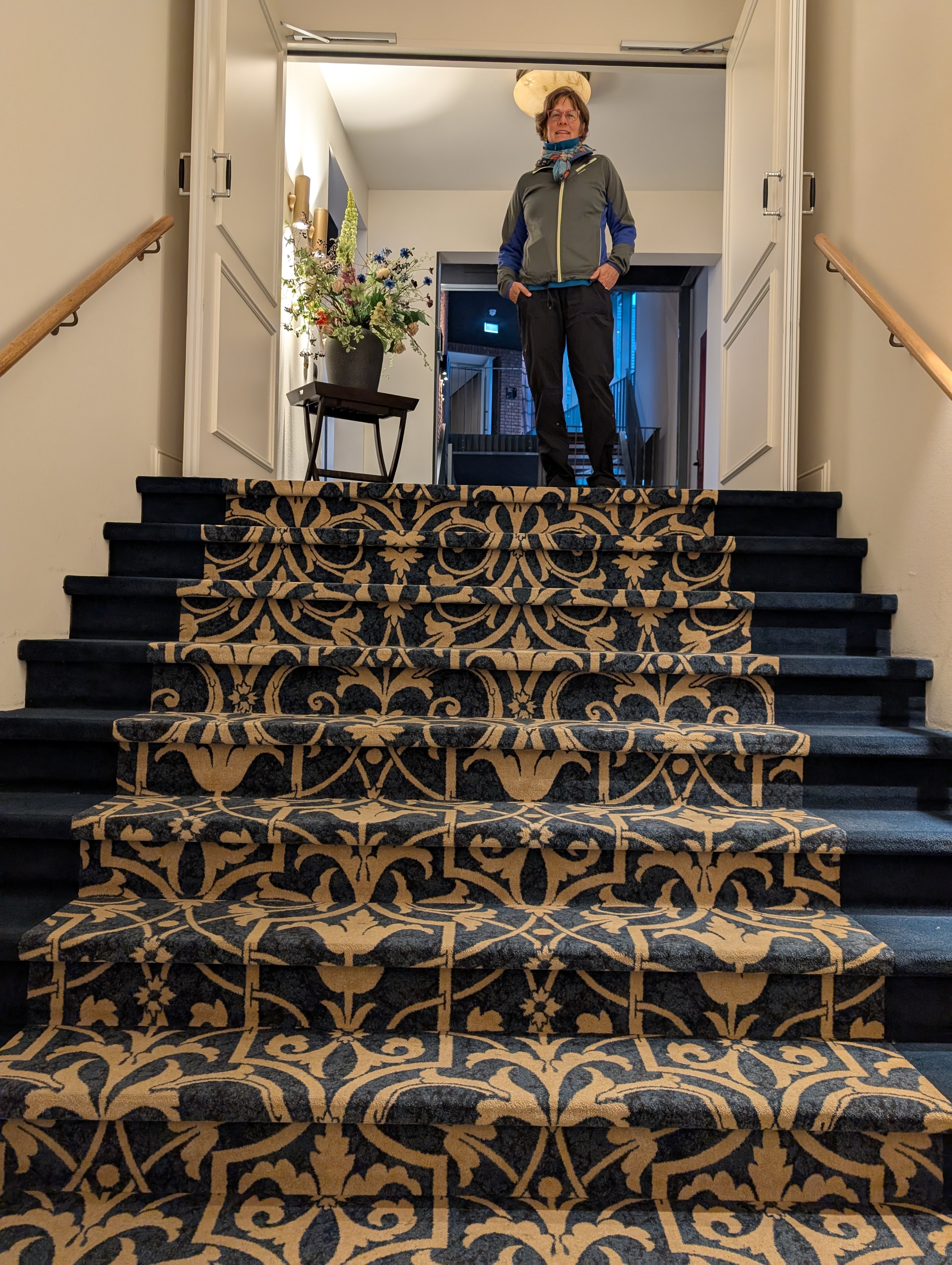
Zierikzee itself was a wonderful surprise — another beautifully preserved medieval port town, its inner harbor lined with historic sailing barges and step-gabled merchant houses. We walked the harbor in the evening, found a spot for dinner, and agreed it had been a genuinely great day on the bike.
Day 2 Highlights
~40 miles · Polder farming country · Dinner by bike · Soccer in Klaaswaal
We woke up in Zierikzee to actual sunshine. After two days of overcast skies and relentless wind, seeing blue sky through the curtains felt like a gift. We packed up, rolled the bikes out, and immediately encountered the day's first reward: a beautiful working windmill right on the dike road out of town. Hard to leave, but we had ground to cover.
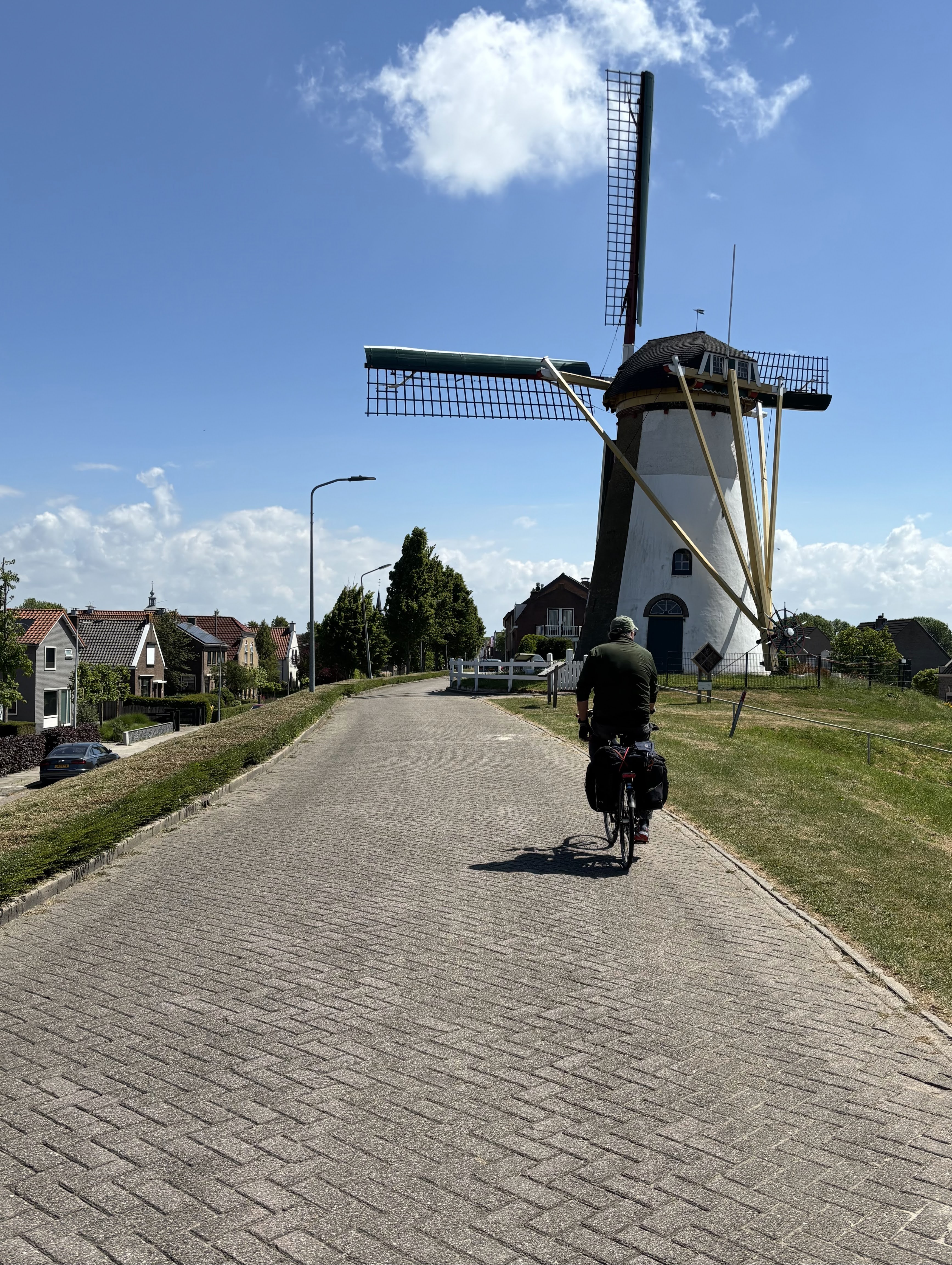
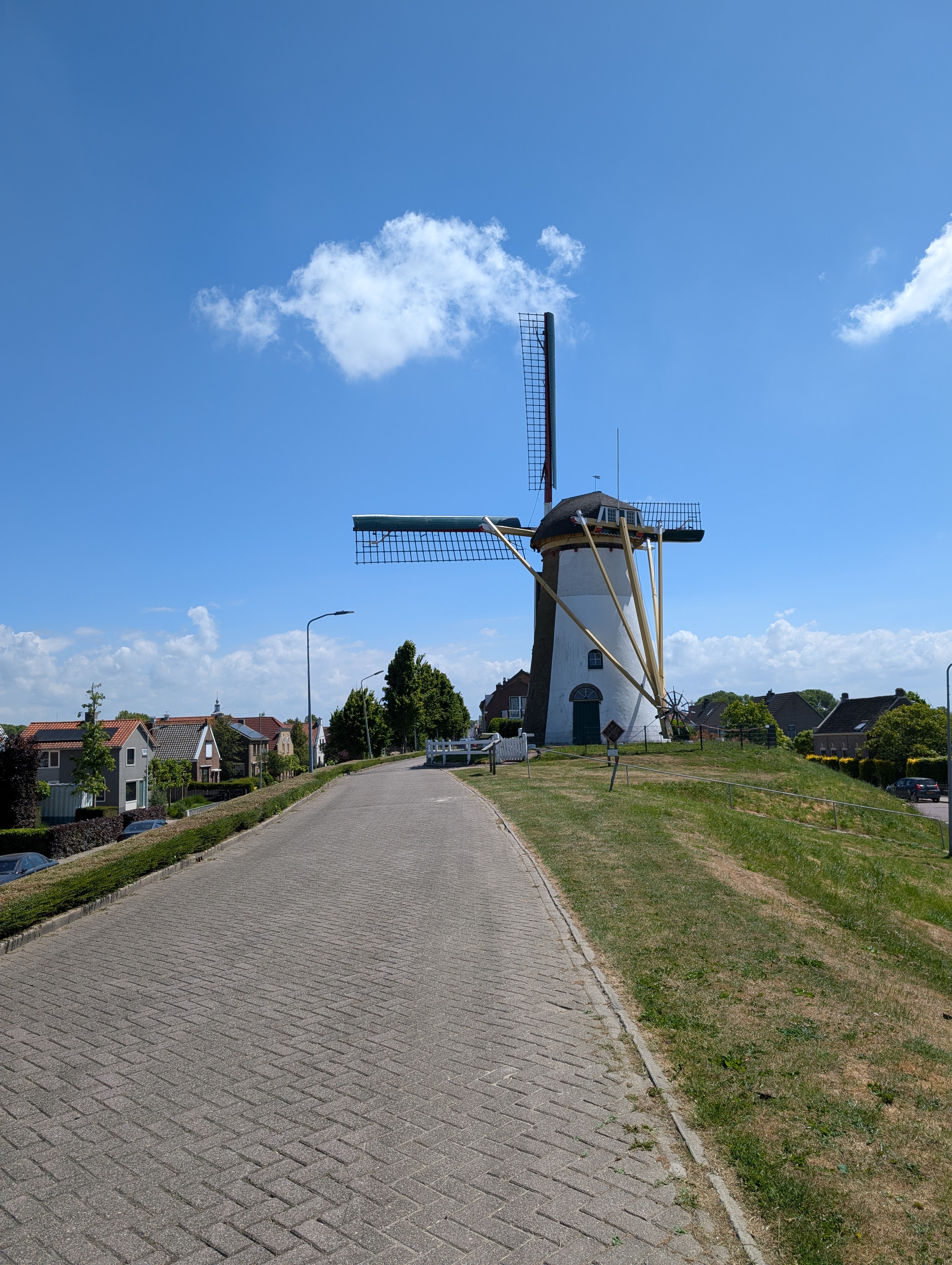
Day 3 was the day the Netherlands really opened up. The route north through Zeeland and into the Hoeksche Waard took us through some of the most purely agricultural landscape of the whole trip — flat, geometric, immaculately maintained. Canals running alongside fields. Tree-lined lanes tunneling through the farmland. Furrowed rows stretching so perfectly to the horizon that they looked computer-generated. We understood for the first time what it means to ride on land that was once underwater.
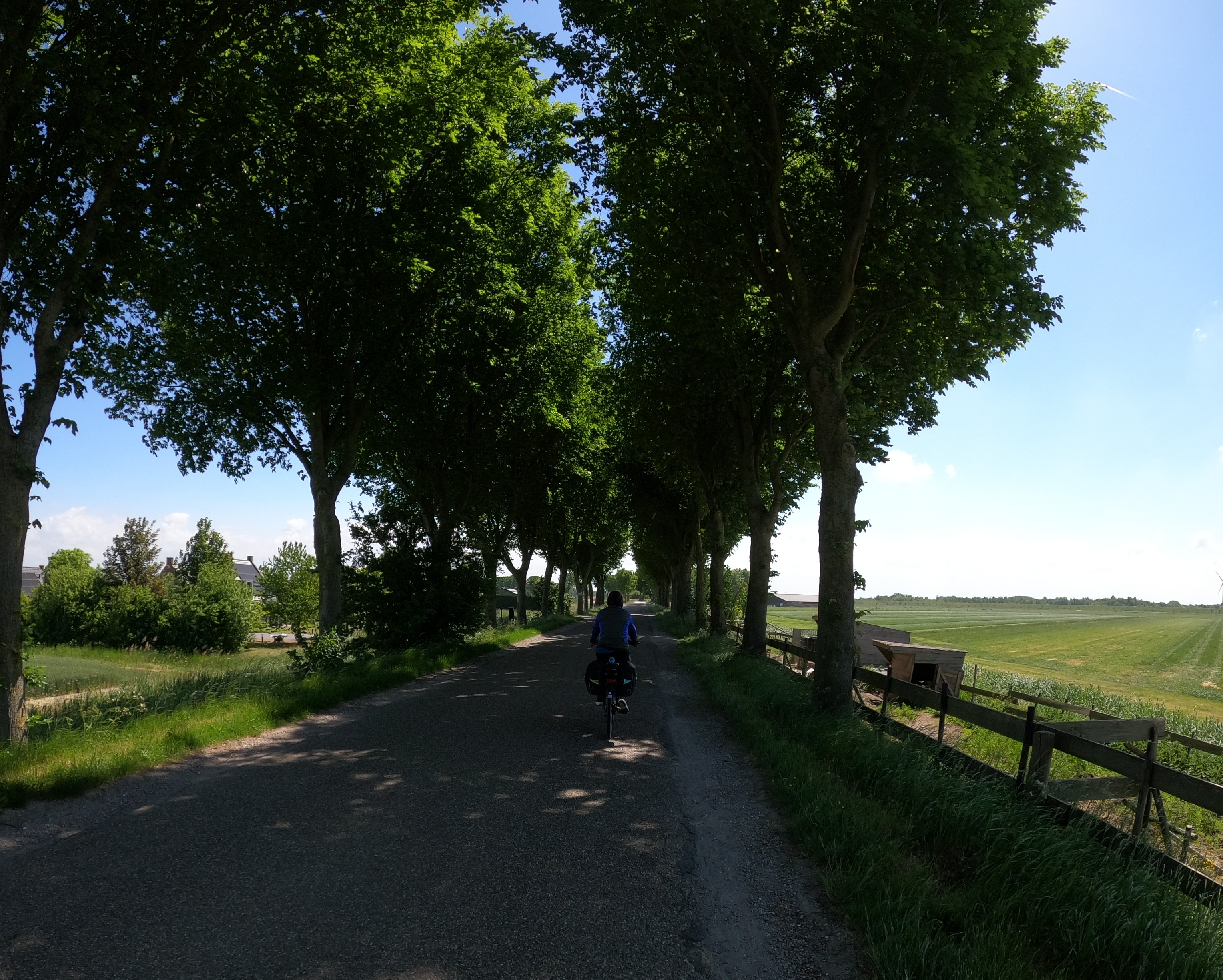
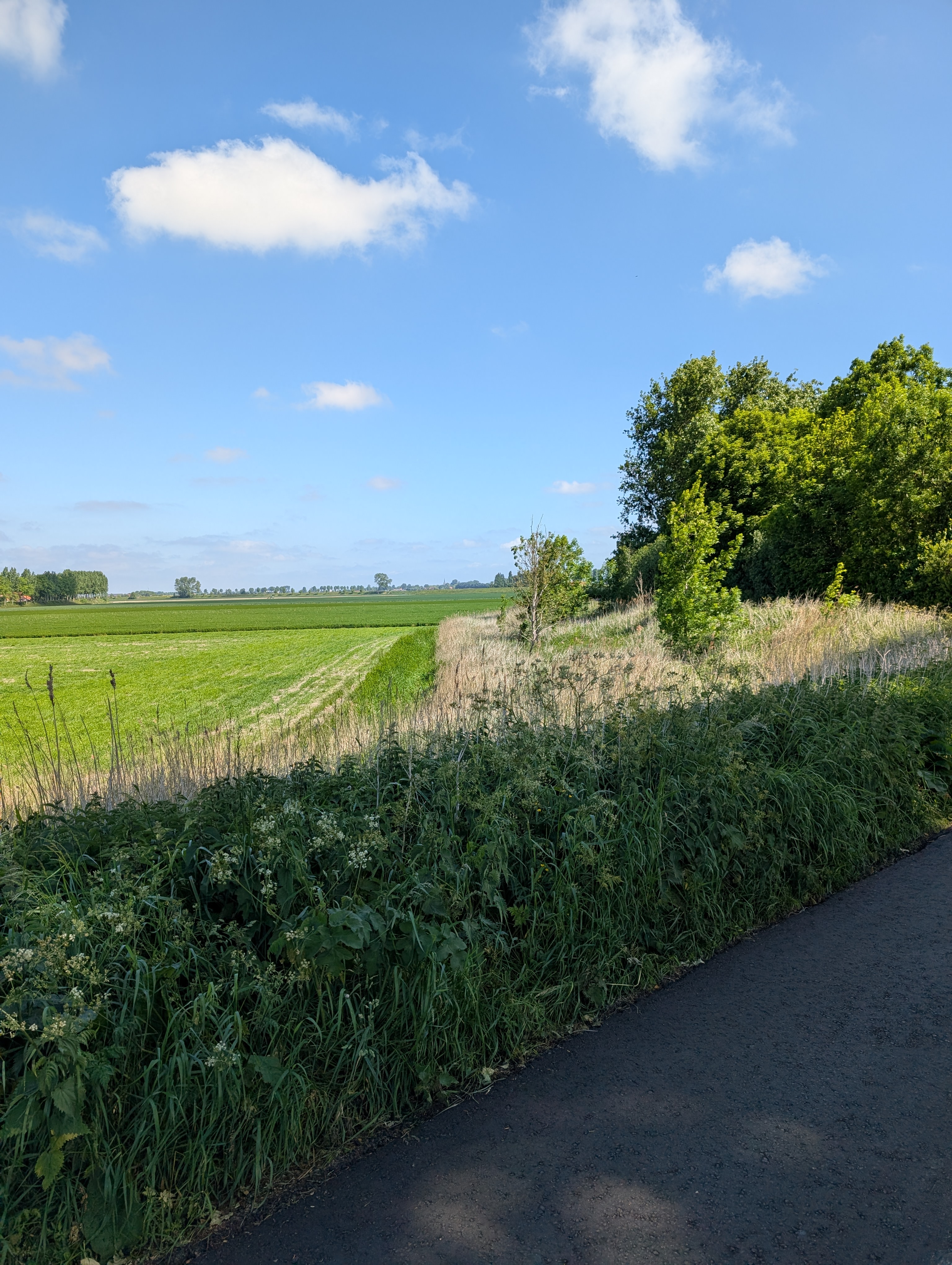
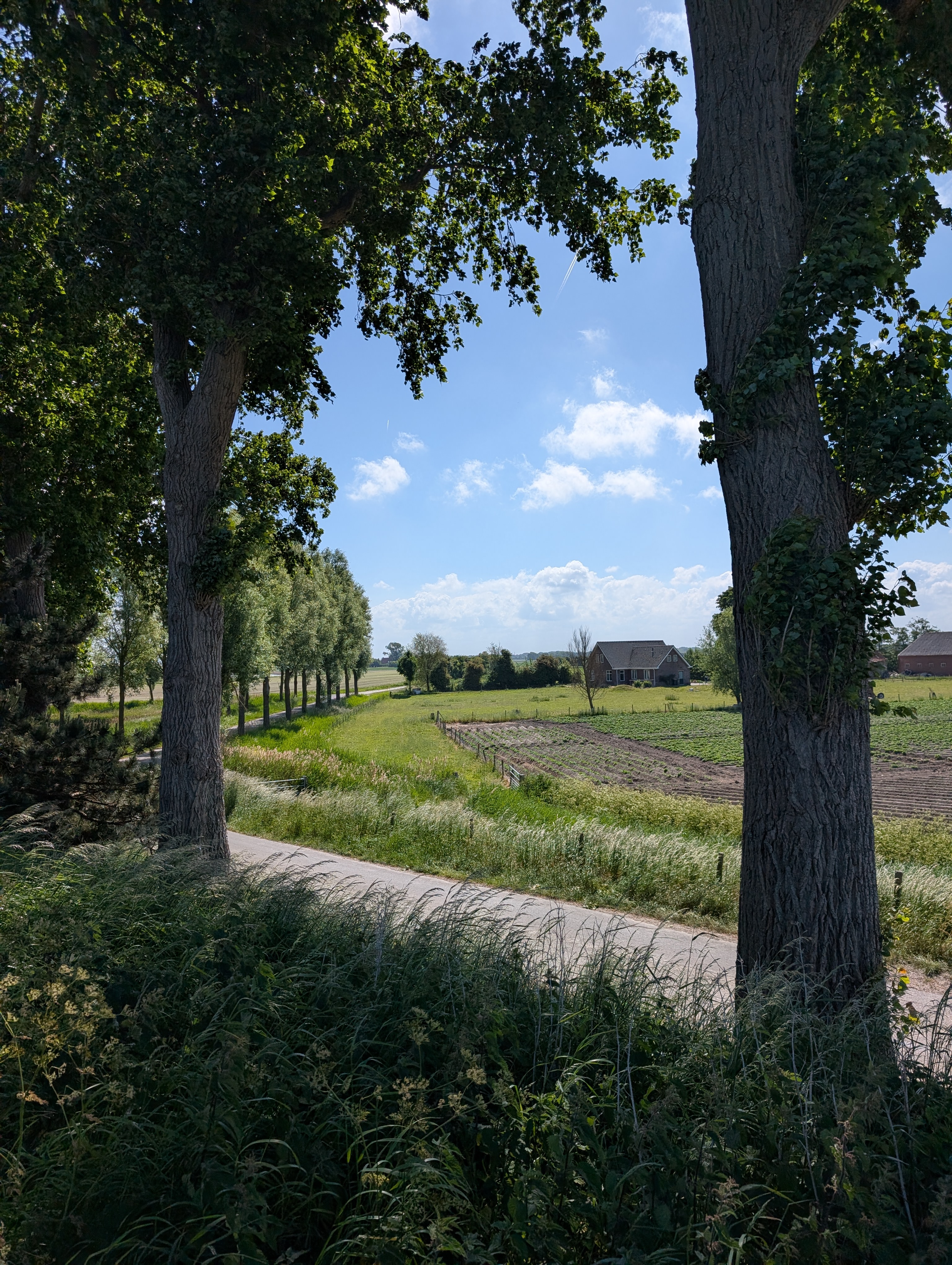
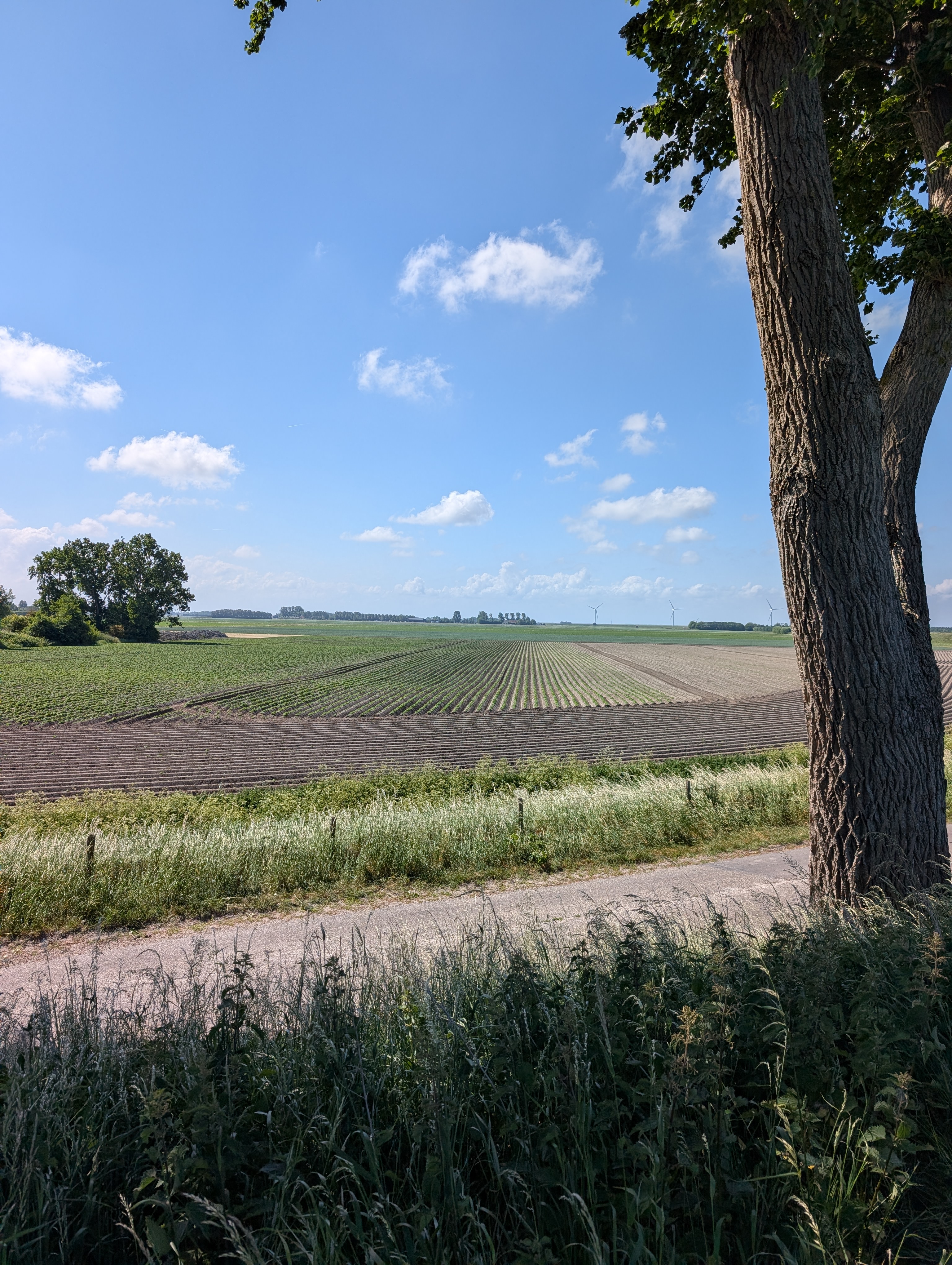
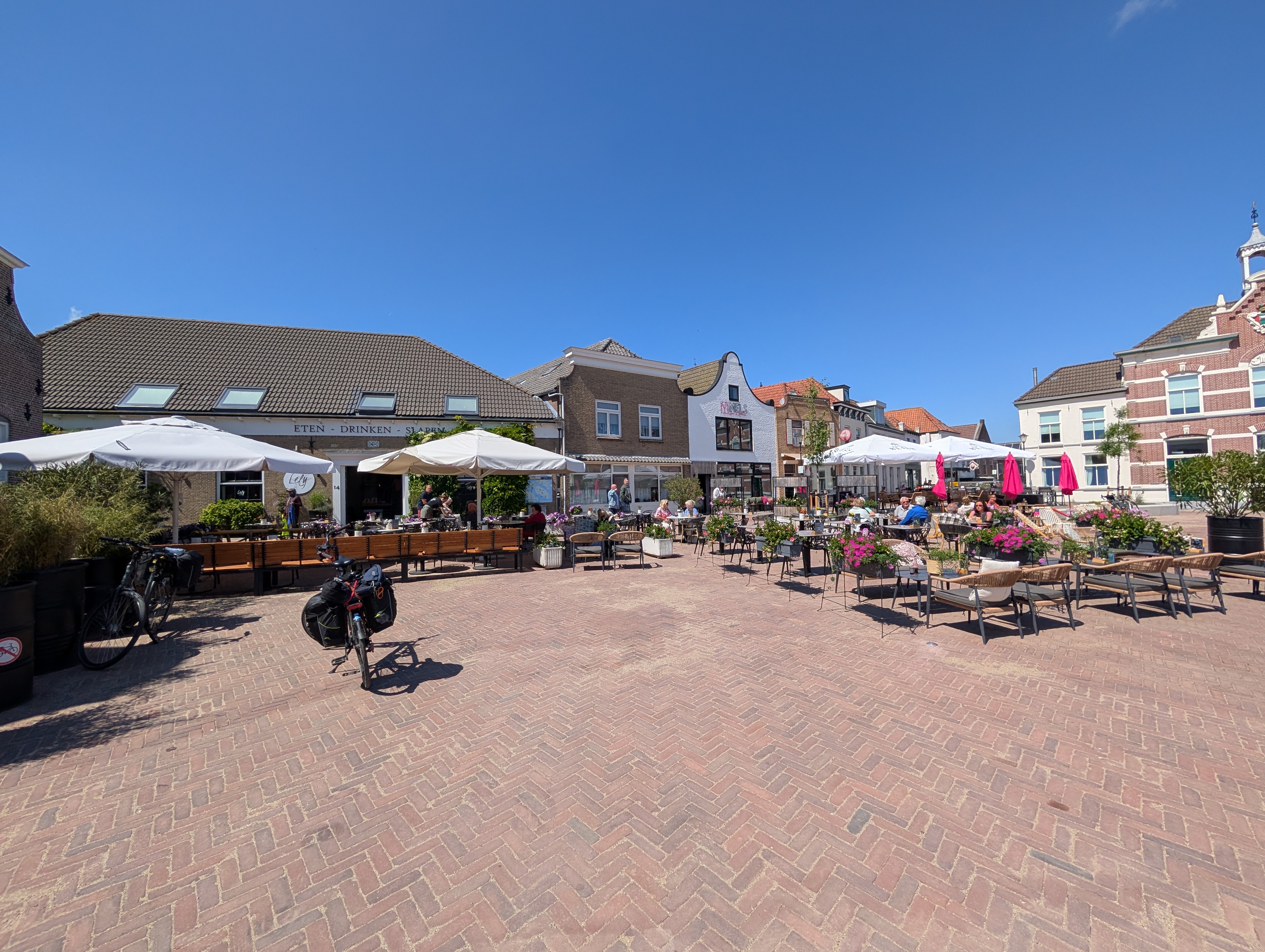
Lunch was a sunny stop at a town square terrace — the kind of Dutch café scene that makes you want to cancel your afternoon plans. We didn't, but we lingered longer than we should have. The bikes needed a rest anyway.
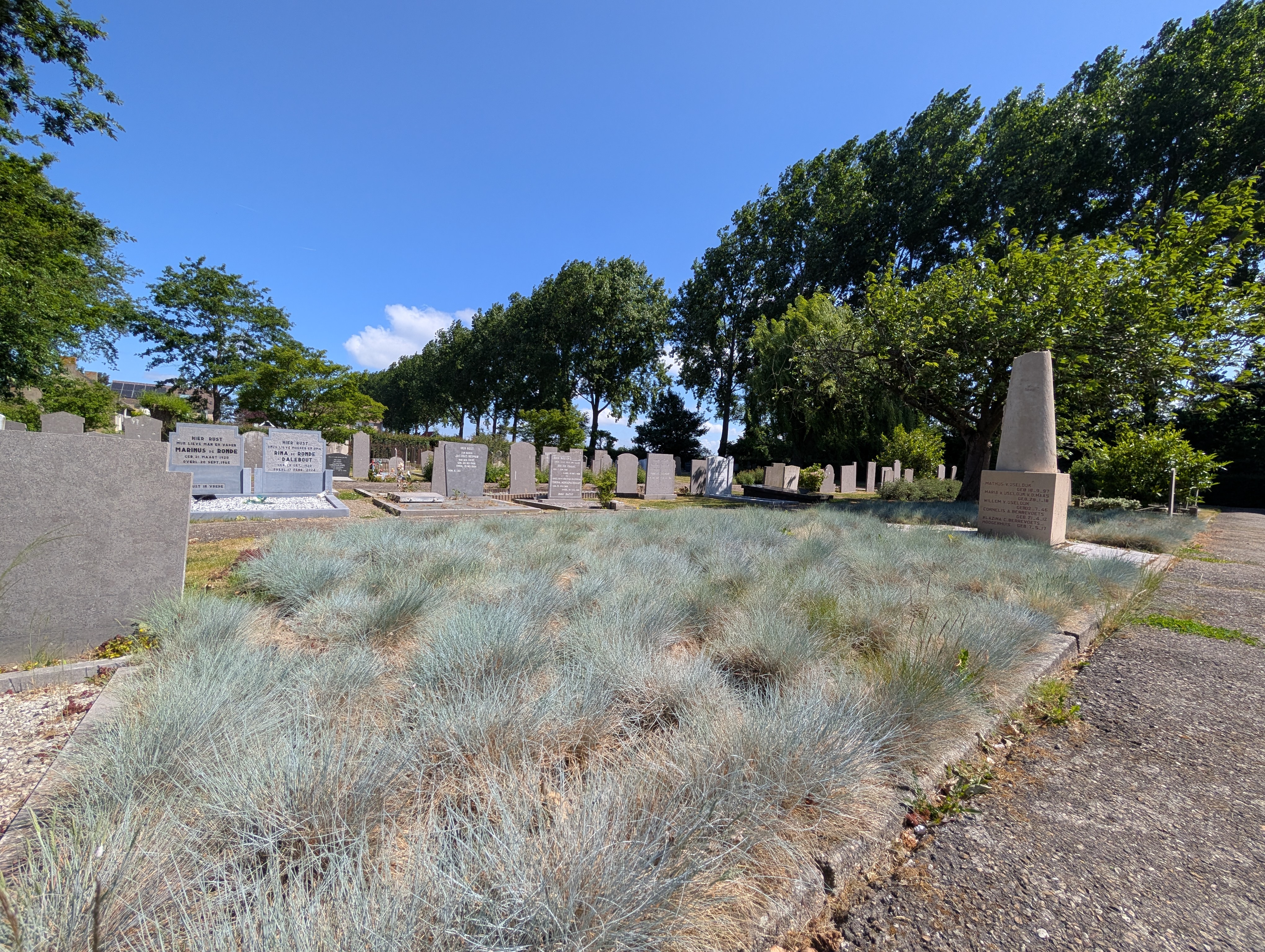
We arrived in Klaaswaal in the early afternoon, which left time to actually explore. It's a small, tidy Dutch town — quiet on a Saturday, but with a local energy to it. We walked the streets, stumbled across a peaceful cemetery with unusual ornamental grass growing between the graves, and eventually found ourselves watching a local football match. No plan, just stumbled in. It felt like exactly the kind of thing you can only do when you're not in a hurry.
Dinner was the highlight: Eetcafé Hoekschewaard, an all-you-can-eat Chinese restaurant with a twist — you order each course from a tablet at your table, and the food keeps coming until you say stop. We biked there. We biked back. We ordered several rounds. Eating your way through a tablet-ordered Chinese feast after 40 miles on a bike is, we can confirm, an excellent way to spend a Saturday evening.
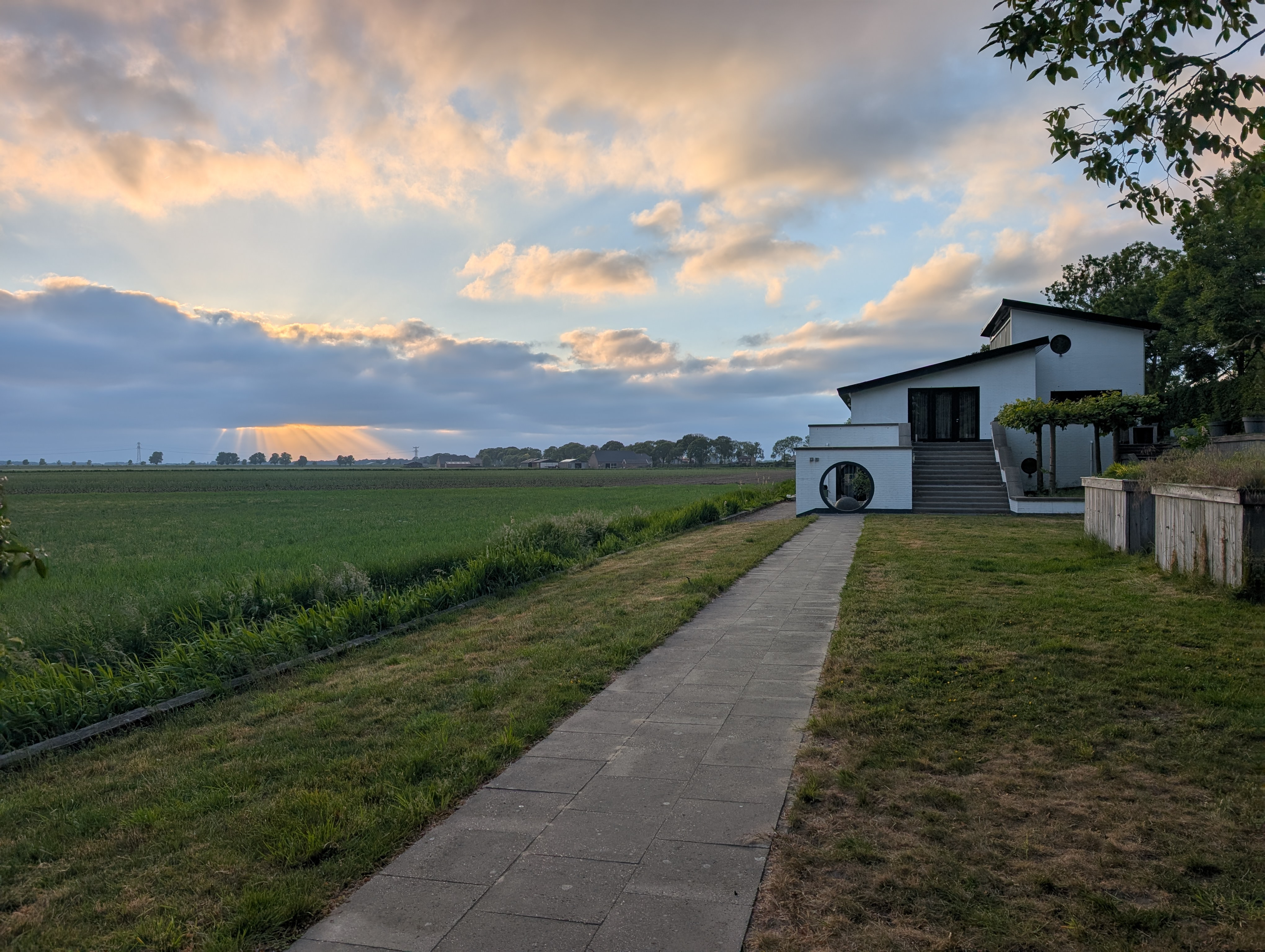
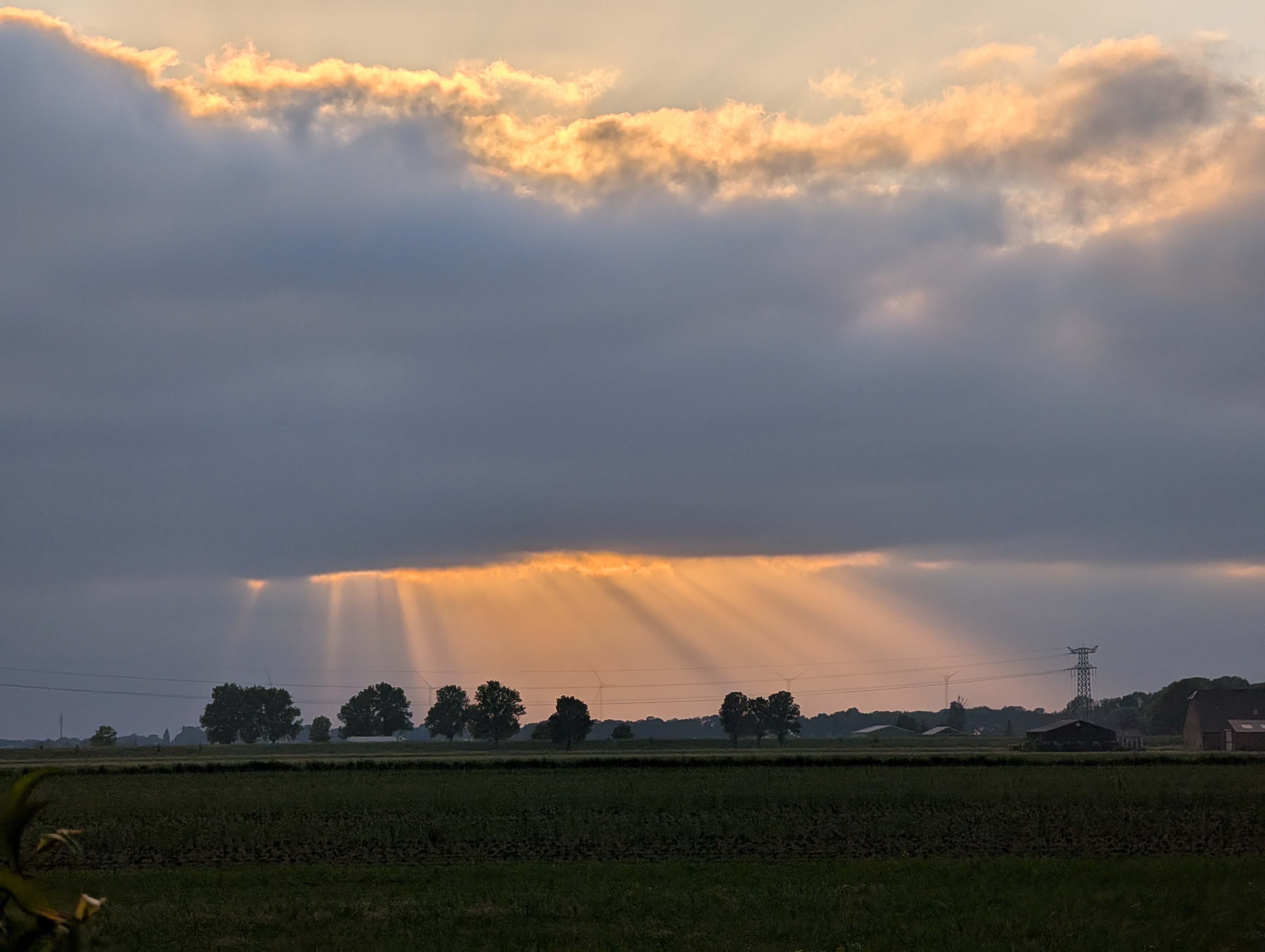
We stayed the night in a rental house just outside of town — a modern place perched right on the edge of the polder with a view across the fields that seemed to go on forever. As the sun went down, crepuscular rays fanned out across the flat horizon in a way that made the whole day feel like it had been building toward exactly that moment.
Day 3 Highlights
~30 miles · Dike roads & farmland · Maastunnel · Rotterdam architecture
We left Klaaswaal on quiet country roads that wound along dikes and through flat, open farmland. By now the rhythm of Dutch cycling had fully clicked — outside the cities, traffic is minimal, drivers give you space, and bikes genuinely have priority. It felt less like sharing the road and more like the road was built for us.
A few miles south of Heinenoord, we picked up the Jack Dawson Greenpad — a dedicated bike path named for an Australian WWII Warrant Officer whose plane crashed near this spot on March 17, 1945, just weeks before the war ended. A small memorial was erected in 2010 by the local community. It's the kind of thing you'd never find in a car. On a bike, at that speed, you notice the sign, you stop, you read the story, and it stays with you for the rest of the day.
As we approached Rotterdam, the landscape shifted fast. Farmland gave way to suburbs, then suddenly we were standing in front of the Maastunnel entrance. An elevator took us and the bikes down beneath the Nieuwe Maas River. We cycled through the tiled tunnel — cool, echoing, slightly surreal — and rode the elevator back up on the other side. It was one of those experiences that doesn't sound remarkable until you're actually doing it.
From the tunnel exit, the route took us through a city park and then across a beautiful bridge into central Rotterdam. The skyline opened up and we were suddenly in a completely different country from the one we'd been pedaling through all morning. Rotterdam was leveled by German bombing in 1940, and what they built in its place is unlike anywhere else in the Netherlands — bold, angular, modern in a way that feels intentional rather than accidental.
We navigated to the hotel via Dutch bike lanes — proper, separated, traffic-light-equipped infrastructure that made riding through a major city feel completely natural. Dropped the bikes, cleaned up, and walked to a nearby Italian restaurant for dinner. The food was excellent, but the real find was the wine cellar downstairs — a beautiful vaulted space that felt like it belonged in a different century.
After dinner, we spent the rest of the evening exploring Rotterdam on foot. The Cube Houses — tilted 45 degrees on their pylons like a geometry problem come to life. The Markthal, a horseshoe-shaped market hall with apartments built into the arch above. The Erasmus Bridge glowing white against the river at dusk. The whole city felt like an architecture exhibition you could walk through. It's the kind of place that rewards wandering, and we wandered until our legs reminded us that we'd already done thirty miles on bikes that morning.
Day 4 Highlights
The Lumineers · Belgian beer · Overnight in Belgium
Photos and story coming soon.
Took the train from Rotterdam to Brussels for a night — saw The Lumineers in concert and explored the city. Delirium beer. Back on bikes the next morning.
Back to the Netherlands · Back on the bikes
Photos and story coming soon.
Returned from Brussels by train in the morning and got back on the bikes to reach Leiden — our base for two nights.
Photos and story coming soon.
Photos and story coming soon.
Photos and story coming soon.
Biked back to Amsterdam, then took the train to Utrecht for the afternoon before returning to Haarlem for the night.
Photos and story coming soon.
Left early from Haarlem for the airport. Bikes returned, bags packed, memories made.
Until the next one.