An old name, from the Low Countries
One of America's oldest Dutch families
Reynier van der Sluijs sailed from Holland and settled at Germantown, Pennsylvania, around 1701 — among the early Dutch families of that pioneering settlement just outside Philadelphia. He and his son Adrian were naturalized as citizens on September 29, 1709, and the 1929 family history calls the Vanderslices "one of the oldest families in Pennsylvania."
More than three centuries and eleven generations later, the name is still carried across the country — and it’s likely that nearly every American Vanderslice traces back to Reynier, which would let this tree double as a map of the wider family.
What "Vanderslice" means
Vanderslice is the Americanized spelling of the Dutch surname van der Sluijs (also written Sluis or Sluys). It is a place-name: sluis is the Dutch word for a sluice — a lock, floodgate, or gated channel that controls the flow of water through a canal or dike.
The van der means "of the," so van der Sluijs is literally "of the sluice." In the low-lying, water-laced Netherlands such gates were everywhere and essential, and a name like this was usually earned in one of two ways: by an ancestor who lived right beside a sluice, or by one who operated it — a sluiswachter, or lock-keeper, who raised and lowered the waters. (It can also point to the town of Sluis on the Zeeland coast.) Either way, the family took its name from the sluice — and over generations American clerks softened the Dutch spelling until van der Sluijs became Vanderslice.
The 1929 family book preserves a romantic legend — a noble foundling found on a North Sea beach — but genealogists long ago debunked it: there was never a "Baron van der Sluys." The sluice is the real, humbler root.
Where they came from
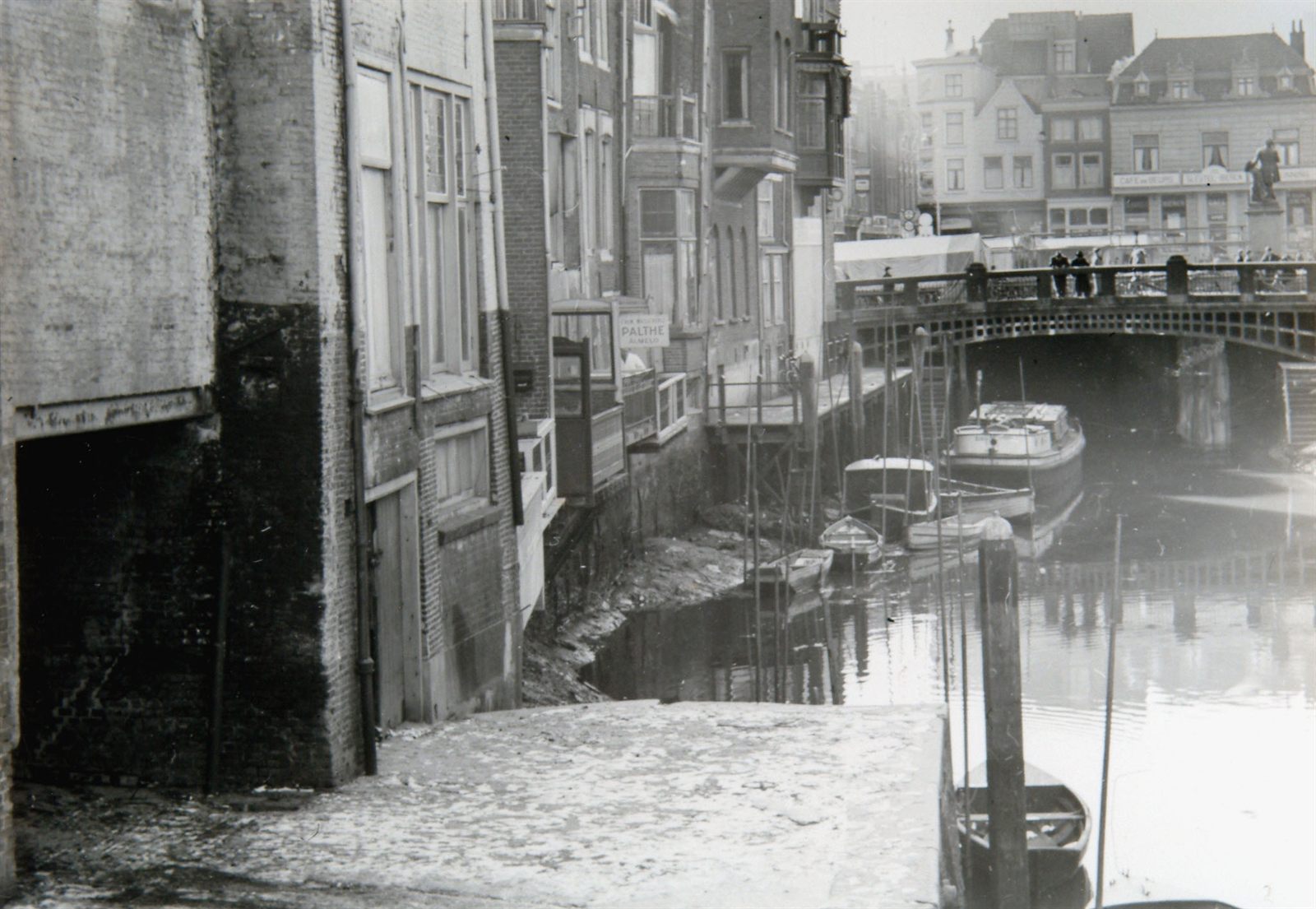
Dordrecht was Reynier's city: the oldest town in Holland, a river port where the Rhine trade in wine, timber and grain met the sea, and the birthplace of the Dutch Republic in 1572. His parents and grandparents lived on the Vriesestraat, and in 1686 he bought a house on the Voorstraat ("Front Street"), the city's main street, where he worked as a grutter, a groat-miller who hulled and sold grain. The house is still standing.
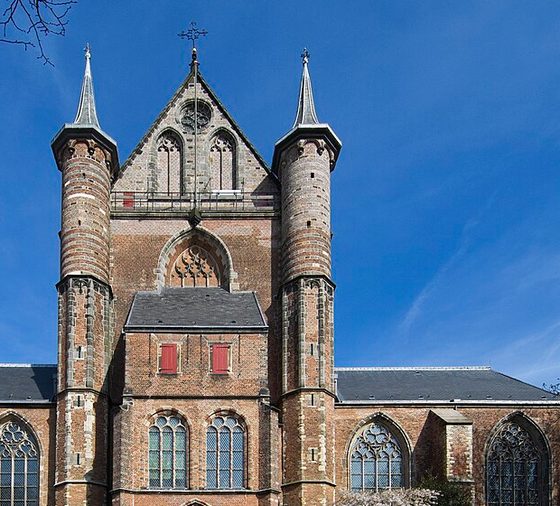
Leiden was his wife Anna Spruijt's family's city, the university and cloth town where the Pilgrims had lived before the Mayflower. Reynier and Anna registered their banns, the formal notice of their intention to marry, there in July 1685, while Anna and her mother were living beside the Pieterskerk.
Around 1701, a few years after a bankruptcy had cost him his house, they left Dordrecht, where they had lived since their marriage, for Germantown, Pennsylvania.
The full story covers the two cities and Holland in his day, his family and Anna's, the house and everyone who owned it after him, why they may have left, and the crossing.