‹ Back to Adventures
🥾 Hiking & Backpacking
2001 – Present
Grand Canyon
Rim to river, rim to rim, and everything in between. The Grand Canyon is not just a hike — it's a lifelong obsession.
Rim to river, rim to rim, and everything in between. The Grand Canyon is not just a hike — it's a lifelong obsession.
Most people visit the Grand Canyon once, stand at the rim, take a photo, and leave. I went to the rim — and then kept going down. What started as a single hike has turned into a decades-long love affair with one of the world's most spectacular and demanding landscapes.
Over 500 miles hiked, more than 15 trips to the canyon floor, and 9 rim-to-rim crossings completed in a single day. Each trip reveals something new — a different season, a different trail, a different view of those ancient layers of rock.
Some of those trips are single-day hikes — rim to river and back, or rim to rim before the sun goes down. Others are overnight backpacking trips, carrying everything in to sleep at the bottom, whether at Phantom Ranch or the campground along Bright Angel Creek. Over the years I've done plenty of both.
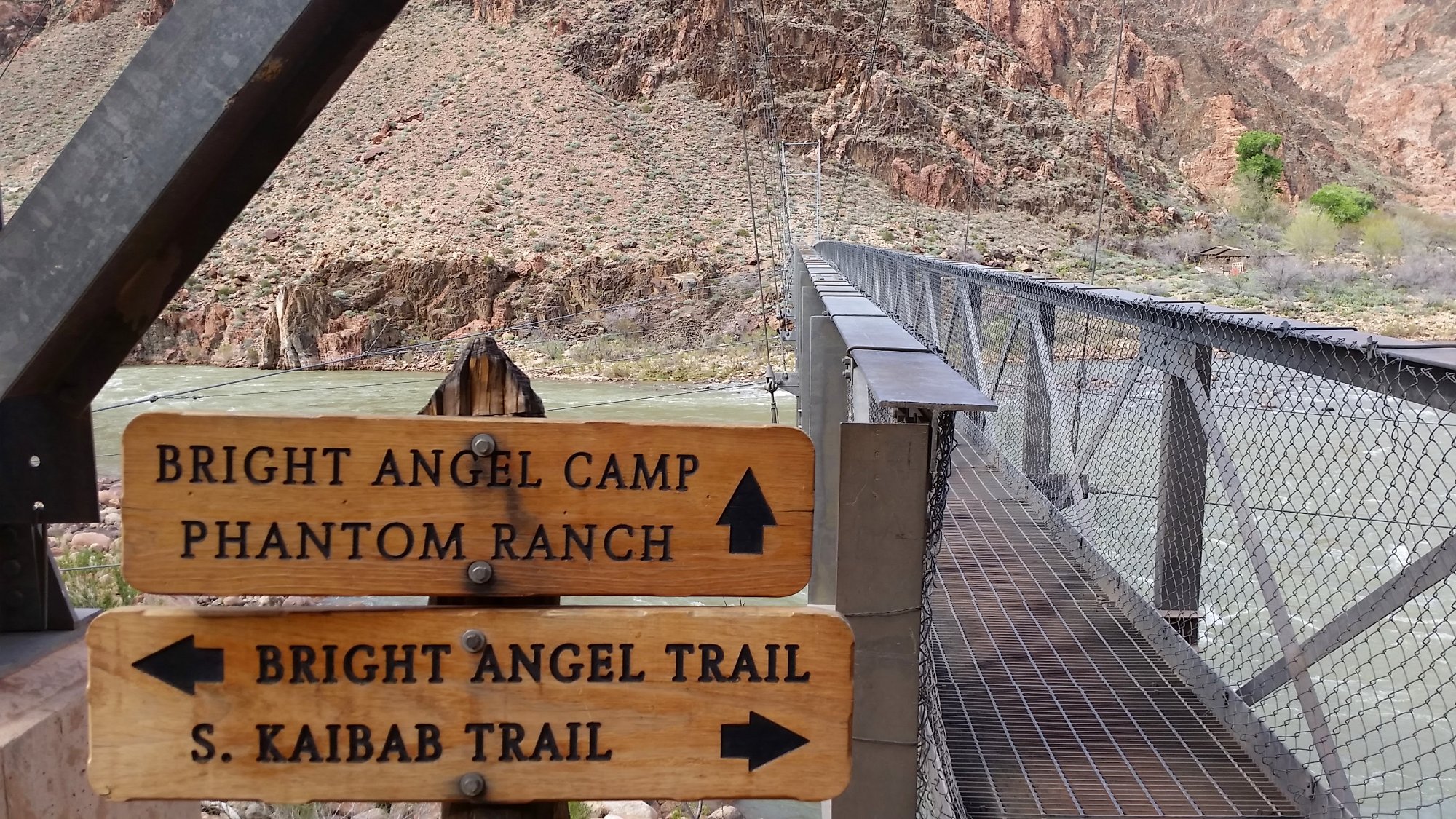
The Silver Bridge crossing — Phantom Ranch just ahead
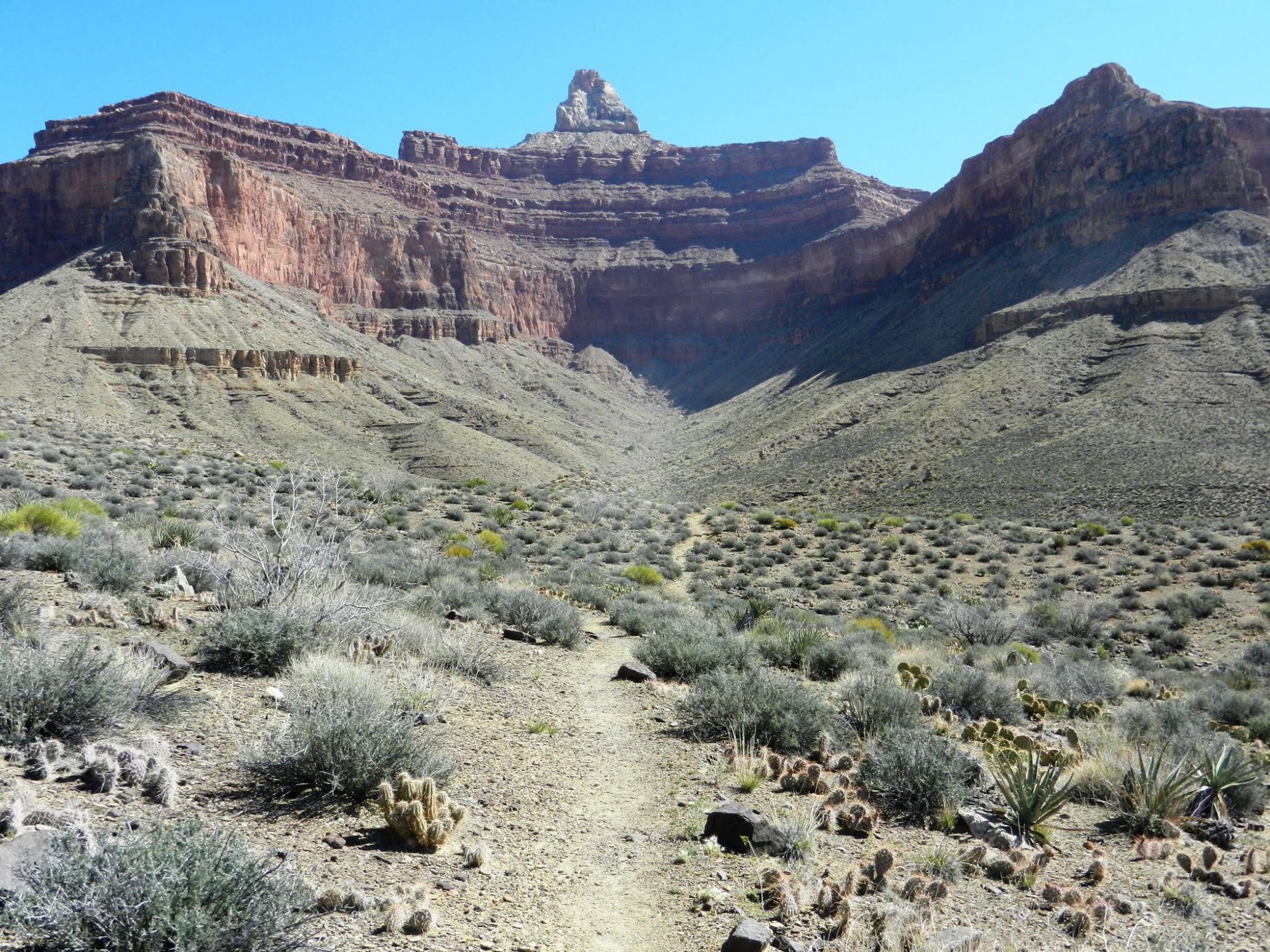
The inner canyon — cactus, scrub, and massive walls on every side
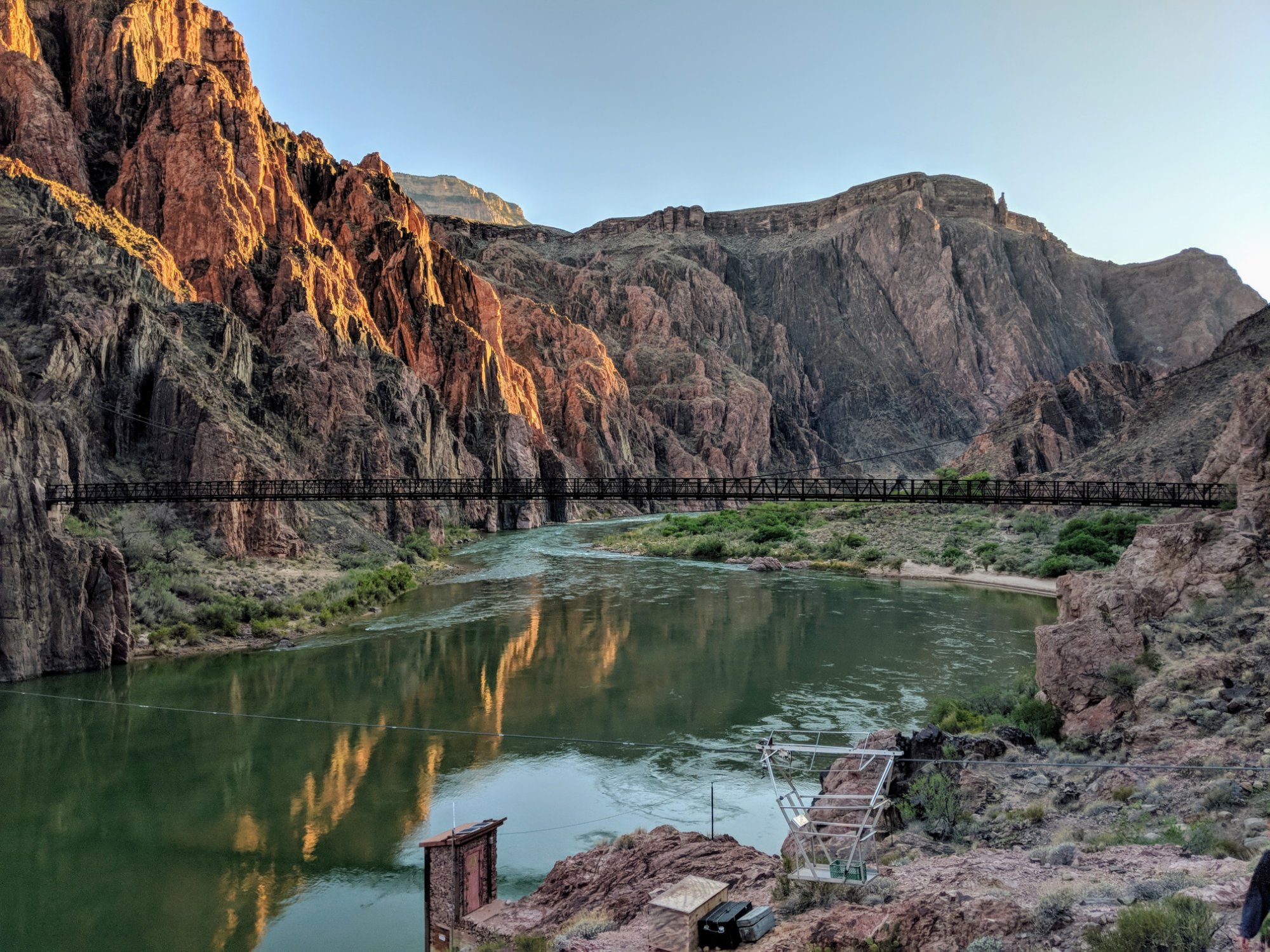
The Colorado River at Phantom Ranch — golden morning light on the walls
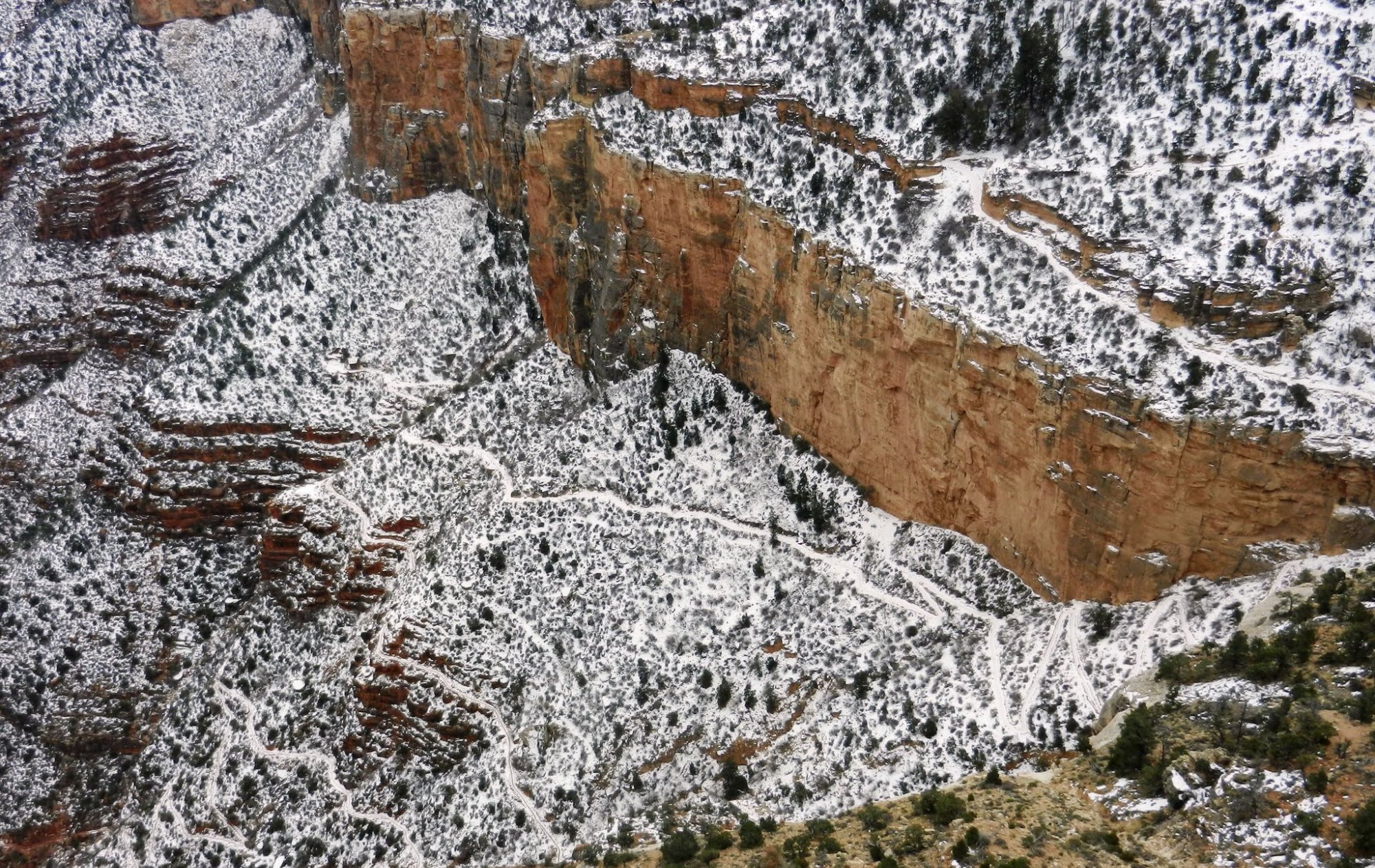
Winter in the canyon — snow on the rim, switchbacks carved into the cliff
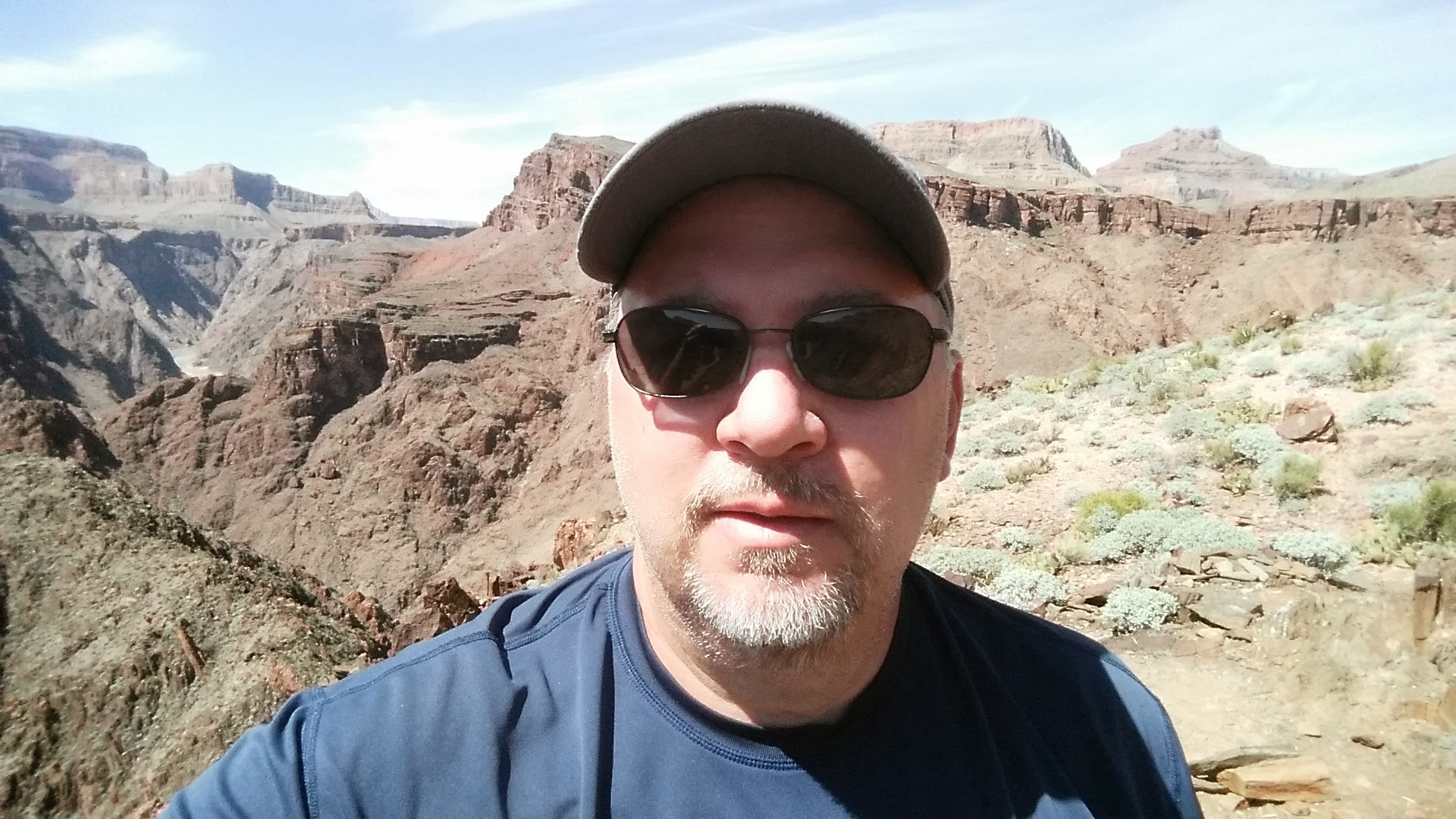
At the canyon floor — a long way from the rim
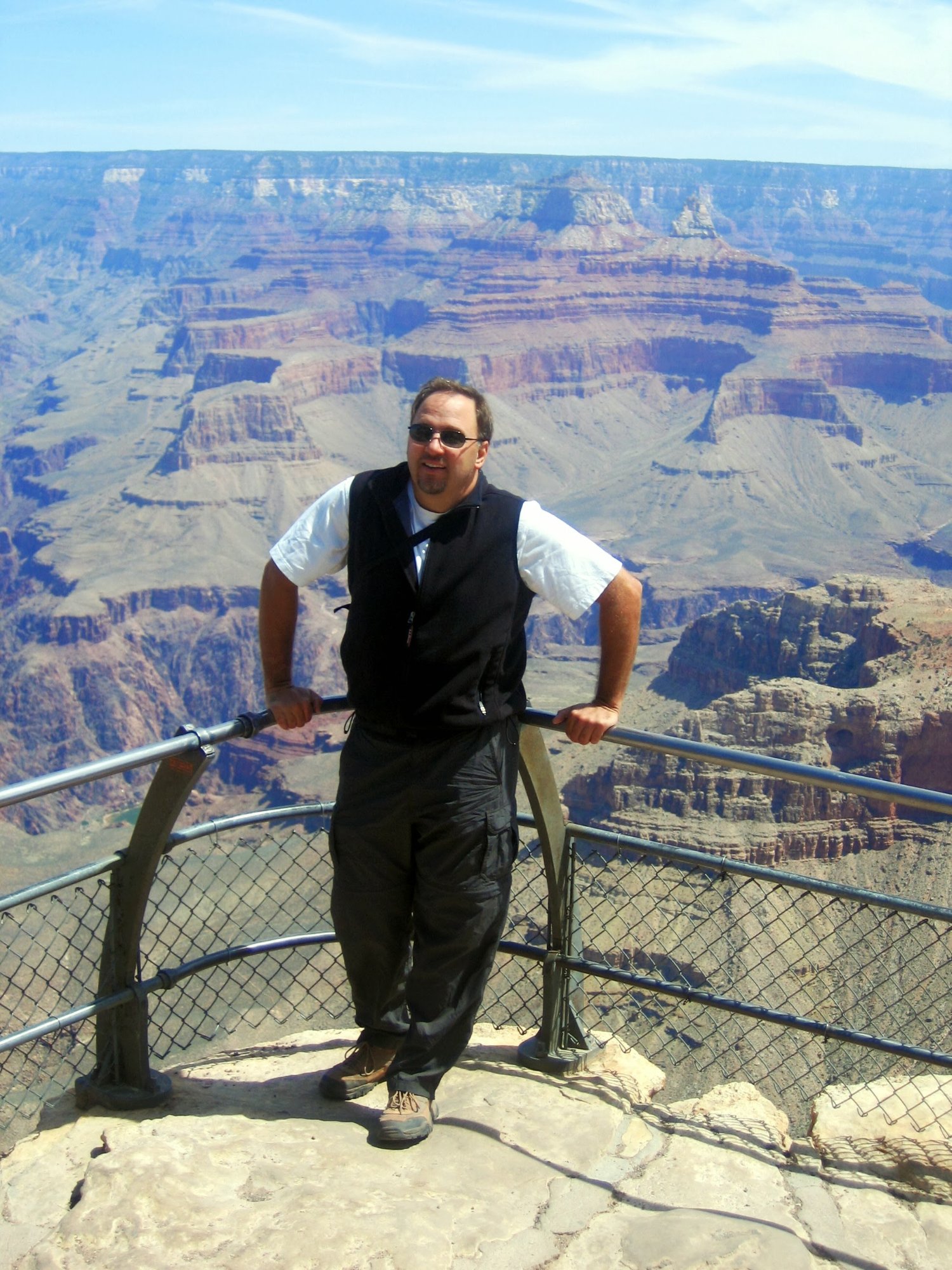
At the South Rim — before it all began
Beyond the rim-to-rim crossings and the overnight stays at Phantom Ranch, a handful of individual trips stand out on their own. Here's the first — I'll add more over time.
This one came together on a whim. Doug and I had been watching the forecast, half-hoping for snow on the rim — December can go either way at 7,000 feet — and when the timing looked right, we just went. We drove up the night before, grabbed a hotel room near the park, and were on the trail early the next morning.
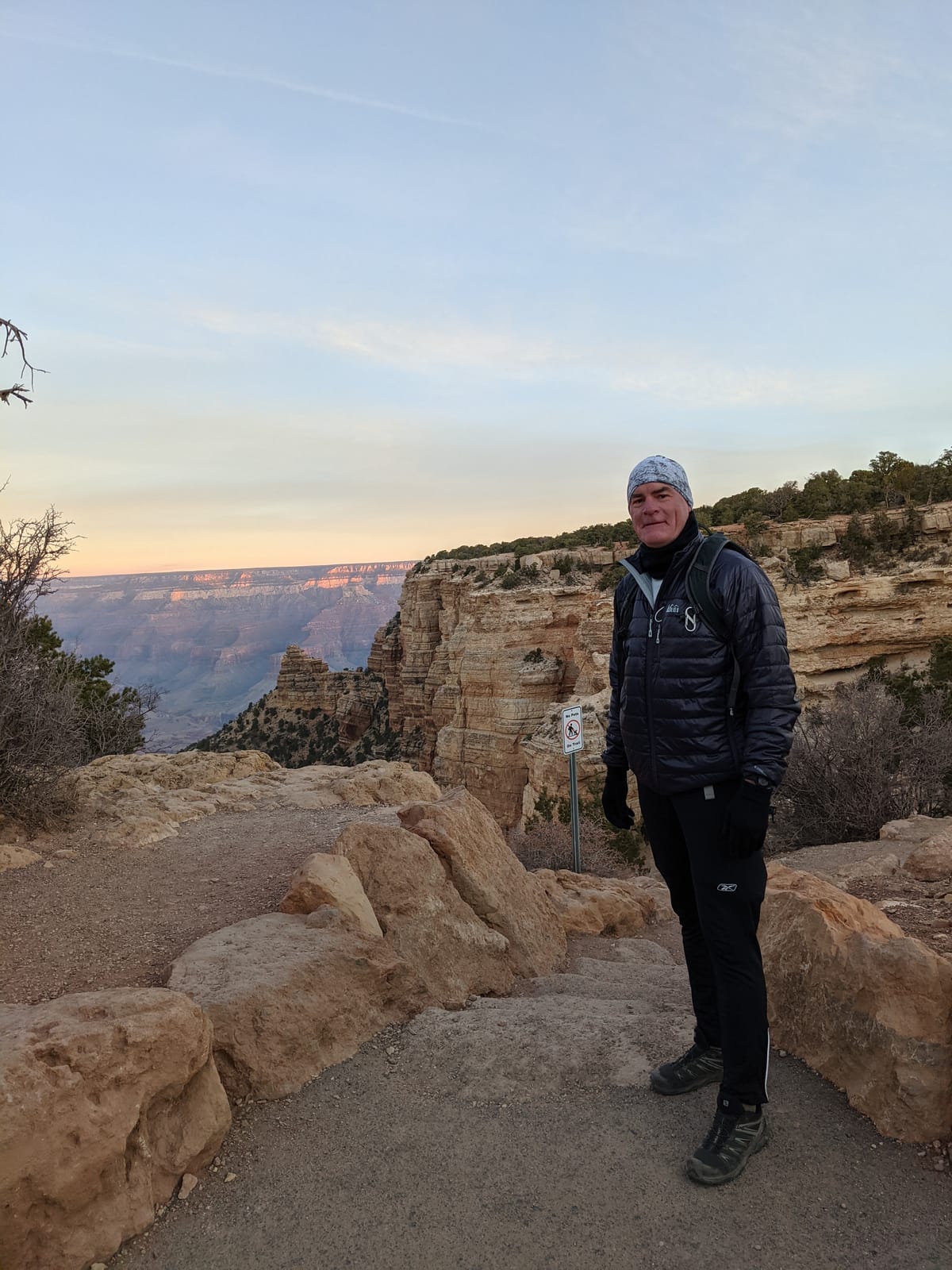
Doug at the South Rim just after sunrise — cold up top, first light on the far walls.
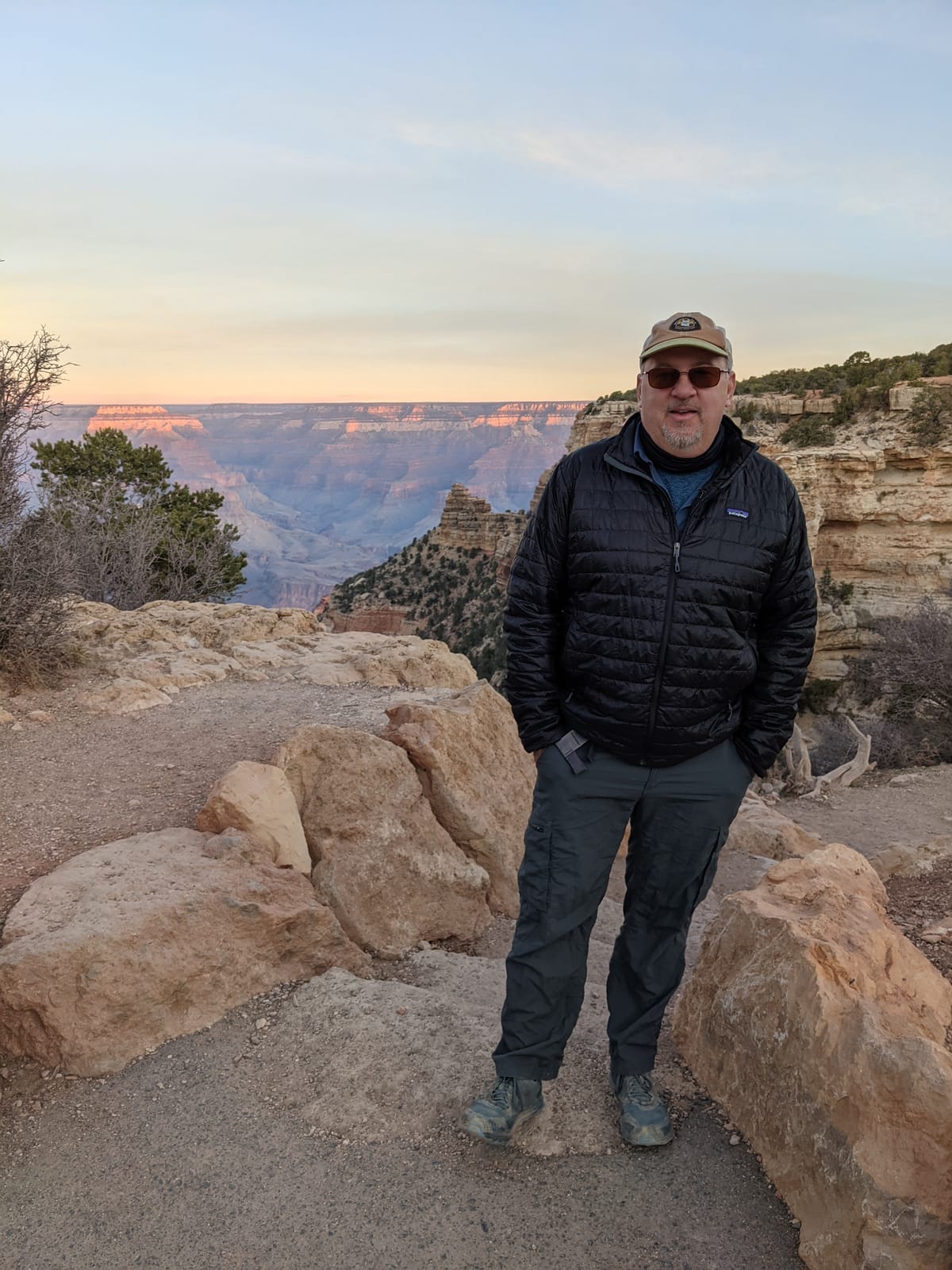
Me at the rim before we dropped in — layers on for a cold December morning.
We started down the South Kaibab Trail at first light. It's the newer of the two corridor trails — built toll-free by the Park Service in 1924–25 to sidestep Ralph Cameron's toll on the Bright Angel — and it earns its reputation: it rides the spine of a ridge with almost no shade and open canyon on both sides the whole way down. Roughly 4,860 feet of descent over about seven miles to the Colorado.
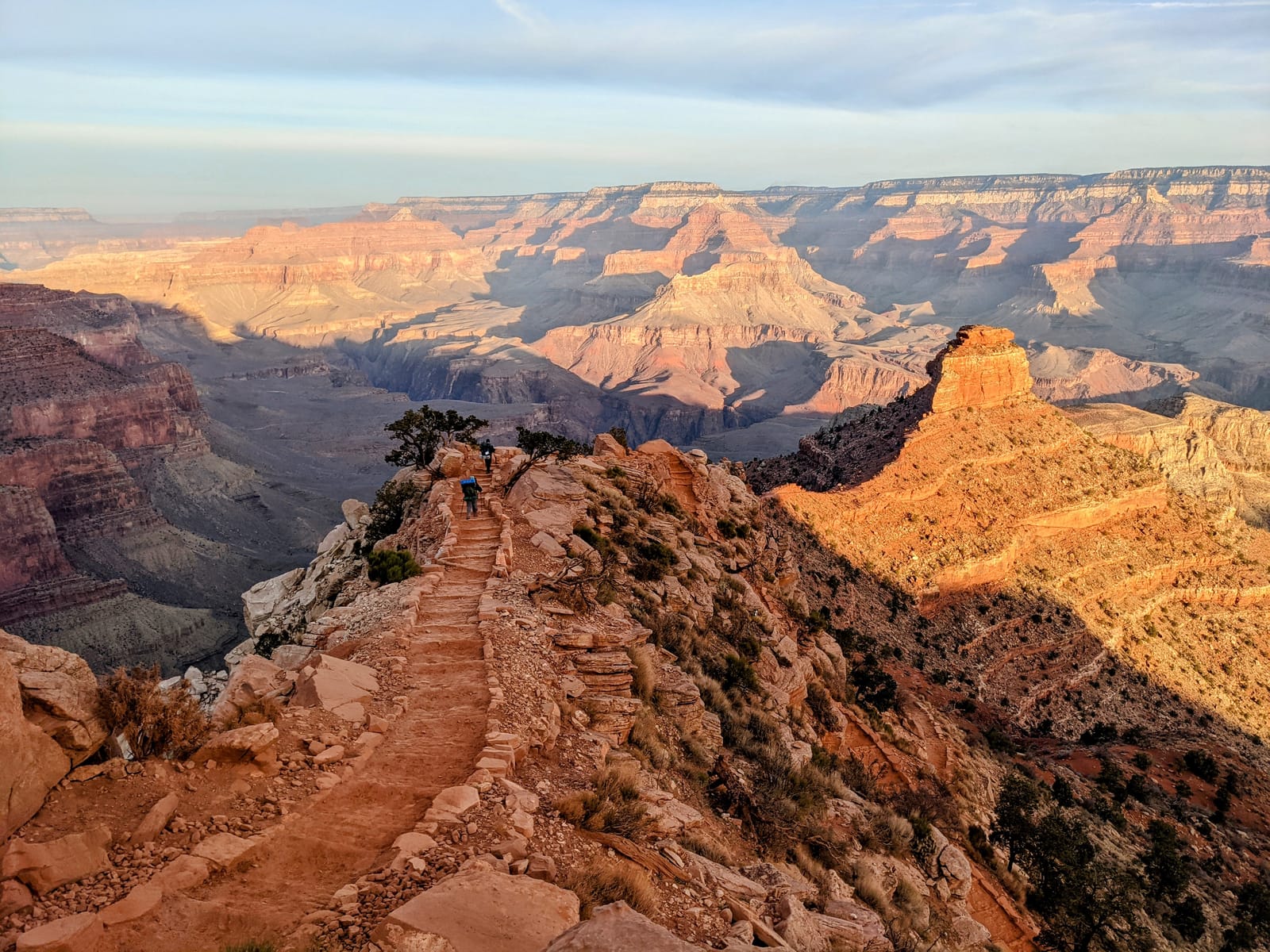
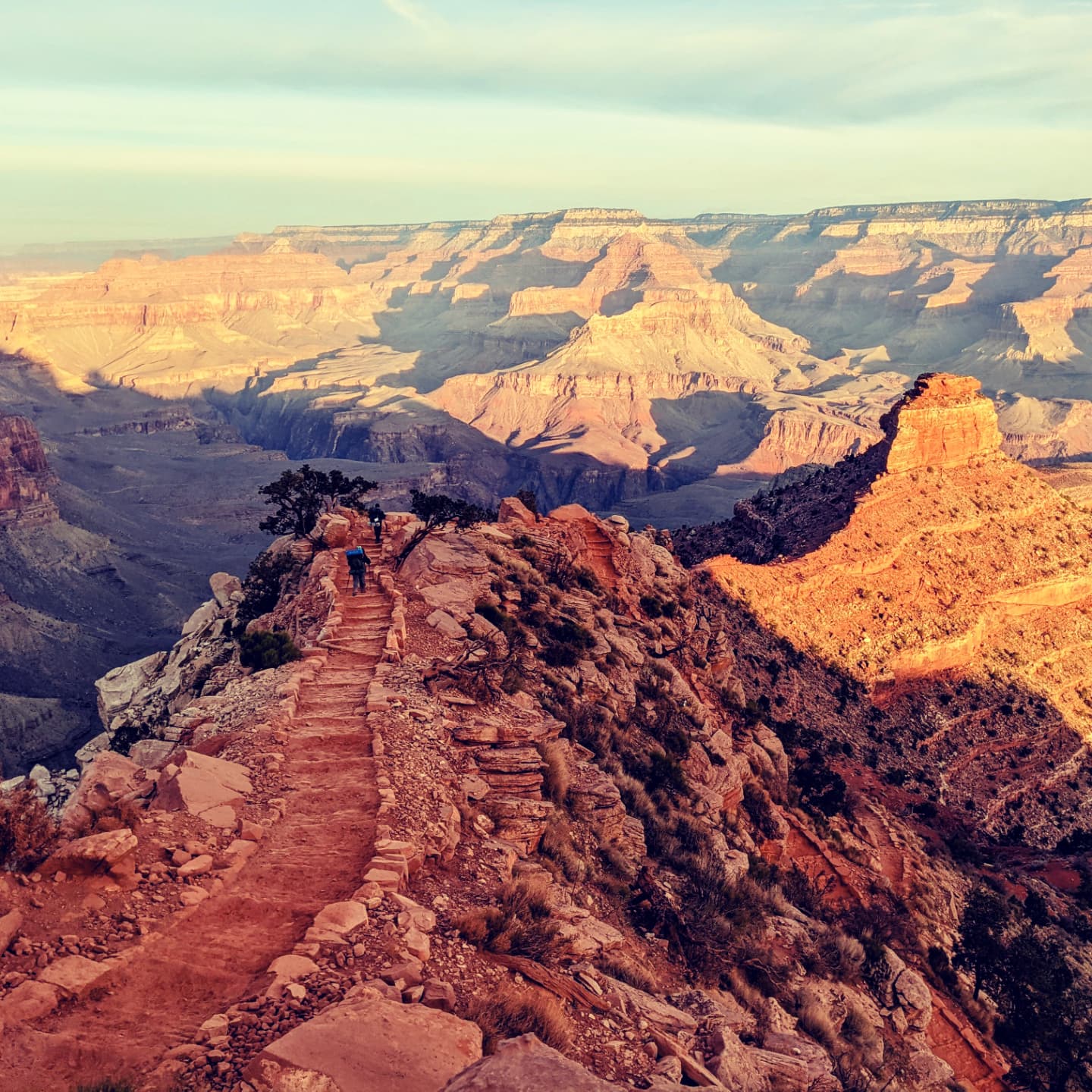
The South Kaibab rides the spine of a ridge — open canyon on every side, almost no shade, all the way down.
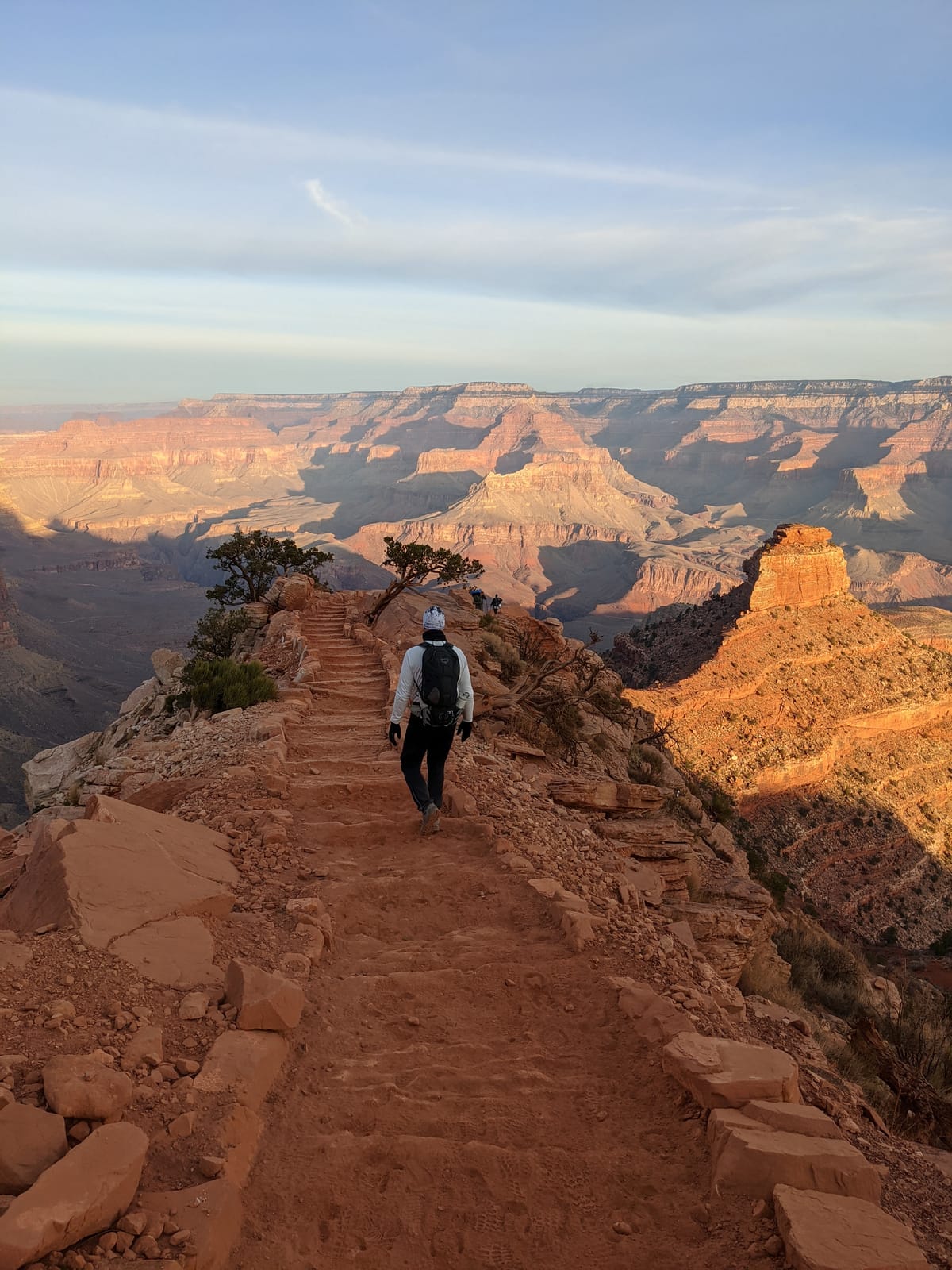
Doug heading down the South Kaibab in the early light, O'Neill Butte glowing on the right.
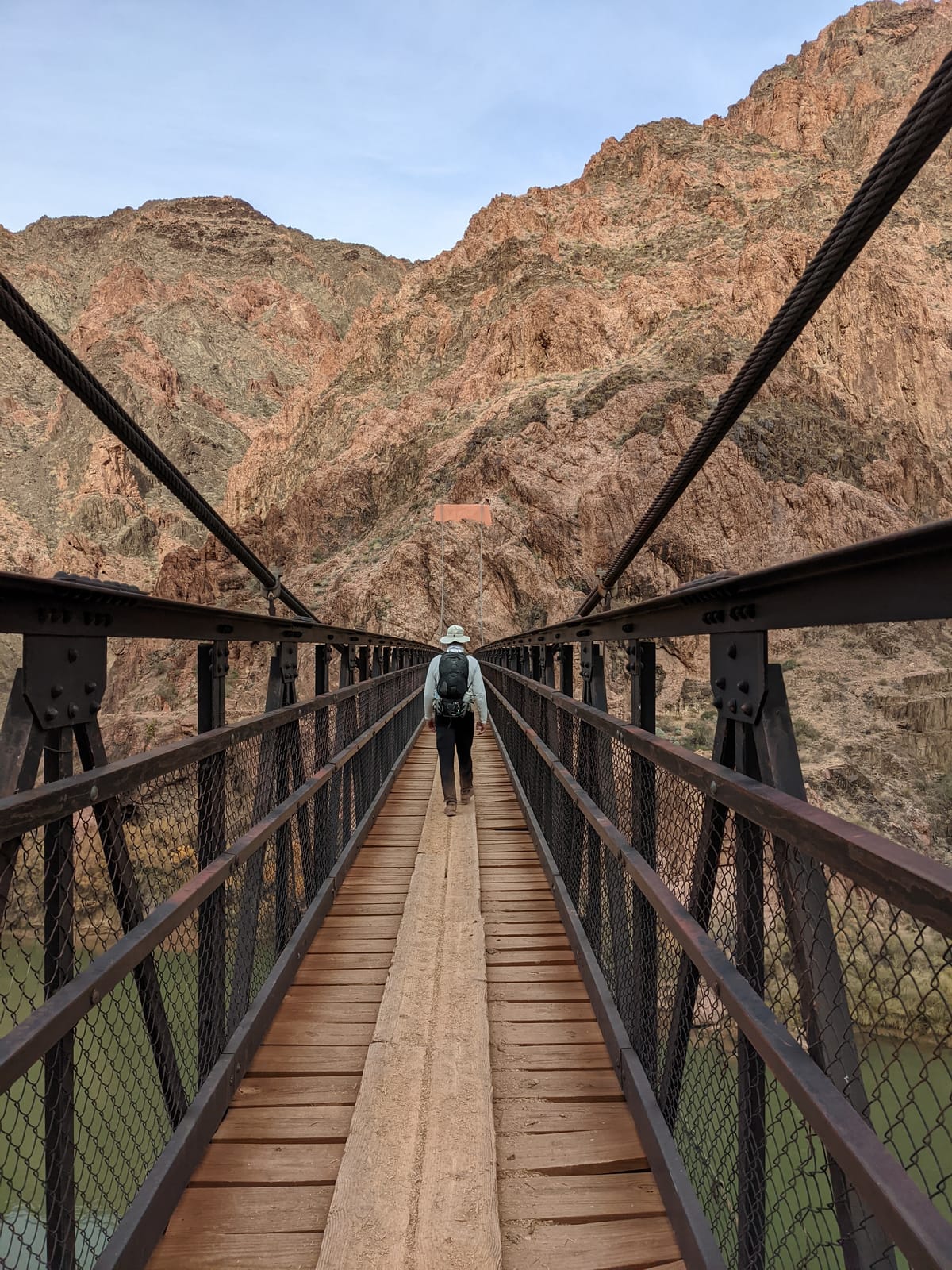
Doug crossing the Black Bridge — the 1928 Kaibab Suspension Bridge — to the river's north side.
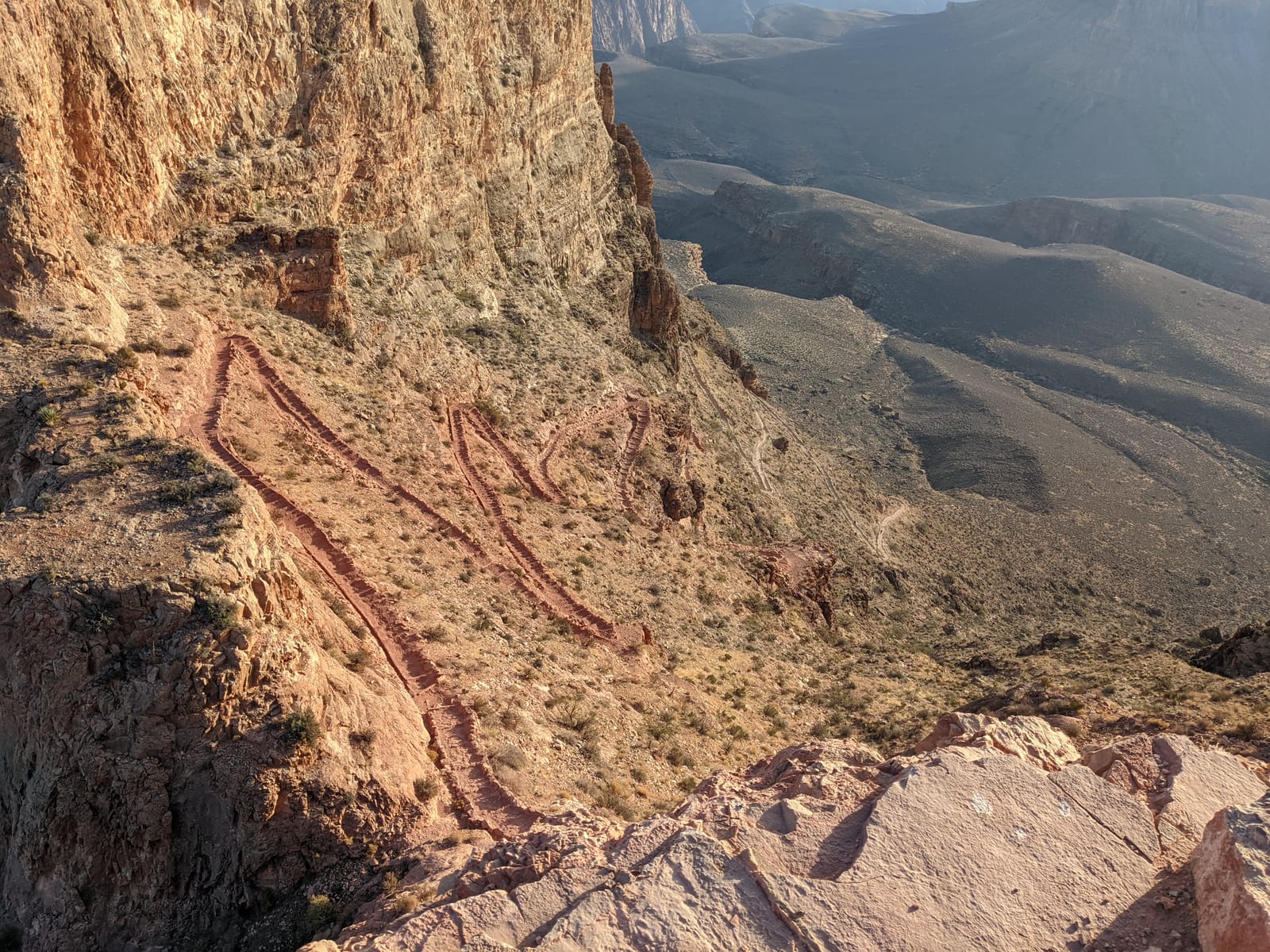
Switchbacks carved into the rock on the drop toward the river.
At the bottom we crossed the Colorado on the Black Bridge and followed the River Trail to Phantom Ranch, tucked in the cottonwoods where Bright Angel Creek meets the river. The canyon was quiet that day. We didn't have it entirely to ourselves — but at Phantom Ranch we were the only ones there for most of the time we sat and ate our packed lunches.
More on its first century: Arizona Highways, "Phantom Ranch Turns 100."
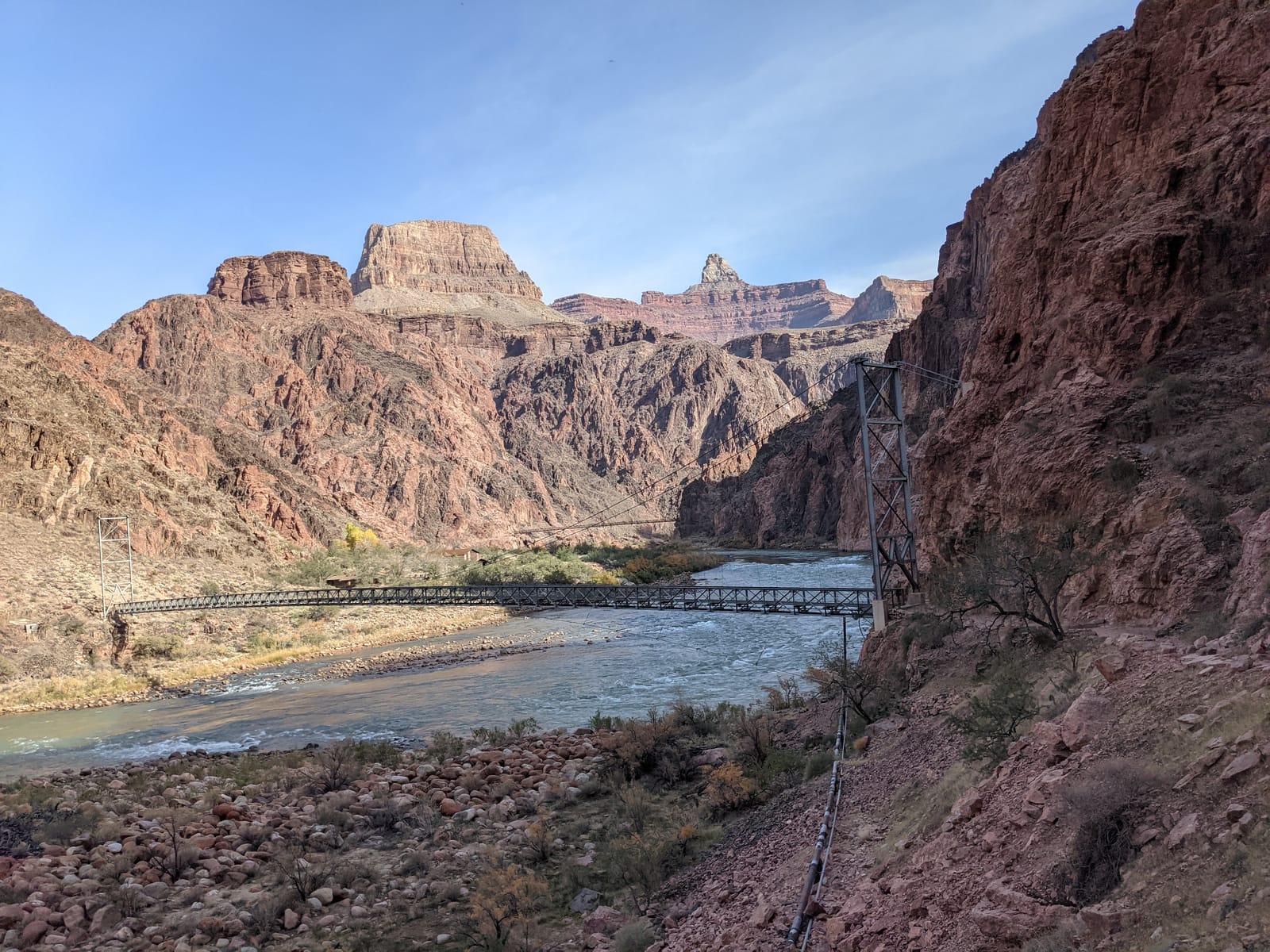
The Silver Bridge over the Colorado — built around 1970 to carry the trans-canyon water pipeline, and hikers on the Bright Angel side.
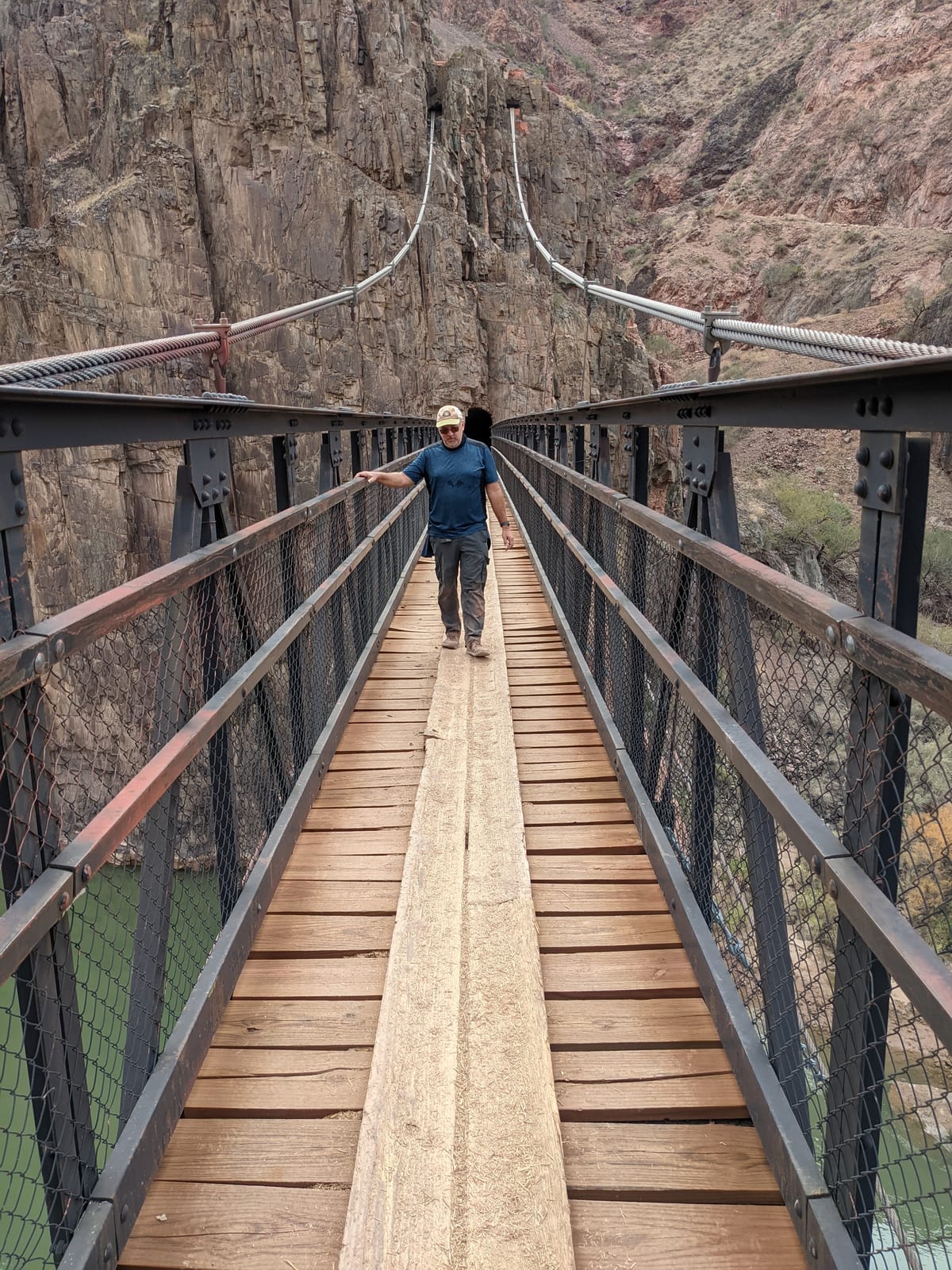
Me on the Black Bridge, down at the bottom.
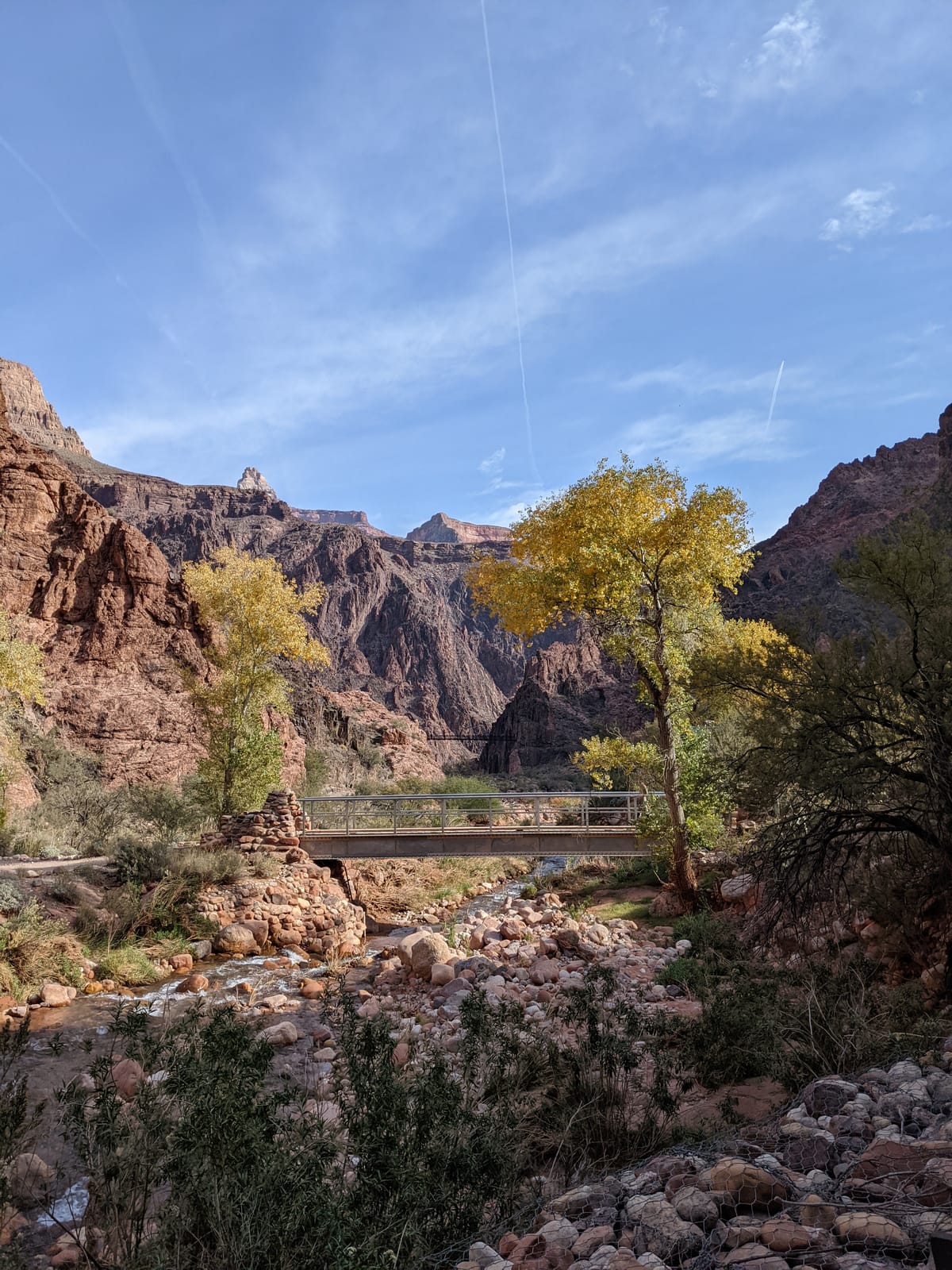
Bright Angel Creek near the campground, cottonwoods still lit up in their fall gold.
The snack bar was open, so I made a point of getting dessert. I surprised Doug with a king-size four-pack of Reese's peanut butter cups — and bought one for myself, so he wouldn't have to share his.

Dessert at the bottom: a four-pack of Reese's — one for Doug, one for me, no sharing required.
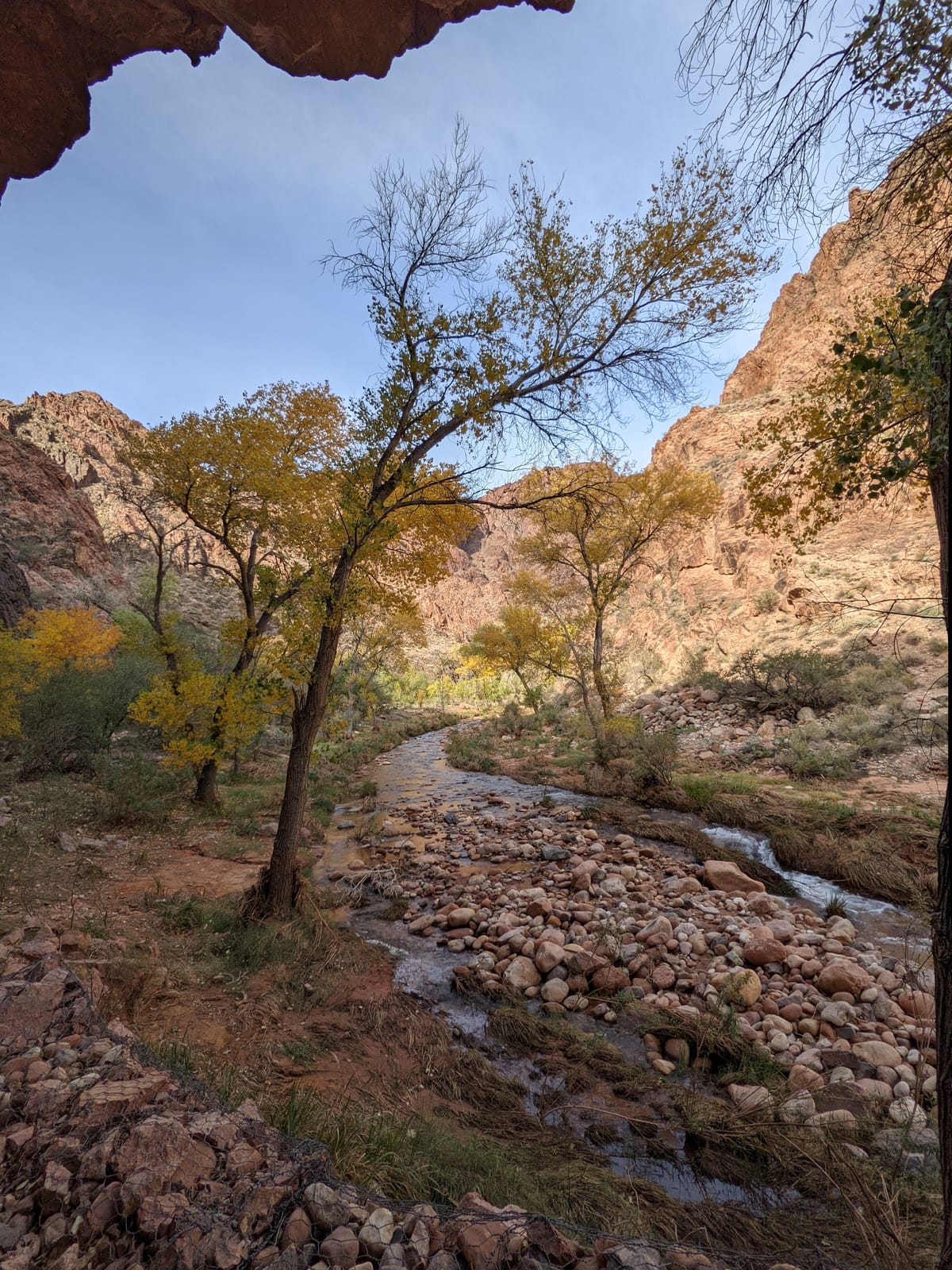
Autumn along Bright Angel Creek at Phantom Ranch, still holding its color in December.
Then came the long way up. We climbed out on the Bright Angel Trail — a route that follows a fault line people have used for thousands of years — 9.5 miles and nearly a mile of elevation gain from the river, past Havasupai Gardens and up through the golden cottonwoods to the South Rim. The Park Service posts a blunt warning near the top: don't try to hike to the river and back in a day. We did exactly that — but we knew the canyon, started early, and took our time.
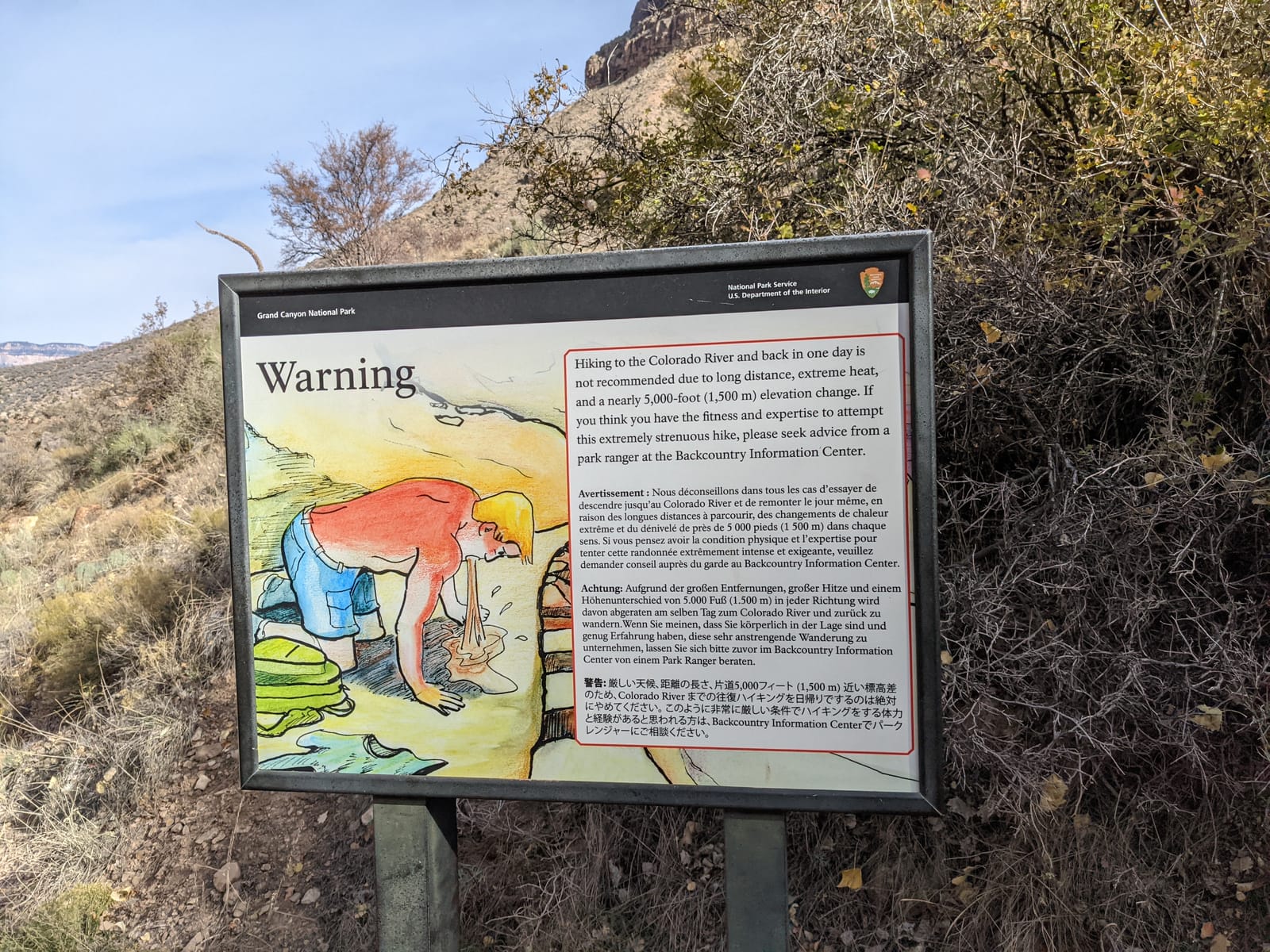
The Park Service doesn't sugarcoat it: hiking to the river and back in a day is "not recommended."
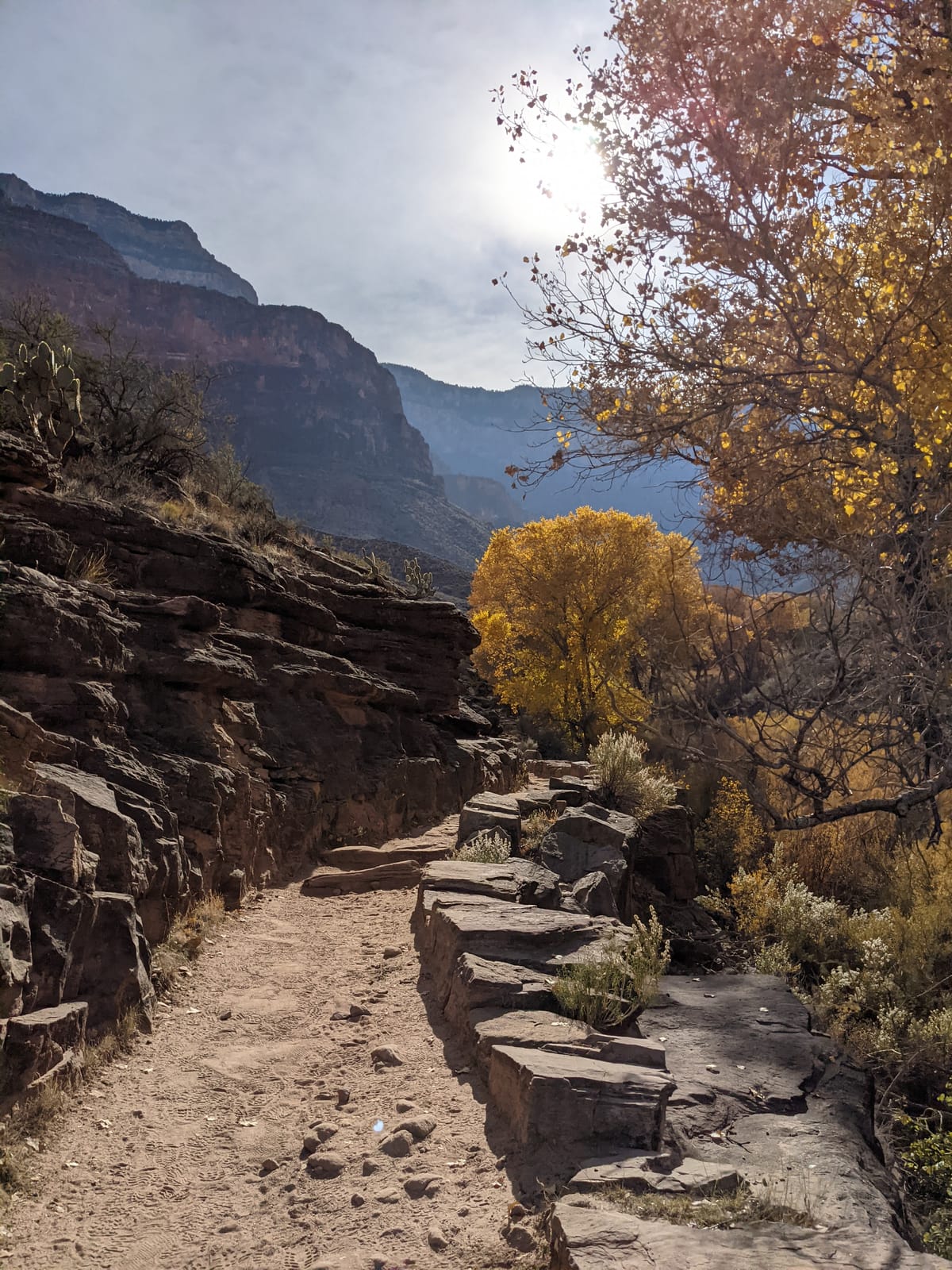
Climbing out on the Bright Angel through backlit cottonwoods.
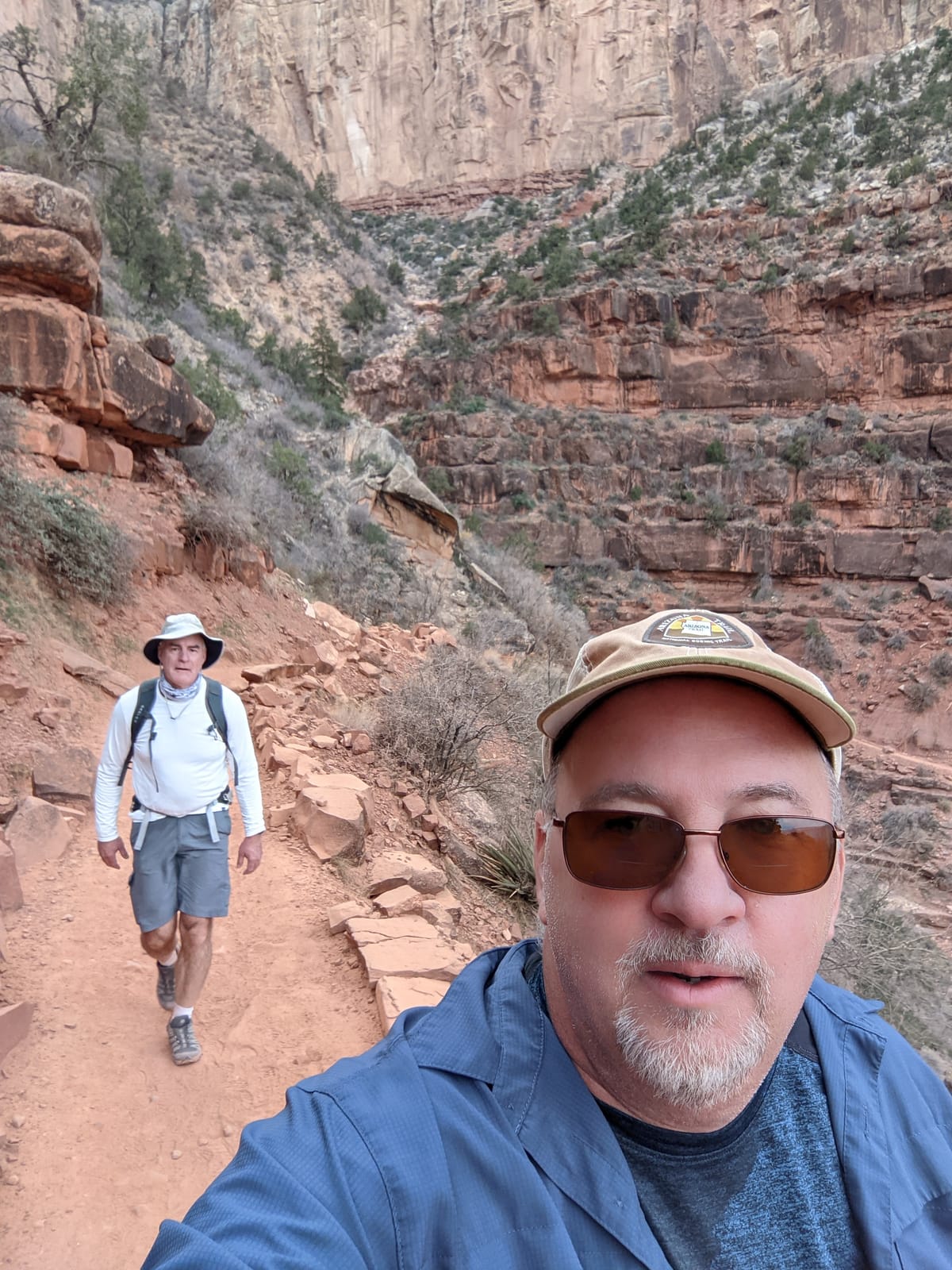
Doug (behind) and me on the long climb out — 9.5 miles and nearly a mile up from the river.
Further reading: the National Park Service's history of the Grand Canyon's corridor trails — where the South Kaibab, Bright Angel, and river bridges come from.
A rim-to-rim hike does just what it sounds like: it crosses the entire Grand Canyon from one side to the other — dropping from the North Rim or South Rim all the way down to the Colorado River, then climbing back out the opposite side. There's no road across; the only way through is on foot (or by mule), straight down into the canyon and back up the far wall.
Done in a single day, that crossing — roughly 21–24 miles depending on the route — is the canyon's ultimate day-hike challenge. Start before dawn on the South Rim, descend the South Kaibab, cross the canyon floor past Phantom Ranch, and climb out the North Kaibab to the North Rim. Or the reverse. I've done it nine times in a day.
It's not a hike for the unprepared. The elevation change is brutal in both directions, water management is critical, and inner-canyon temperatures in summer can top 110°F. But finishing at the opposite rim as the sun goes down is one of the most satisfying feelings I've ever had on a trail.
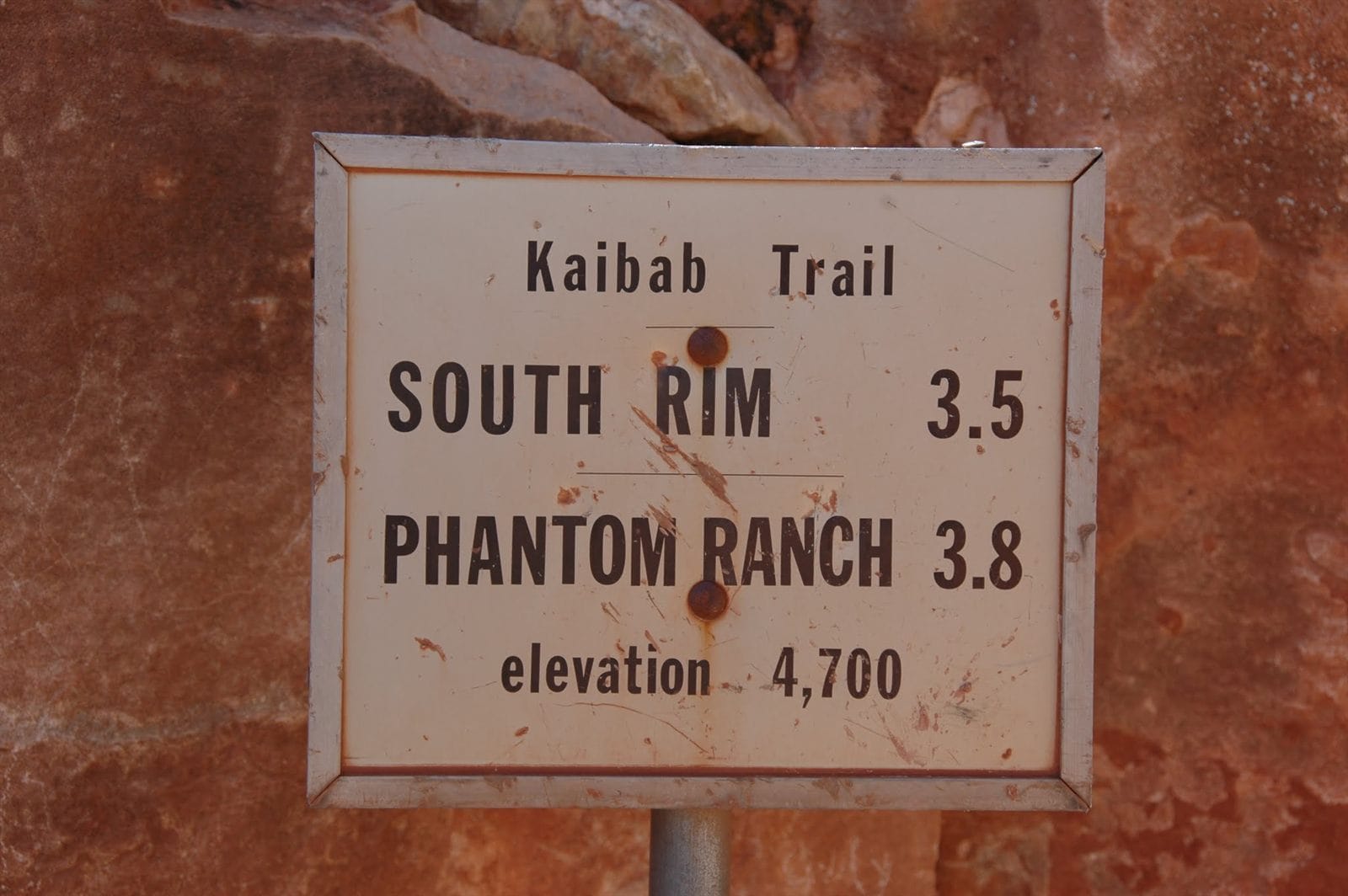
Kaibab Trail — South Rim 3.5 miles back, Phantom Ranch 3.8 ahead, around the halfway mark.
Grand Canyon National Park — where every one of these trips begins.
Over the years, the canyon has become something I love to share. The group shots here are from a few of the rim-to-rim hikes I've helped organize — rallying friends to the trailhead before dawn and getting everyone across to the far rim by nightfall. I've also taken plenty of people down into the canyon for their first time, and planned and led others on hikes and overnight stays at Phantom Ranch. Watching someone reach the Colorado River for the first time never gets old.
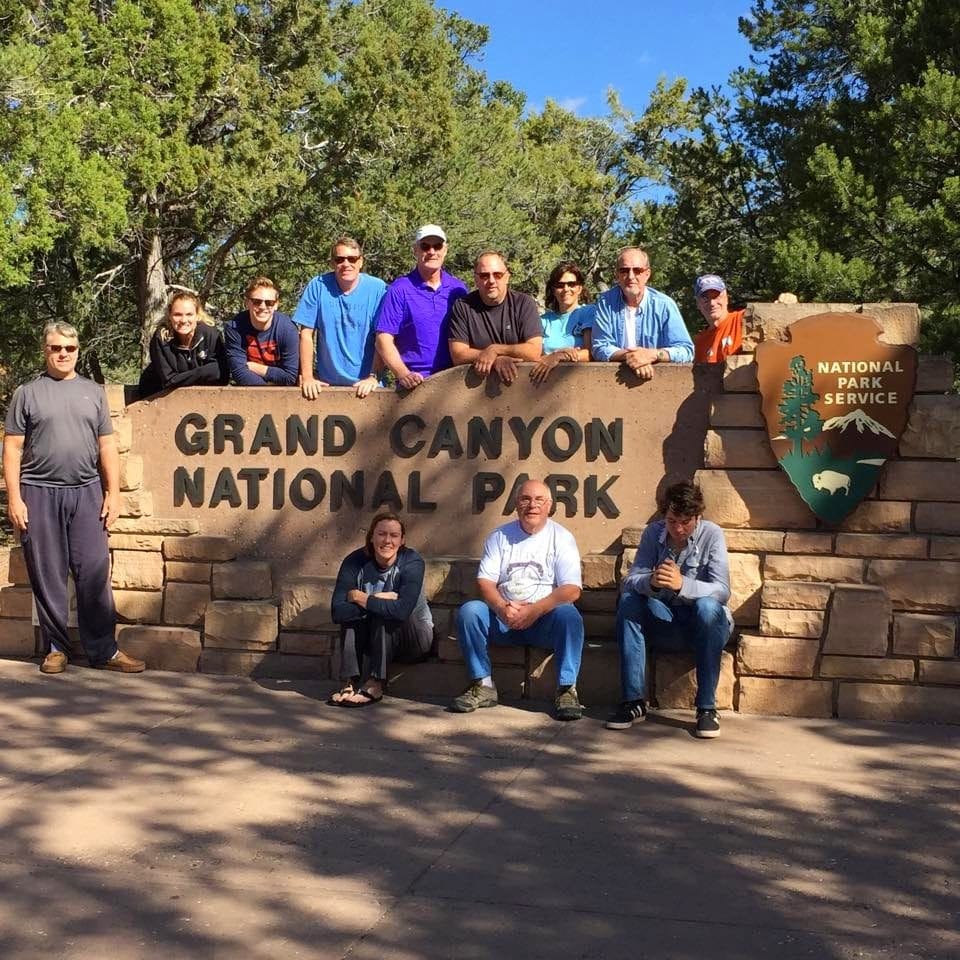
A rim-to-rim group I helped organize, gathered at the park sign before the crossing.
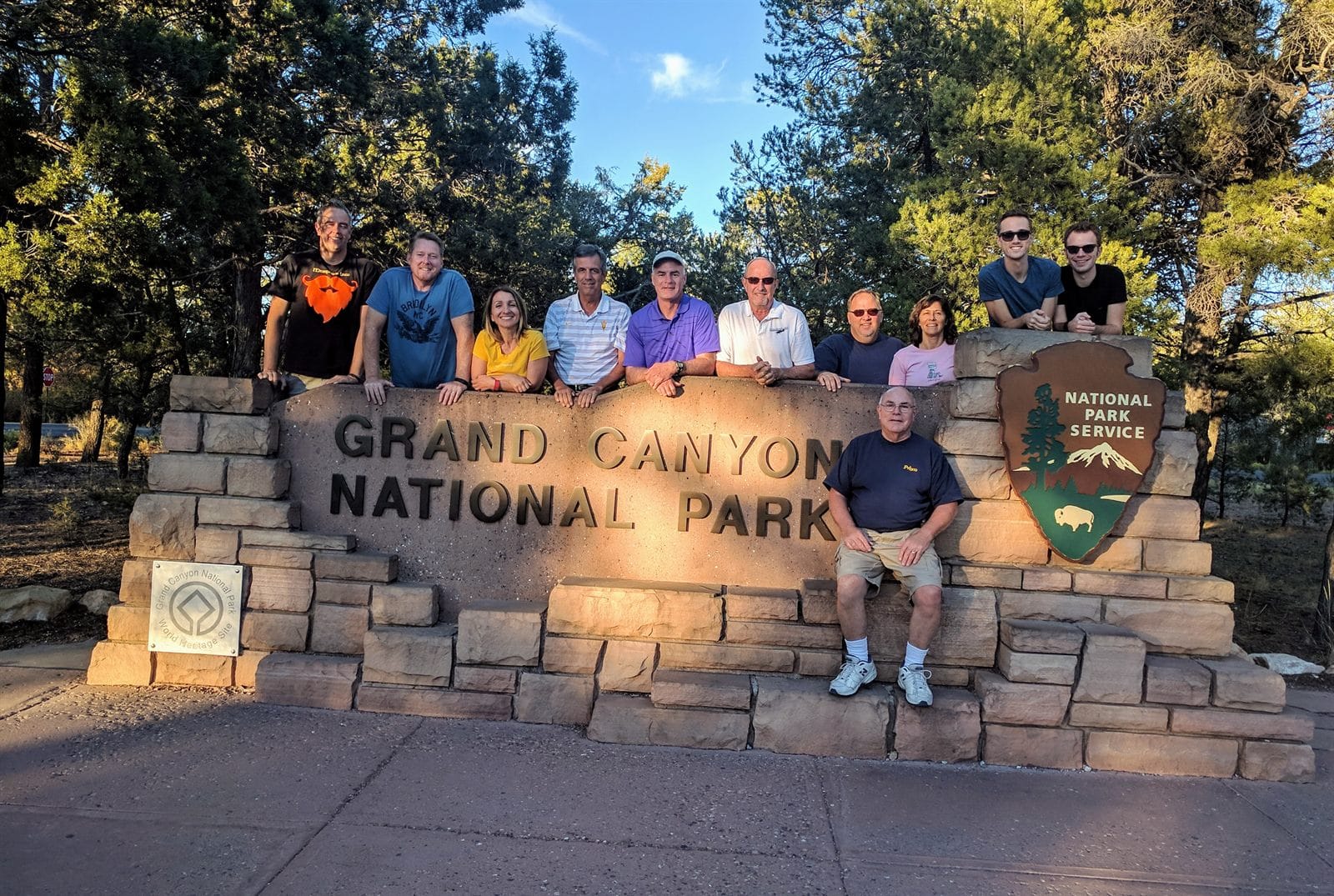
Another rim-to-rim crew, fresh and ready at the rim.
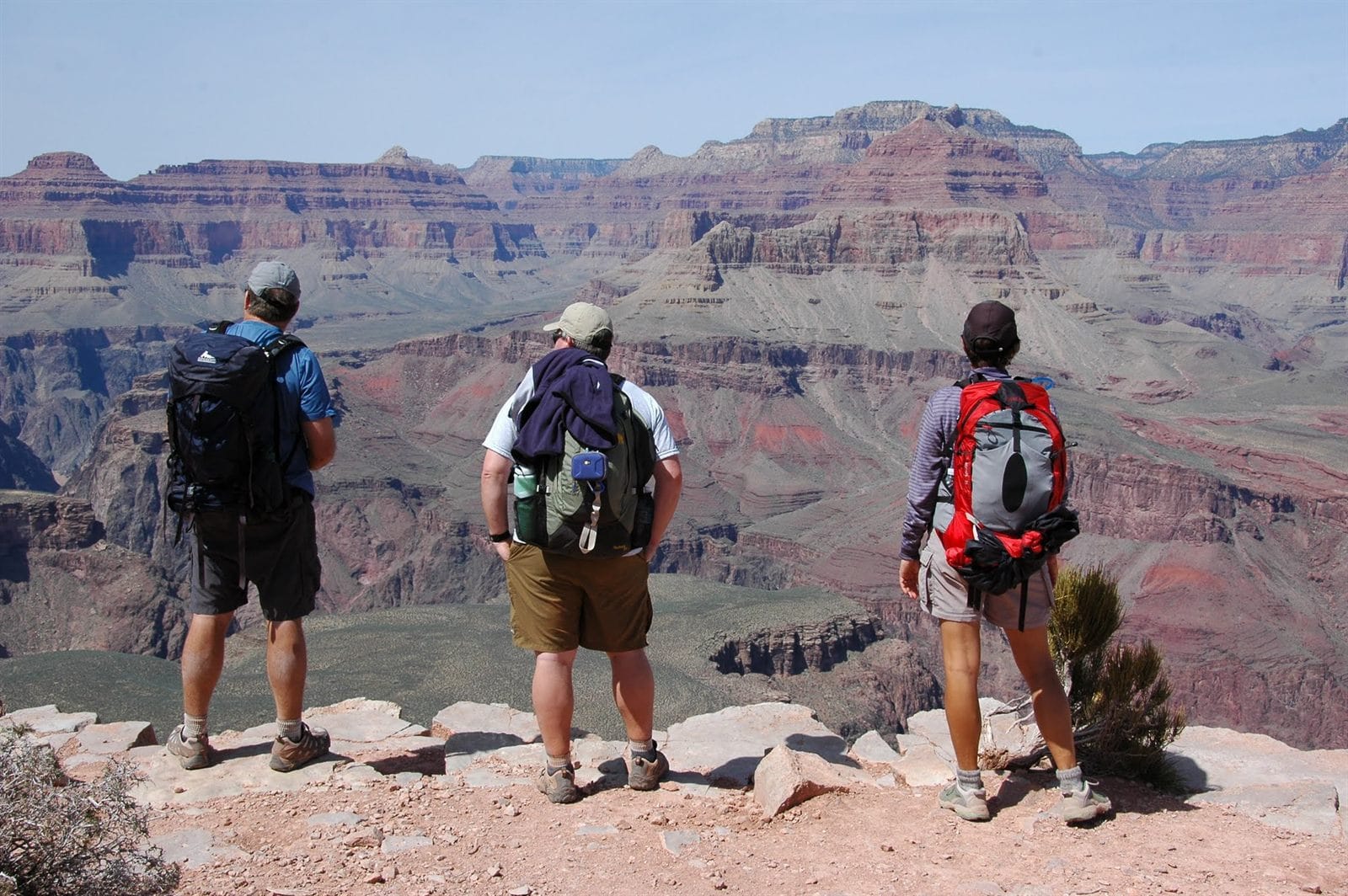
Friends soaking in the view from an overlook on the way down.
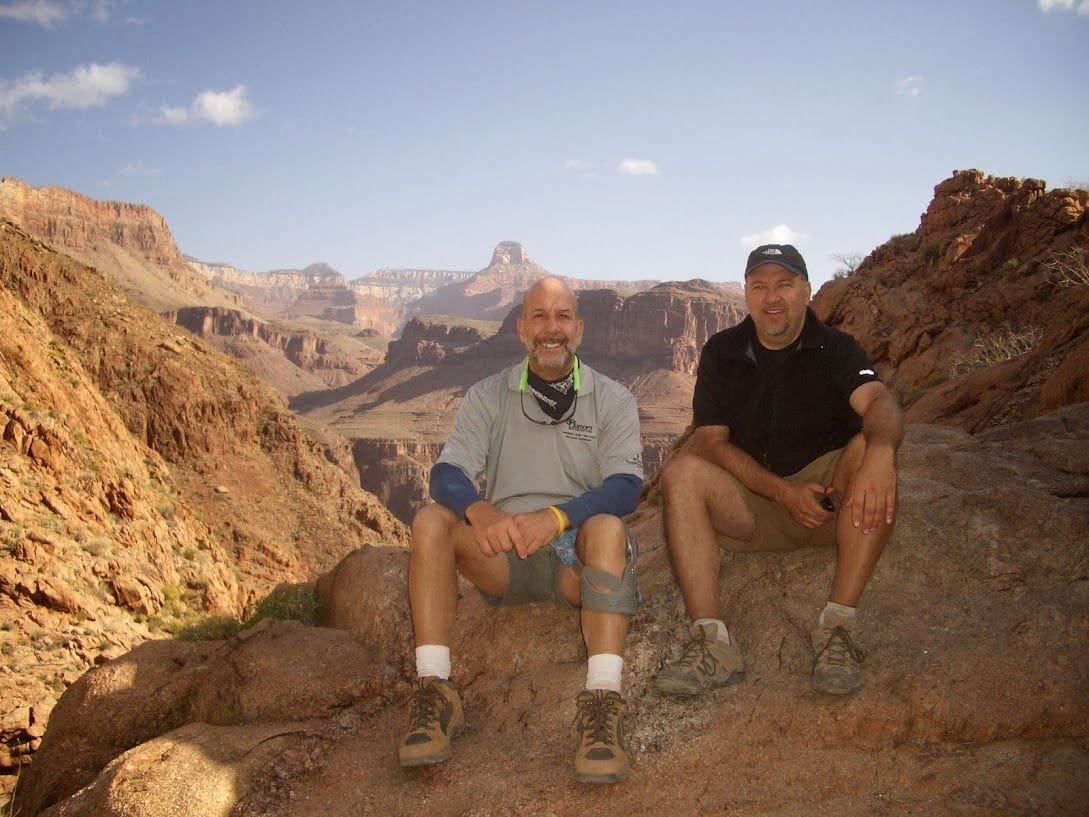
Good company in a grand place — a breather on the red rocks.
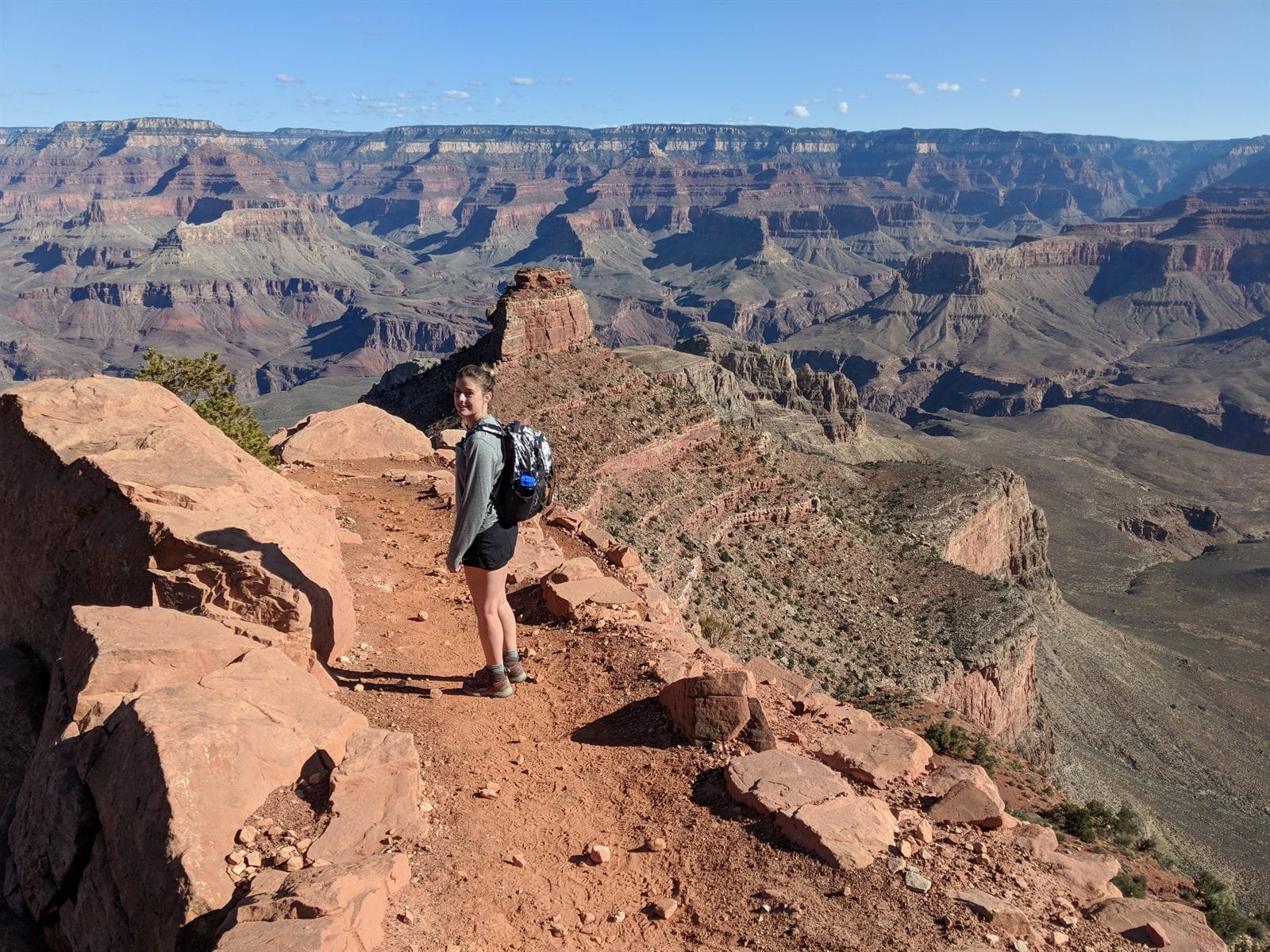
Jessica — a family member I took down to Phantom Ranch for her first trip to the bottom of the canyon.
Tucked on the canyon floor near where Bright Angel Creek meets the Colorado River, Phantom Ranch is the only lodging below the rim — and you reach it the way everyone has for a century: on foot, by mule, or by raft.
It was designed by architect Mary Colter for the Fred Harvey Company and opened in 1922. Its native-stone cabins and central dining hall were built from rock and timber found right there in the canyon, with everything else packed down by mule. Colter named it "Phantom Ranch" after nearby Phantom Creek, overruling the company's planned "Roosevelt Chalet." More than a century later it still runs much the same way — hot meals in the canteen, postcards carried out "mailed by mule," and beds booked by lottery long in advance.
When I'm not pushing rim-to-rim in a single day, Phantom Ranch is the reward. I've stayed there many times — in both the dorms and the cabins — using it as a basecamp to explore the inner canyon at a slower pace.
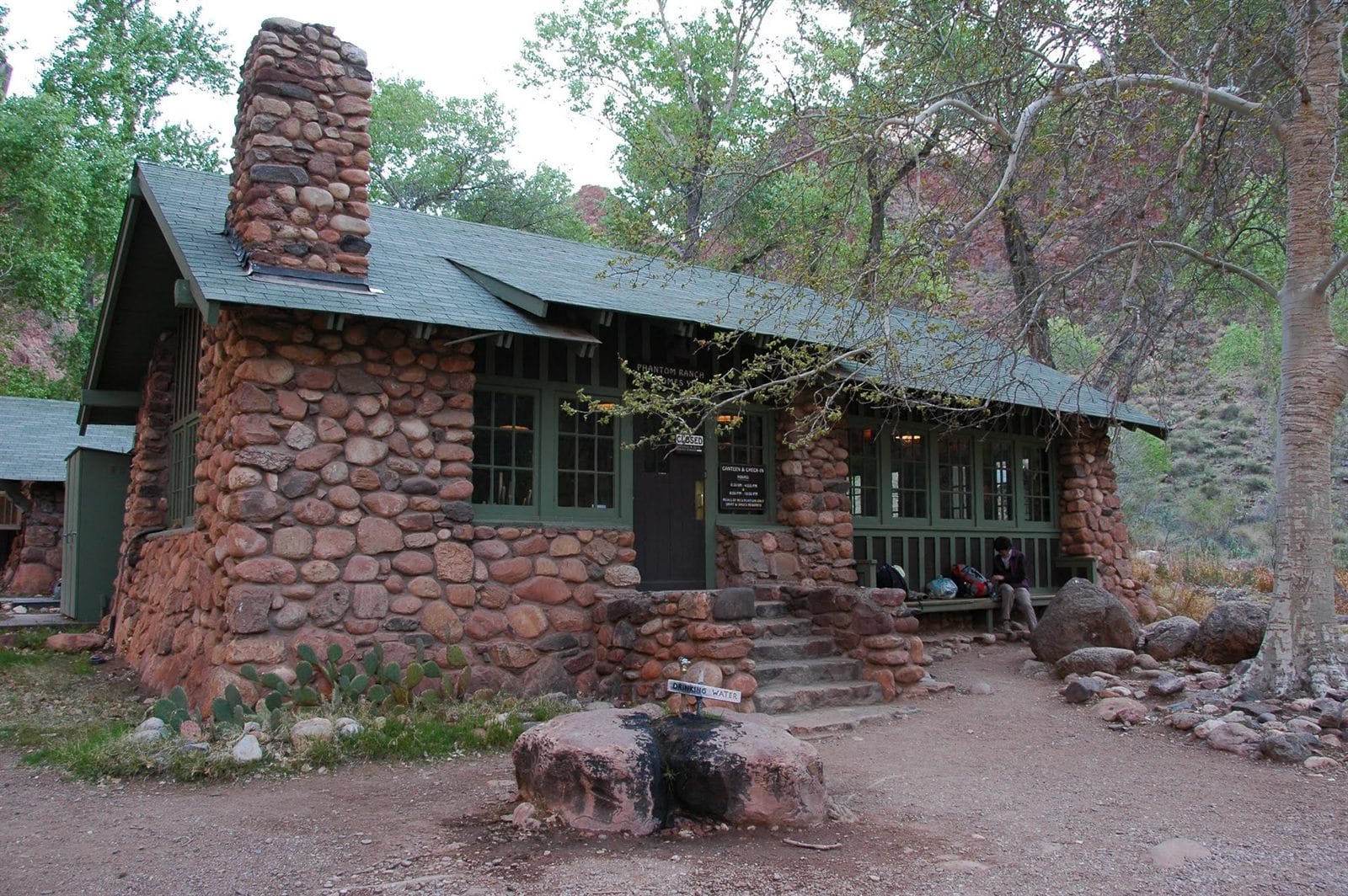
One of Phantom Ranch's native-stone cabins, down on the canyon floor.
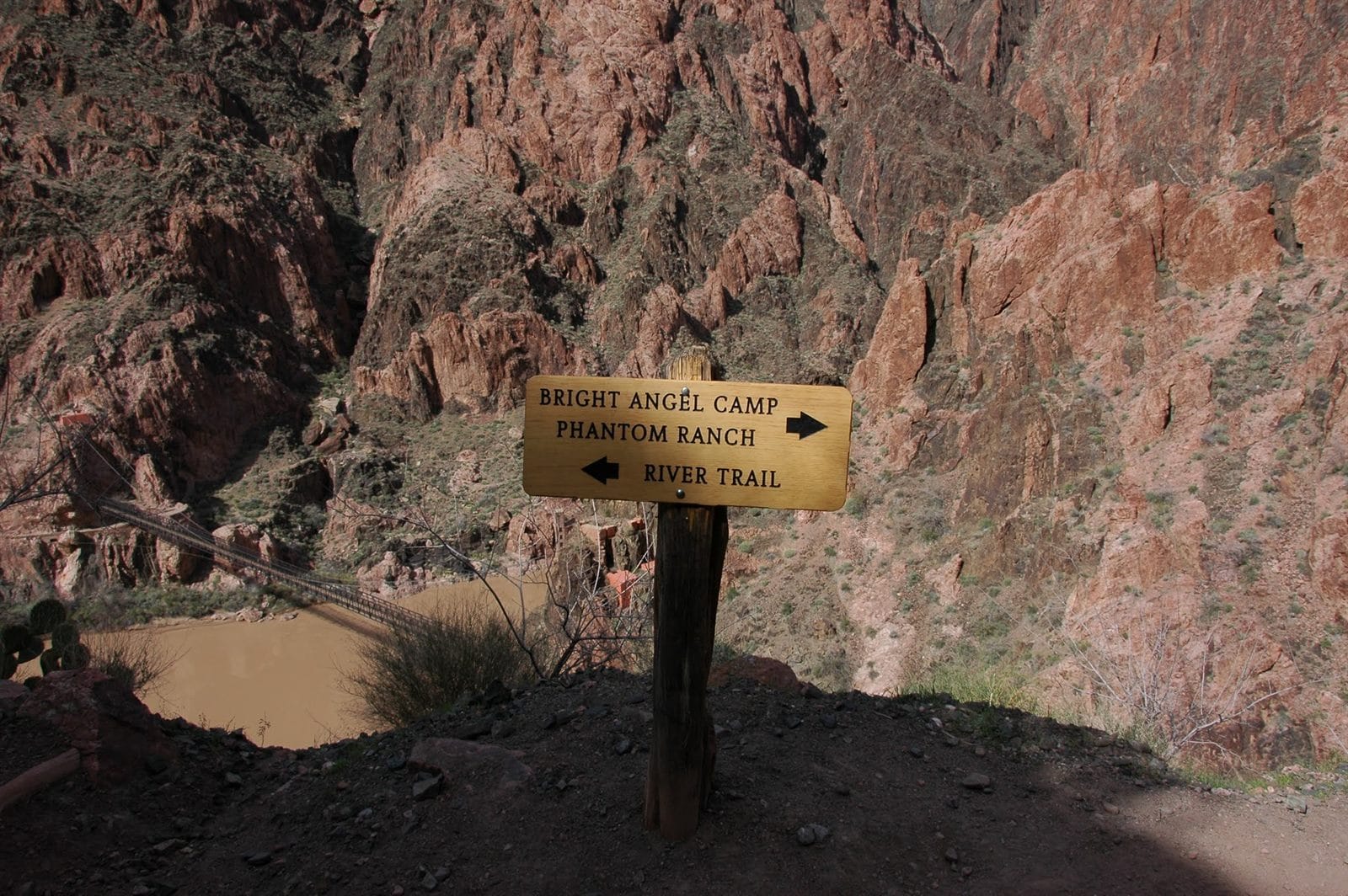
A welcome sight near the bottom — the sign for Phantom Ranch.
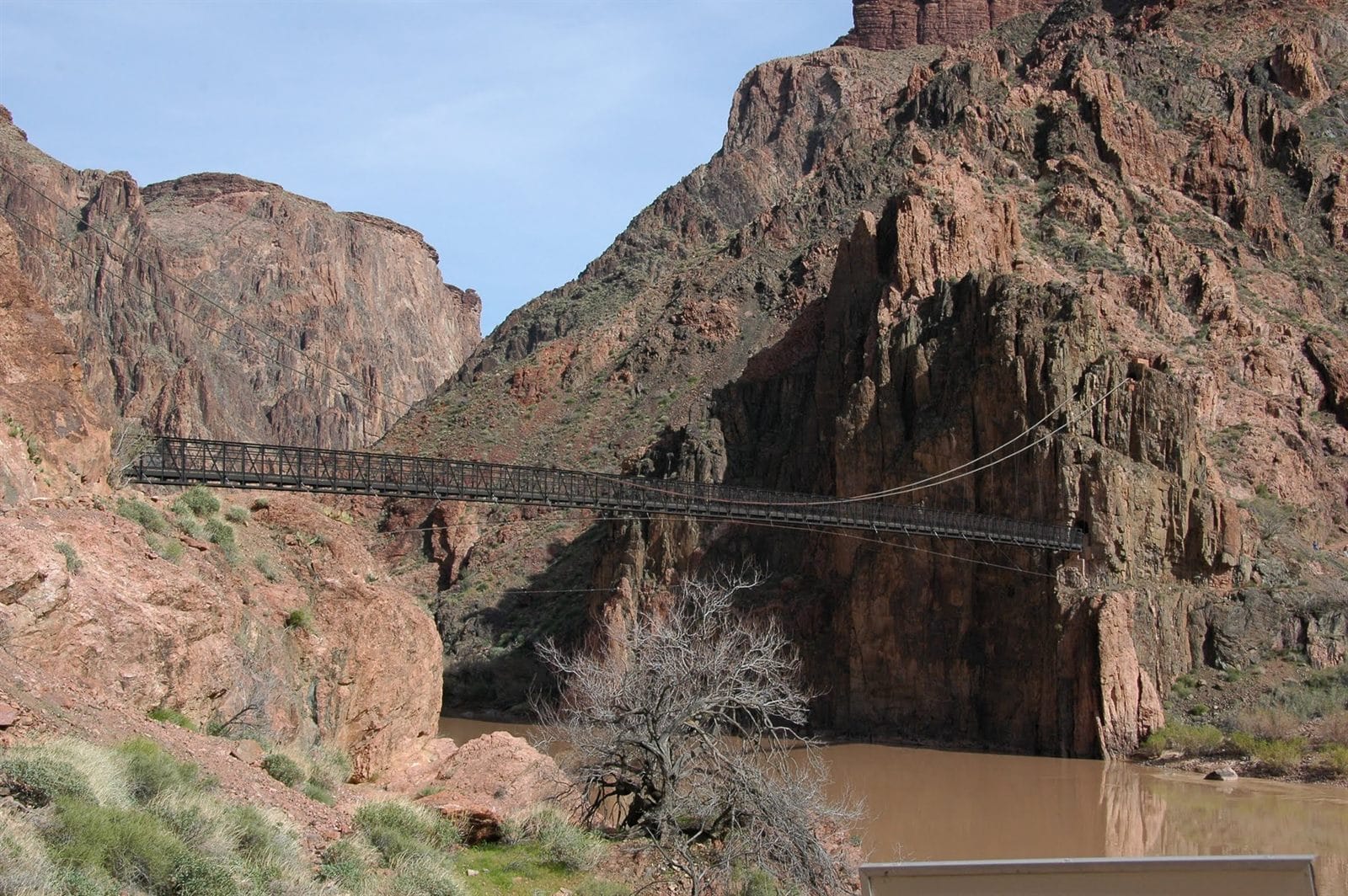
The Black Bridge — the South Kaibab's crossing of the Colorado River.
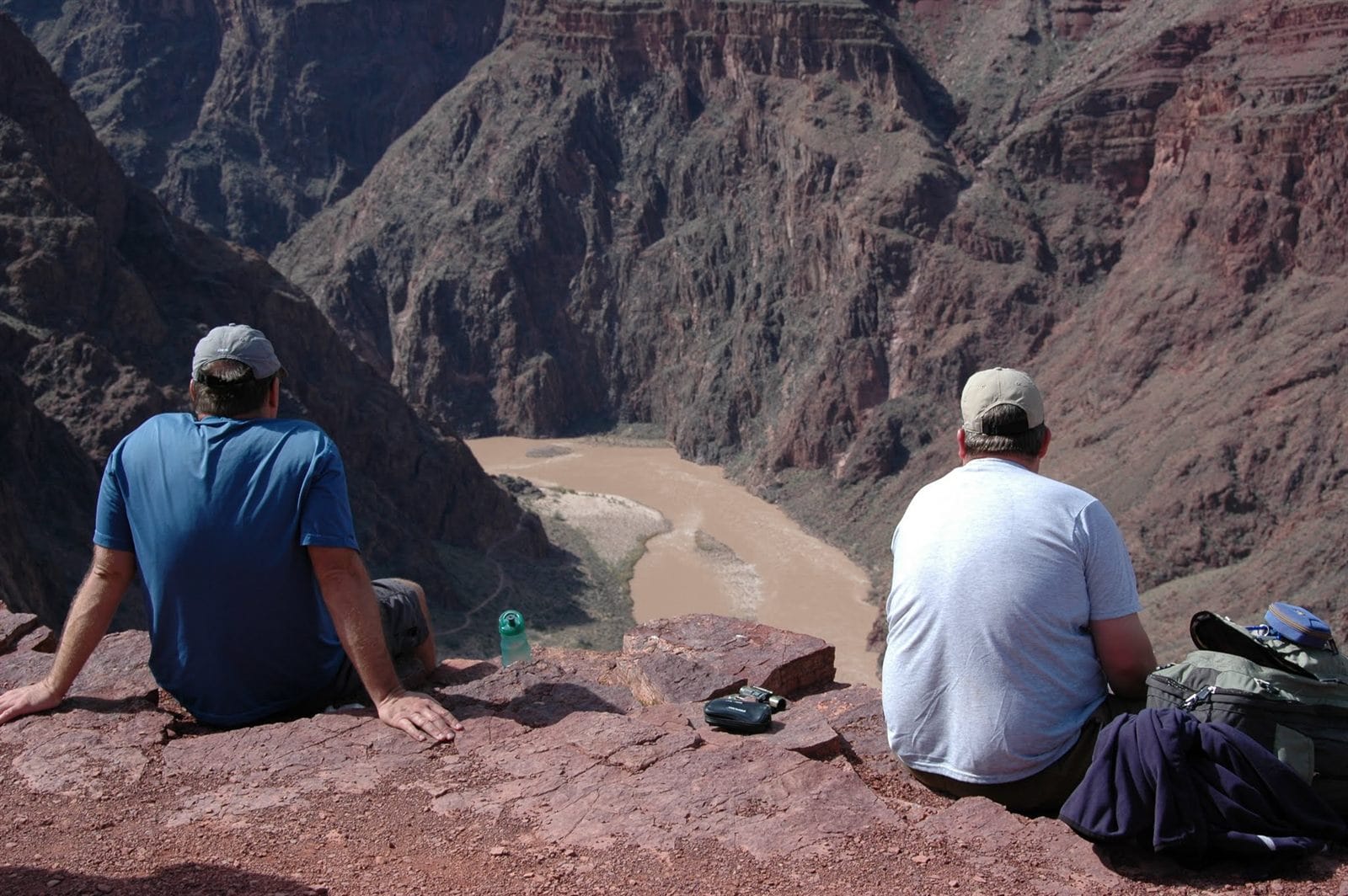
Charlie and me taking it all in at the Colorado River.
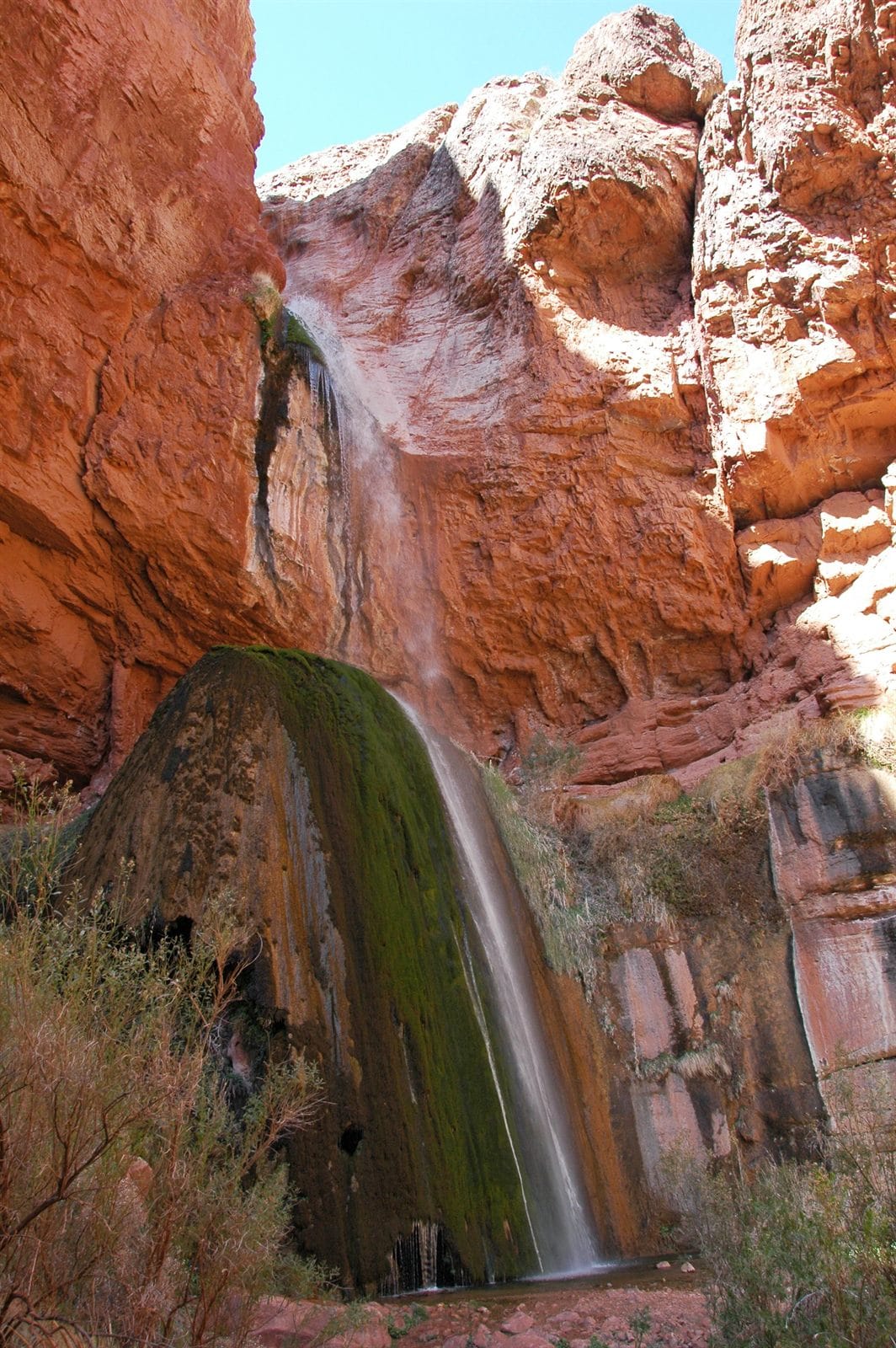
Ribbon Falls — a magical detour off the North Kaibab, between Phantom Ranch and the North Rim.
The Grand Canyon is just one chapter. Explore the other trails, rides, and expeditions.
All Adventures Erie Canal Bike Tour