Where to Begin
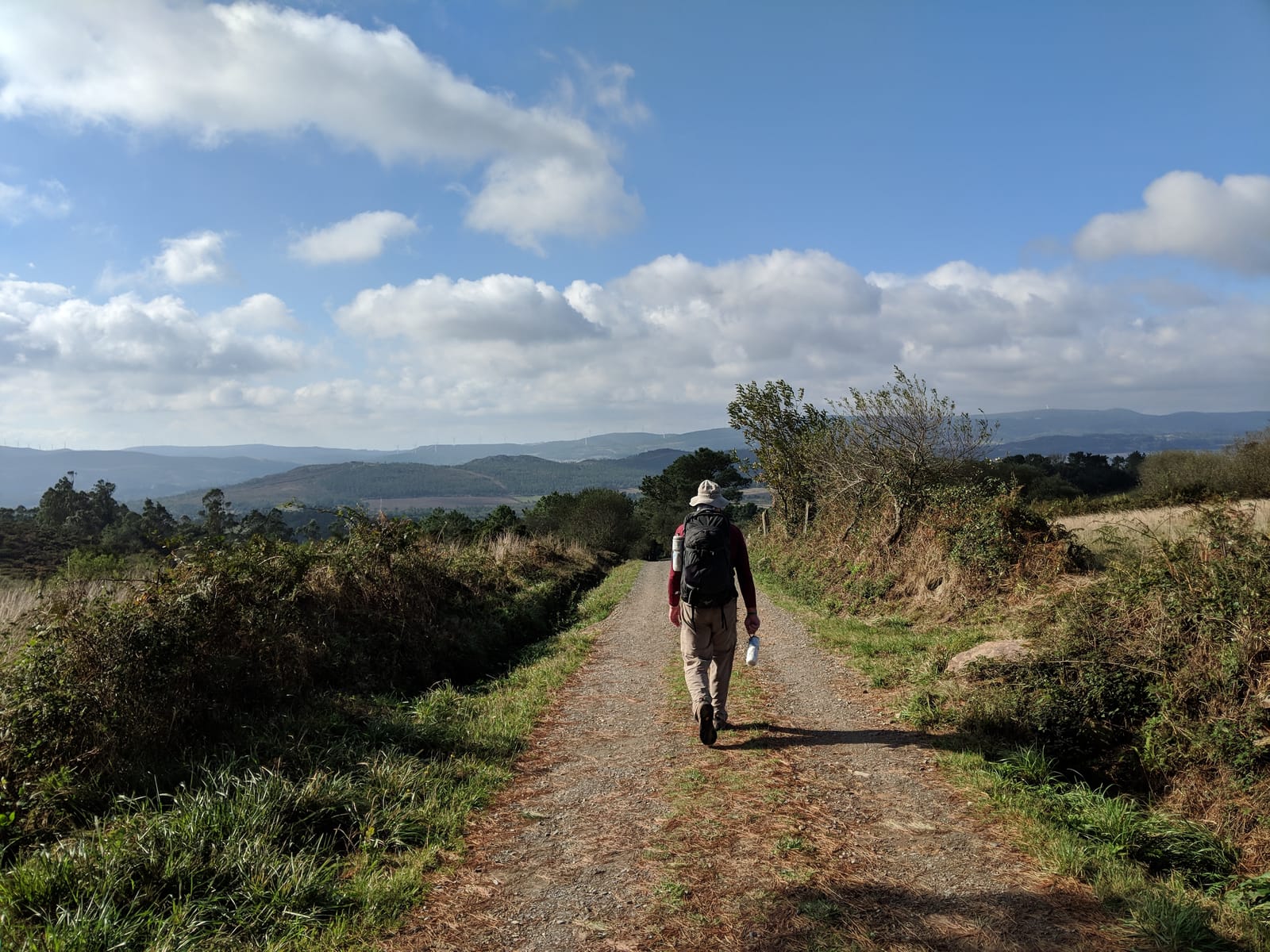
My mom walked the Camino Francés, and Doug and I walked the coast out to Finisterre and Muxía — and ever since, people who hear the story tend to ask the same thing: how would I even start? This page is my answer. It's not a comprehensive guide; plenty of those exist. Think of it instead as a friendly jumping-off point — the path options, how the whole thing works, and the people and films that explain it far better than I can.
If you haven't read it yet, the story that started all of this is here: our Camino de Santiago trip.
🧭 Pick Your Path
"The Camino" isn't a single route but a whole network of historic ways, all ending at the cathedral in Santiago de Compostela. The big decision is which one to walk.
- Camino Francés (French Way) — the classic, and by far the most popular. Roughly 780 km from Saint-Jean-Pied-de-Port in the French Pyrenees across northern Spain. The most infrastructure, the most fellow pilgrims, the most support. A great first Camino.
- Camino Portugués (Portuguese Way) — the second-most-walked route, from Lisbon or (more commonly) Porto, with both a central and a scenic coastal variant.
- Camino del Norte (Northern Way) — follows the rugged north coast of Spain. Quieter and more demanding, with spectacular sea views.
- Camino Primitivo (Original Way) — the oldest route, from Oviedo. Mountainous and challenging, prized by experienced walkers.
- Camino Inglés (English Way) — a short option from Ferrol or A Coruña, around 120 km — long enough to earn the certificate.
- Vía de la Plata — the long southern route up from Seville. Remote, hot, and far less crowded.
- Finisterre & Muxía — the epilogue: a few days on from Santiago out to the Atlantic "end of the world." This is the stretch Doug and I walked.
💡 The "last 100 km" rule: to earn the Compostela (the official certificate of completion), you need to walk at least the final 100 km — or cycle the final 200 km — into Santiago. That's why the town of Sarria, almost exactly 100 km out on the Francés, is the single most popular starting point for people short on time.
🐚 How It Works
A few basics that demystify the pilgrimage before you go.
- The credencial. You carry a pilgrim's passport and collect stamps at towns, churches, cafés, and hostels along the way — proof you walked it, and your ticket to the Compostela at the end.
- Where you sleep. Most pilgrims stay in albergues — simple, inexpensive pilgrim hostels — though hotels and guesthouses line the popular routes too, if you'd rather travel a little softer.
- When to go. Spring and fall are the sweet spots: mild weather and a good crowd. Summer is hot and busy; winter is quiet, cold, and some albergues close.
- Pack light, train your feet. The golden rule is to carry as little as possible (a pack around 10% of your body weight) and to break in your shoes and your legs well before you start.
- Plan it, or wing it. Many walk it spontaneously, booking a bed a day ahead; others plan every night in advance. Both work — it depends on the season and your tolerance for uncertainty.
🎒 On Your Own, or Guided
There's no single right way to do it — just the way that fits you.
Self-guided is how most people walk the Camino: you set your own pace, book beds as you go (apps and guidebooks make it easy), and let the day unfold. It's flexible, social, and inexpensive.
Guided or planned is a great option if you'd rather someone else handle the logistics. Plenty of professional companies will map your stages, book your lodging, and even shuttle your luggage ahead so you walk with just a daypack. Follow the Camino is one well-known example (and the source of the statistics below) — but there are many, so it's worth comparing a few.
🎬 Watch & Learn
The fastest way to understand the Camino is to see it. These are the resources I'd point anyone to.
- Walk with Efren (YouTube) — Efren spends several months each year walking and documenting different Caminos. Entertaining and genuinely useful for choosing a route and figuring out how to walk it. The best free resource I know of.
- The Way (2010) — Emilio Estevez directs his father, Martin Sheen, as a man who walks the Camino Francés in honor of his son. The film that introduces most people to the pilgrimage — and the one that played a part in my own family's story.
- The Way, My Way (2024) — an Australian film based on Bill Bennett's bestselling memoir of walking the Francés. Funny, honest, and shot using a mix of actors and real pilgrims — a wonderful, true-to-life companion to The Way.
- The Pilgrim's Office — the official source in Santiago for the credencial, the Compostela, and the rules on distances and stamps.
📊 The Camino by the Numbers (2024)
A snapshot of who's out there walking, from Follow the Camino's 2024 statistics.
- More than 400,000 pilgrims registered their journey with the Pilgrim's Office in 2024.
- The Camino Francés drew over 60% of all pilgrims, with the Camino Portugués (coastal and central combined) at about 25%.
- The Camino del Norte grew by roughly 12%, while the Inglés and Vía de la Plata saw modest gains.
- Women made up 52% of pilgrims, and younger walkers (ages 18–25) accounted for about 20% — a notable shift toward a younger crowd.
- Pilgrims came from 160+ countries, led by Spain, the USA, Germany, and Italy, with a 15% jump from Asian countries.
Buen Camino
Wherever you start and however you walk it, the Camino has a way of giving you exactly the trip you needed. If you're planning one — or just dreaming about it — I'd love to hear about it.
Get in touch →